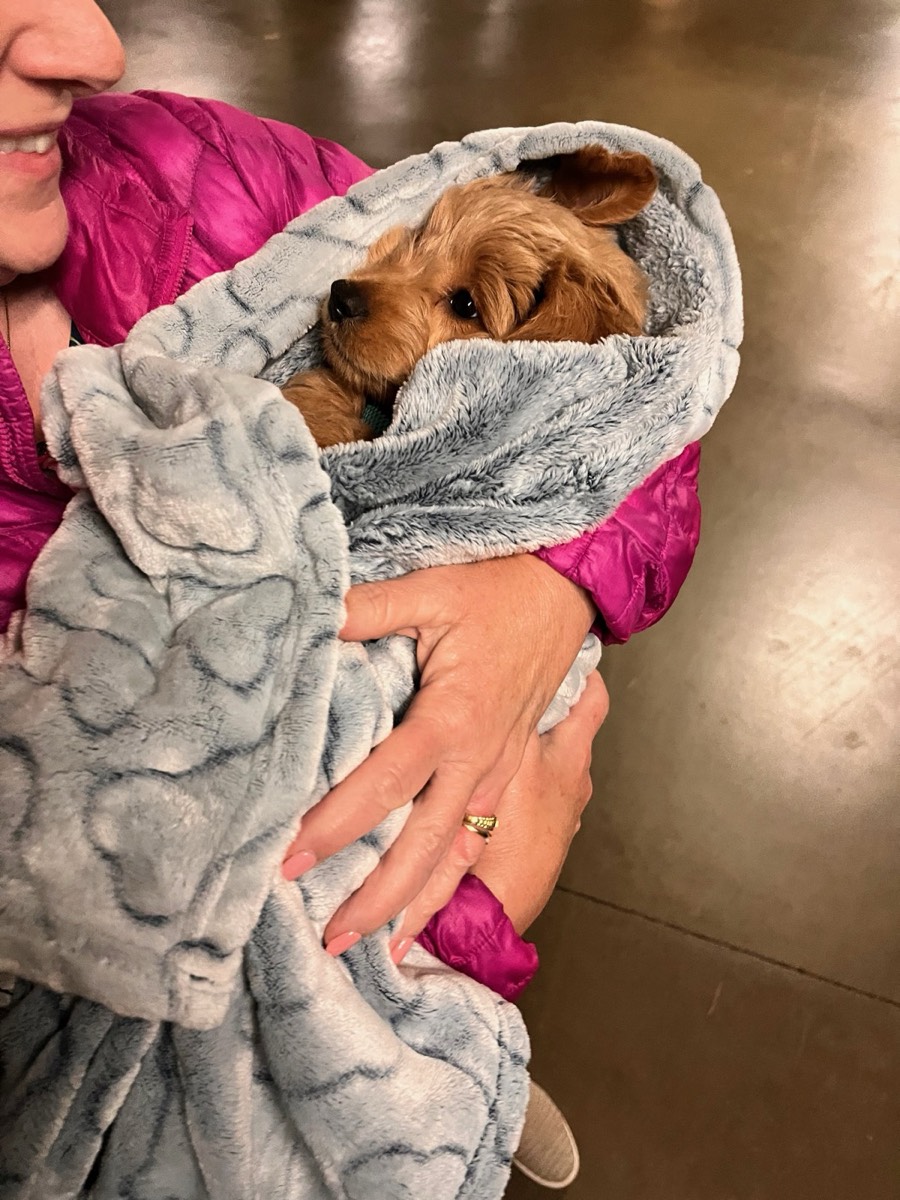
The internet will tell you that introducing a dog to a newborn is either completely straightforward or a crisis waiting to happen, depending on which corner of the internet you land in. The reality is somewhere in the middle, and almost entirely about what you do before the baby comes home.
Jump to a section
Change the Routine Before the Baby Arrives
This is the part most people skip, and it costs them. Dogs are deeply routine-dependent. Whatever is going to change after the baby arrives -- walk timing, feeding schedule, who handles the dog, where the dog sleeps -- change it four to six weeks before your due date.
A dog adjusting to a new routine while also processing a new tiny human who cries at 3am is handling two major disruptions at once. A dog who already adapted to the new schedule before the baby arrived has one fewer thing to stress about. You cannot predict exactly how things will shift after delivery, but you can make educated guesses and start moving in that direction now.
Separation anxiety is one of the most common dog responses to a new baby -- not because of the baby specifically, but because the owner's attention shifts so dramatically. If your dog is already prone to separation anxiety, start working on independence training now, before you're running on no sleep and have zero bandwidth for a dog melting down every time you leave the room.
For the anxious adjustment period
Calming products that actually work -- chews, diffusers, and supplements Arie uses during big changes.
See calming picks on Faves →The Scent Introduction (Do This First)
Before you bring the baby home from the hospital, send something ahead. A used blanket, a onesie, anything that carries the baby's scent. Have someone bring it home and let the dog sniff it calmly, with no big production. Reward calm, relaxed interest. Let the dog process this new smell without simultaneously processing a new creature in the house.
This step sounds small, and it is small. But dogs gather enormous amounts of information through scent, and walking into a house that already smells familiar-ish is genuinely different from encountering a completely novel scent attached to a new object that makes noise and commands all of the adults' attention.
The Actual First Meeting
When you walk in from the hospital, do not walk in carrying the baby. Have someone else hold the baby while you greet your dog first. If your dog has been home alone or with a sitter, they have a lot of reunion energy stored up. Let them burn some of it on you before introducing them to the baby.
Once the dog has settled -- not after one minute, actually settled -- you can introduce the baby. Keep the dog on a leash for this first meeting, not because the dog is dangerous, but because it gives you control without having to grab or shout. Let the dog sniff the baby's feet. Keep it brief. Reward calm.
Do not hold the baby down toward the dog. Do not force closeness. If the dog sniffs once and walks away, that is fine. That is actually ideal. You want neutral, calm interest, not overwhelming excitement in either direction.
Using a leash for the first meeting is about management, not mistrust. A dog who bumps into a newborn with enthusiasm is a problem even if the dog is being friendly. Leash = calm, controlled introduction. Remove it once the dog is clearly relaxed and disinterested.
Managing the Space
Baby gates are one of the most useful tools in this transition, and they work better when they're in place before the baby arrives so the dog is already used to them. A gate that lets the dog see and smell the nursery without access teaches the dog that this is a space that exists -- it just has boundaries.
A walk-through baby gate with a small door is worth the extra cost because you'll be walking through it approximately 400 times a day. The ones without a door get old fast.
The goal is not to banish the dog. A dog who is excluded from all spaces associated with the baby starts to see the baby as the reason for the exclusion, which is the opposite of what you want. Supervised presence is better than permanent exclusion.
The Weeks After: Realistic Expectations
The adjustment period is real. Most dogs settle into the new normal within four to eight weeks, but the first two weeks are the peak of the disruption. You may see increased clinginess, some regression in training, attempts to get attention in whatever ways have worked before -- jumping, barking, getting into things. This is not the dog being malicious. This is the dog recalibrating.
The best things you can do during this period: keep exercise consistent (a tired dog is a calmer dog), keep training interactions brief and positive so the dog still has opportunities to earn praise, and make sure the dog has a designated safe space that is entirely theirs -- a crate, a bed in a corner, somewhere they can go that is quiet and not occupied by the baby.
If you can manage even five minutes of one-on-one time with the dog daily -- a short walk, a training session, sitting on the floor together -- it helps. The dog doesn't need a lot. They need enough to know they still exist in your world.
Training treats for the transition
Small, high-value treats make calm behavior around the baby worth repeating. What we keep stocked.
See treat picks on Faves →When to Get Help
If your dog shows guarding behavior around the baby, growls, or shows signs of significant stress that don't improve after the first few weeks, bring in a certified professional trainer or behaviorist rather than hoping it resolves on its own. These are the situations where waiting costs more than acting. A good trainer can assess what's actually happening versus what you're interpreting as a problem, and the two are sometimes different things.
Resource guarding directed at the baby specifically, or persistent anxiety that isn't improving with routine and exercise, are the flags to act on quickly. For the in-between stuff -- is this rash something or nothing, should I be worried about this behavior -- we use Dutch (affiliate link), a telehealth vet service at $11/month. The ability to send a video of a behavior and get a professional read on it without a full office visit is genuinely useful when you also have a newborn.
Frequently Asked Questions
How do you introduce a dog to a new baby?
Start before the baby comes home. Let the dog sniff a used blanket or piece of clothing from the hospital before the first in-person meeting. When you bring the baby home, greet the dog first (without the baby) so they can burn off excitement, then do a calm, leashed introduction. Keep it brief, reward calm behavior, and don't force closeness.
How long does it take for a dog to adjust to a new baby?
Most dogs settle into the new normal within 4-8 weeks. The first two weeks are the adjustment peak. Regression in house training, increased clinginess, or acting out are all common short-term responses. Consistency with routine and exercise helps significantly.
Should I be worried about my dog around a new baby?
Most dogs do fine with proper introduction and supervision. Never leave any dog alone with an infant, regardless of temperament -- this is a universal rule, not a breed-specific one. Watch for signs of stress in your dog (excessive panting, yawning, lip licking, hiding) rather than waiting for an obvious problem.
What if my dog is too excited or jumpy around the baby?
Manage the environment rather than trying to train your way through pure excitement. Baby gates that let the dog see the baby's space without access are useful. Keep initial interactions short. Reward calm behavior specifically -- four paws on the floor, relaxed body. A dog who is exercised before introductions is dramatically easier to manage.
Should I change my dog's routine before the baby arrives?
Yes. Whatever routine shifts you know are coming -- walk times, feeding schedule, who handles the dog -- change them before the baby arrives, not after. A dog who adjusts to a new schedule during a calm period handles the baby's arrival much better than a dog adjusting to both at once. Start 4-6 weeks before your due date.

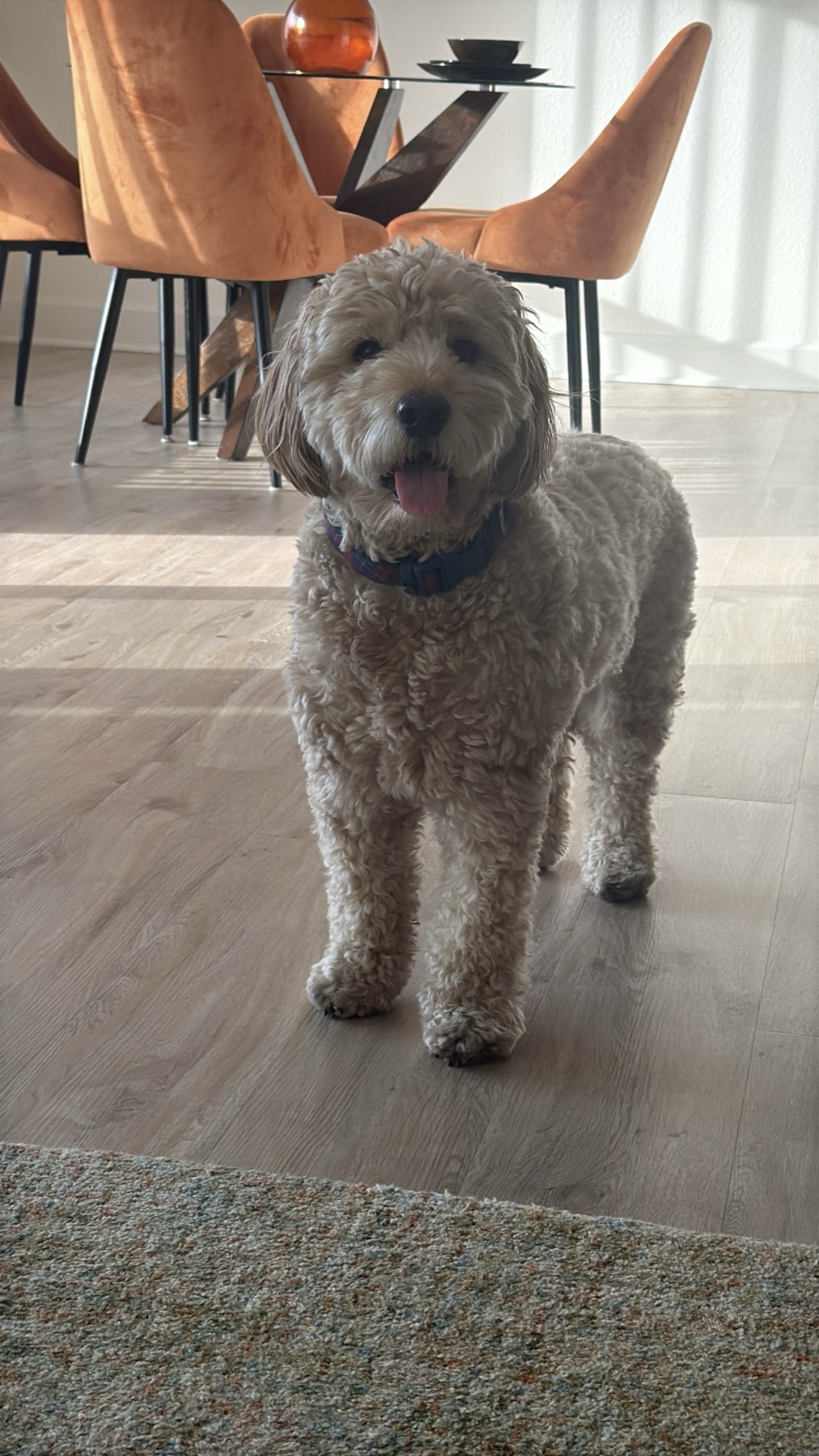
FREE GOLDENDOODLE GUIDE
Get the Goldendoodle Survival Guide
Everything I wish I'd known before getting Arie -- beach gear, grooming reality, the 7pm witching hour, and more. Free PDF.
No spam. Ever. Unsubscribe anytime.
Have questions? Find us on TikTok @ariepup!
← Back to the Blog