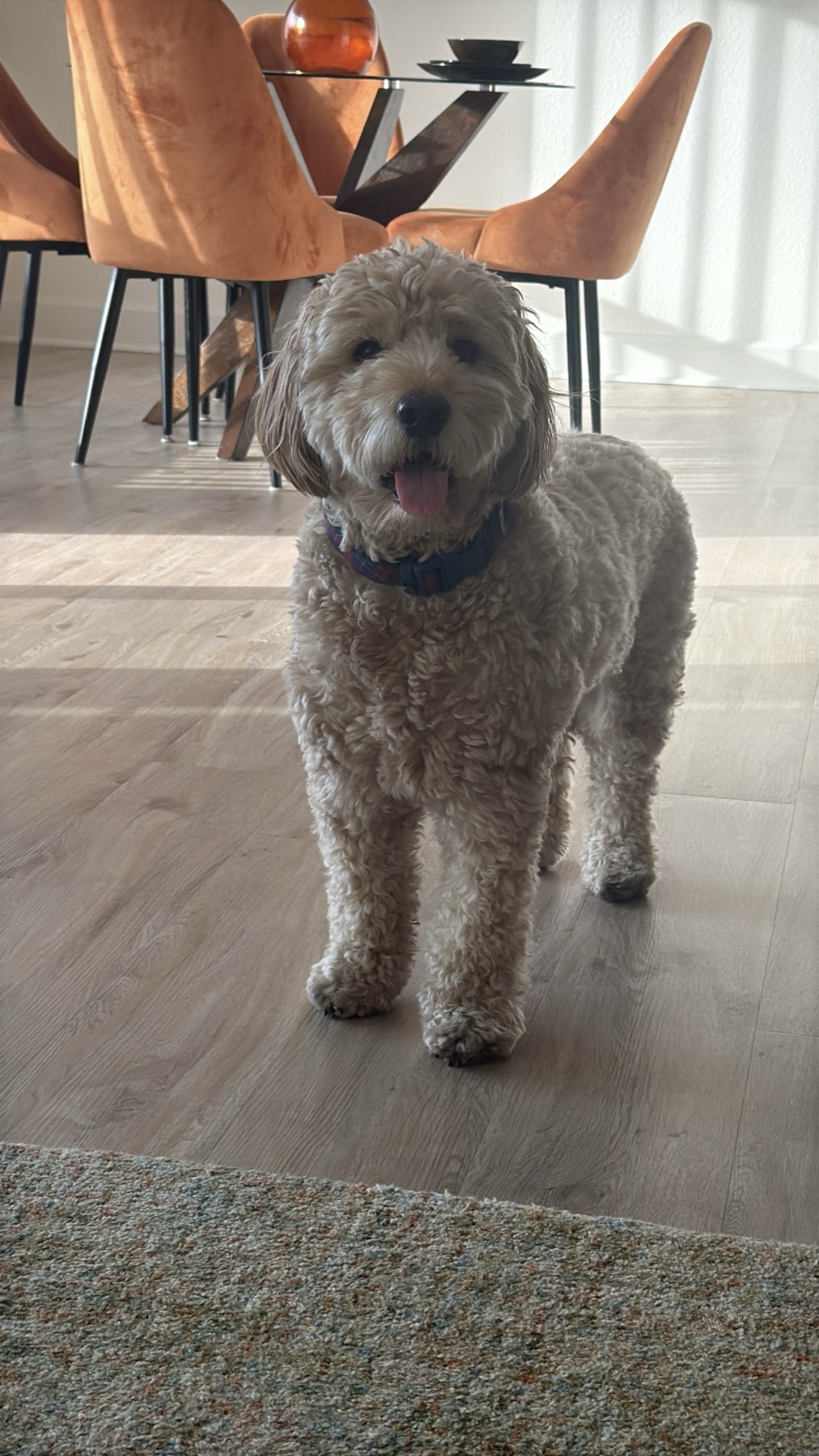
Everyone wants the puppy. Then a third of those people quietly start researching adult rehoming groups around month four. The puppy is not the problem. The mismatch is. So before you commit to either, here is the honest comparison nobody runs you through at the breeder visit.
The Puppy Fantasy vs the Actual First Year
The fantasy is the smelly head, the floppy ears, the little legs running across the hardwood. That part is real. What gets edited out of the daydream is everything in between. Puppies sleep 18 to 20 hours a day, which sounds restful until you realize the waking hours are biting, peeing, screaming in a crate, and chewing the corner off something expensive. They need a bathroom break every 1 to 2 hours in the early weeks. They have no impulse control until close to a year old. They cost more in the first 12 months than they will in most adult years, between vaccines, neuter, training classes, replacement furniture, and the gear you bought wrong the first time.
None of this is a reason not to get a puppy. It is a reason to be ready for what the first year actually is, month by month. The owners who struggle hardest are the ones who pictured a calm sidekick by month three and got a small chaos demon with a thesaurus of bad ideas.
What an Adult Goldendoodle Actually Offers
An adult dog is a known quantity. You can see the coat type — whether it sheds and how much is something you can actually observe before you commit, rather than hoping the puppy lottery lands on the curlier end of the gene pool. You can see the size. You can watch them around other dogs, around children, around strangers, and form a real opinion before you sign anything. Most adults are already house trained, already crate trained, and already sleep through the night. The amount of energy required to integrate a sane adult dog into a household is a fraction of what a puppy demands, and they can be left alone for a normal work day without a meltdown.
The catch is information. An adult comes with history, and not all of it is documented. A rescue might be perfect or might come with a noise sensitivity, a fear of men in hats, or a love of chewing baseboards that took the previous owner a year to figure out. A retired breeder dog may have spent most of life in a kennel and need months to learn that couches are for sitting.
The Real Tradeoffs, Side by Side
Time
A puppy needs an adult home, or daycare, or a midday dog walker, for the first 4 to 6 months at minimum. An adult dog can typically handle a standard 8 hour work day with a midday walk. If you work outside the home and do not have midday backup, a puppy is a much harder bet.
Money
Puppy purchase prices from reputable breeders are typically the highest single year expense you will face. Adoption fees for adult dogs are usually a fraction of that, though older dogs can carry more vet costs over the long run. The first year of any new dog also includes gear, training, and the random extras that nobody warns you about.
Energy match
Goldendoodles are physically mature around 12 to 18 months and mentally settled closer to 2 or 3. If you're adopting young and want to know where they'll land, an Embark DNA test predicts adult size and coat before the dog finishes growing. If you want hiking partner energy on day one, an adult around age 2 to 4 lands you there immediately. If you want clay you can shape, a puppy makes sense, as long as you have the runway to do the shaping.
Are you ready to build your life around a dog for 12 months, or do you need a dog that fits into the life you already have? Puppies require the first. Adults are built for the second. Most regret happens when people pick the wrong one for their answer.
Who Should Get a Puppy
People who are home most of the day or have a flexible schedule. People who want to train from scratch and have realistic expectations about how long that takes. People who have done this before and know what they are signing up for. People who want the full experience, smelly head and all, and have the patience for the months that are not cute. (Worth knowing: the separation anxiety window tends to peak between 8 and 16 weeks — the exact stretch when most people are returning to work.)
Who Should Get an Adult
People with full work days. First time dog owners who want a softer landing. Families with very young kids, where a 60 pound puppy in a teething phase is genuinely dangerous to a toddler. People recovering from a recent loss who do not have the bandwidth for chaos. People who specifically want a calm dog and are honest enough to admit it.
If you want a starter puzzle that holds up to determined chewing, the Outward Hound Hide-A-Squirrel is the one almost every doodle owner I know has somewhere in the toy bin. It is not a forever toy, but it earns its place in week one.
The Middle Path: an Older Puppy or Young Adult
Nobody talks about this enough. Many breeders have puppies returned at 8 to 14 months because the family underestimated the work. Rescues regularly have 1 to 2 year old doodles surrendered for the same reason. These dogs are often house trained, past the worst of the chewing, still young enough to bond intensely, and frequently free of the issues that come with a true rescue background. If you are open to it, this is the smartest middle ground in the whole conversation.
Where People Get This Decision Wrong
They pick the puppy because the puppy is on Instagram. They underestimate the year. They overestimate their own bandwidth. Or they pick the adult to avoid the puppy phase and then resent the dog for not being a blank slate. The decision is not which is better. It is which one matches the life you actually live, not the one you wish you had time for.
Frequently Asked Questions
Is it better to get a Goldendoodle puppy or an adult?
Neither is universally better. A puppy is better if you have months of consistent time at home and want to shape behavior from day one. An adult is better if you want a known personality, can skip the house-training phase, and prefer to slot a dog into your existing life rather than rebuilding life around a puppy.
How long does it take to house train a Goldendoodle puppy?
Most Goldendoodle puppies are reliably house trained between 4 and 6 months with consistent crating, scheduled potty breaks every 1 to 2 hours at first, and supervised free time. Full bladder control typically lands closer to 6 months. Some puppies take longer.
What age is an adult Goldendoodle?
Goldendoodles are physically mature around 12 to 18 months and mentally mature closer to 2 or 3 years. Most rescues and rehoming groups consider any dog over 1 year an adult, though the calmer, settled version of the dog usually arrives between 2 and 4.
Where can I get an adult Goldendoodle?
Breed-specific rescues, general doodle rescues, and breeder retirement programs are the three main paths. Some reputable breeders rehome retired breeding dogs at 4 to 6 years old. Adoption fees for adults are typically lower than puppy prices, but vet workup, transport, and quarantine are real costs to budget for.
Are adult rescue Goldendoodles harder to train?
Not inherently. Adult dogs can absolutely learn new cues and routines. What is harder is unwinding established fears or reactivity if the dog came from a rough background. A puppy gives you a blank slate. An adult gives you information. Both are workable with patience.
Will a Goldendoodle puppy bond as well with me if I work full time?
Bonding is not the problem. Logistics are. A puppy needs potty breaks every 1 to 2 hours, social contact, and supervision. Without midday help, doggy daycare, or a flexible schedule, a puppy is genuinely hard to do well. An adult dog is much more compatible with a standard work day.
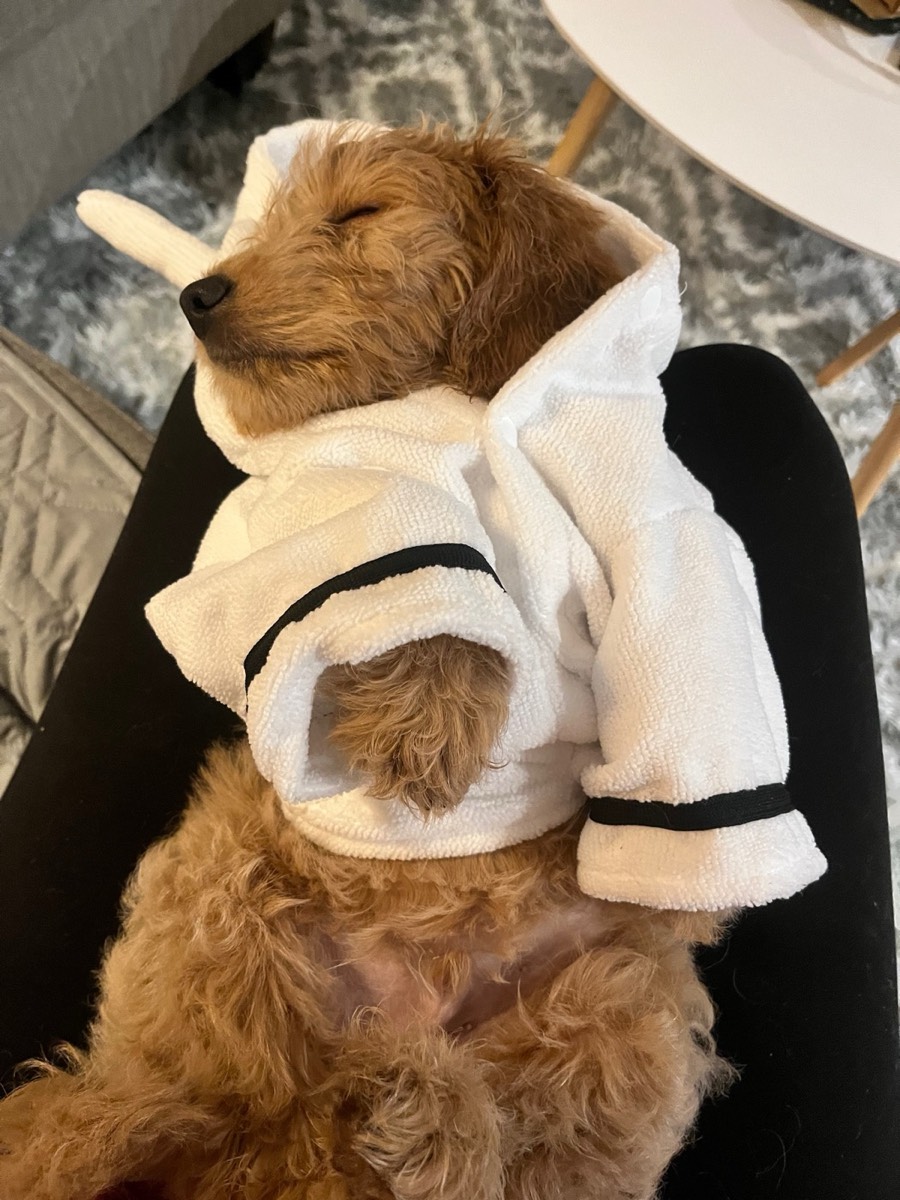


FREE GOLDENDOODLE GUIDE
Get the Goldendoodle Survival Guide
Everything I wish I'd known before getting Arie. Beach gear, grooming reality, the 7pm witching hour, and more. Free PDF.
No spam. Ever. Unsubscribe anytime.
Have questions? Find us on TikTok @ariepup!
← Back to the Blog