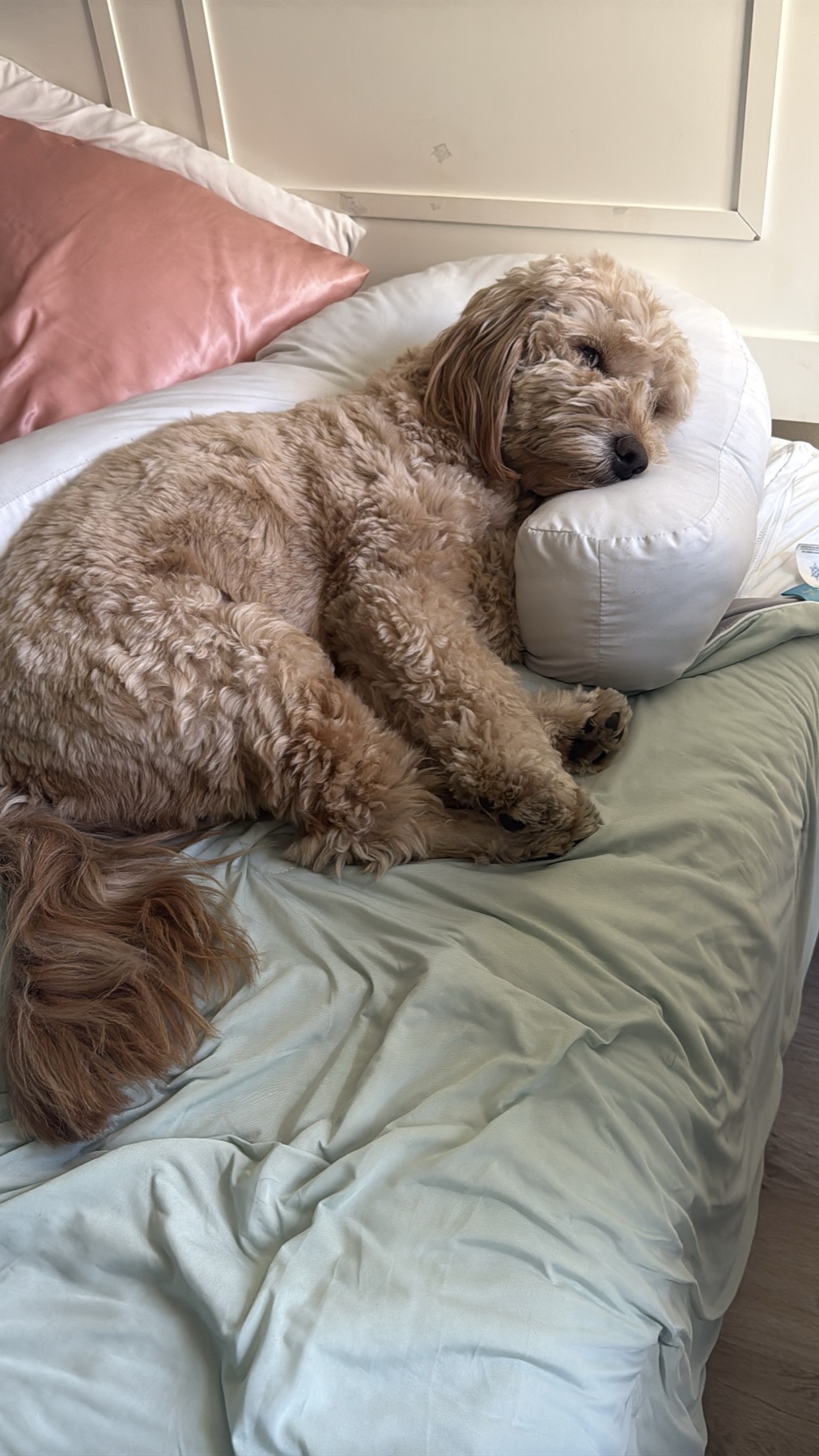
When Arie was a puppy, leaving the house felt like abandoning him at a bus station. The crying. The pacing. A neighbor once knocked to ask if everything was okay. Everything was not okay. Separation anxiety in Goldendoodles is common, genuinely miserable for everyone involved, and surrounded by advice that ranges from "mostly useless" to "actively makes it worse." Here is what actually helps.
Jump to a section
What Separation Anxiety Actually Looks Like
Not every dog who fusses when you leave has true separation anxiety. There's a real spectrum. Normal dog boredom looks like a dog who settles down after 10-20 minutes, may chew something he shouldn't, and greets you at the door like a reasonable animal when you return. True separation anxiety escalates rather than resolving. The barking doesn't stop. The pacing continues. There may be destruction, accidents indoors in a housetrained dog, or frantic behavior that starts the moment you pick up your keys.
Goldendoodles are velcro dogs by design. They were bred to be with people -- it's a core feature of the breed, not a personality quirk unique to your dog. That bond is part of what makes them so great. It's also exactly why being alone is harder for them than for more independent breeds. Some dogs adapt fine. Others do not.
A camera or a pet monitor is the fastest way to find out what's actually happening when you're not there. What owners imagine is happening and what is actually happening are frequently different.
What Actually Helps
Desensitization (the unsexy answer)
The most effective intervention for separation anxiety isn't a product. It's practice. The concept is simple: make your departures meaningless by doing them constantly at very short durations. Pick up your keys, don't leave, put them down. Repeat twenty times. Leave for thirty seconds, come back, act like nothing happened. Build duration gradually over days and weeks. It's tedious. It works. Dogs with separation anxiety need to learn that you leaving does not mean you're gone forever, and the only way they learn that is through repeated, calm evidence.
Exercise before you leave
A tired dog is a calmer dog. This is less about curing separation anxiety and more about reducing baseline agitation. A dog who had a real walk before you left -- not a quick trip to the sidewalk -- has a much better shot at settling down than a dog who's been inside all morning and is already buzzing. If your schedule allows it, exercise right before you leave the house. On days when outdoor exercise is off the table, indoor enrichment activities can take the edge off the same way. The timing matters.
Crate training, done right
A crate used correctly becomes a dog's safe space, not a punishment. Dogs who associate their crate with food, comfort, and rest often choose to go in it voluntarily. The mistake most people make is putting a dog in a crate for the first time and then leaving for hours. That's not crate training. That's just confinement, and it will make anxiety worse, not better. Crate introduction is a slow process and has to happen before you need to use it.
Puzzle toys and frozen Kongs
Giving a dog something absorbing to work on when you leave buys time and creates a positive association with your departure. A Kong stuffed with something good and frozen takes a while to finish. It gives the dog something to do in those first critical minutes when anxiety is highest. It won't fix severe cases, but it's a low-effort addition to any approach.
Keep Them Busy
Arie's favorite puzzle toys and enrichment picks -- the ones that actually hold his attention
See toys on Faves →Calming supplements
There are a lot of calming products on the market and the quality varies considerably. Ones with L-theanine, melatonin, or ashwagandha tend to get better feedback from owners and trainers than ones that are essentially just flavored treats. They're not a cure and they don't work on every dog, but as part of a broader approach they're worth trying -- especially during the desensitization phase when you're asking your dog to tolerate something stressful repeatedly.
Arie-Tested Calm
Calming chews and supplements that have actually made a difference for Arie
See calm picks on Faves →What Doesn't Help
Getting a second dog
People suggest this constantly. Sometimes it works. More often you end up with two dogs instead of one, and the original dog is still anxious. A second dog is a major commitment and should never be the first thing you try. If a dog is anxious about being separated from his humans, a dog companion isn't necessarily a substitute for that.
Long, dramatic goodbyes
It feels loving. What it actually does is teach the dog that departure is a significant emotional event. Keep goodbyes neutral and brief. The dog will not feel abandoned because you didn't spend five minutes telling him he's a good boy on your way out the door. That extra attention ramps up the anticipatory anxiety, not the security.
Punishing destruction or accidents after the fact
When a dog destroys something or has an accident while you're gone, punishing him when you return accomplishes nothing except confusing a dog who no longer has any idea why you're upset. He's not doing it out of spite. He was panicking. The behavior happened because of anxiety, not defiance, and punishment doesn't address anxiety. It just adds fear of you on top of fear of being alone.
What helps: desensitization practice, real exercise before you leave, a crate introduced correctly, puzzle toys, calming supplements as support.
What doesn't: dramatic goodbyes, punishment after the fact, hoping it resolves on its own, assuming a second dog will fix it.
When to Call a Professional
If your dog is hurting himself, regularly breaking out of containment, or you're getting neighbor complaints, it's past the point of DIY. A certified separation anxiety trainer (look for the CSAT credential) is the specific qualification to seek out. General obedience trainers are not the same thing. Separation anxiety is a specific behavioral condition and not all trainers have the methodology to treat it.
In severe cases, a vet conversation about temporary medication as a bridge while training happens is reasonable and worth having. Medication alone won't fix separation anxiety, but it can lower the anxiety ceiling enough for training to actually work. This is not a character failure for your dog. It's a medical issue with a behavioral component, and it can be treated. Dogs who struggle when left at home sometimes do better once they've had more structured exposure to being away from you in lower-stakes settings -- the same energy management approach that helps with the 7pm witching hour applies here too. And if car rides are part of your regular routine, making the car a positive space can ease the transition out the door.
Frequently Asked Questions
Do Goldendoodles get separation anxiety?
Yes, Goldendoodles are particularly prone to separation anxiety. They were bred to be companion dogs and naturally bond very closely with their people. That velcro personality is part of what makes them great family dogs, and it also makes being alone harder for them than for more independent breeds.
How do I know if my dog has real separation anxiety or is just bored?
Boredom looks like a dog who settles down after 10-20 minutes, may chew something he shouldn't, and greets you normally when you return. Separation anxiety escalates rather than resolving -- continuous barking, pacing, destruction that starts at the door, or accidents in a housetrained dog. A camera or pet monitor is the fastest way to know for sure what's happening when you're not there.
Does getting a second dog fix separation anxiety?
Sometimes, but not reliably. Some dogs calm down significantly with a companion. Others stay anxious regardless, and you've added a second dog to your household without solving the original problem. A second dog should not be the first intervention you try for separation anxiety.
How long does it take to treat separation anxiety in dogs?
For mild cases with consistent desensitization work, you may see real improvement in 4-8 weeks. Moderate to severe cases can take several months, especially if you're also working with a trainer and, in some cases, temporary medication. There's no quick fix. Consistency is more important than intensity.
Should I crate my dog if he has separation anxiety?
It depends on whether the dog is crate-trained and whether he finds the crate calming or more stressful. Some dogs with separation anxiety feel safer in a crate because it limits the space they have to pace and worry about. Others panic worse in confinement. If the crate hasn't been introduced properly as a positive space, using it during anxiety will make things worse.

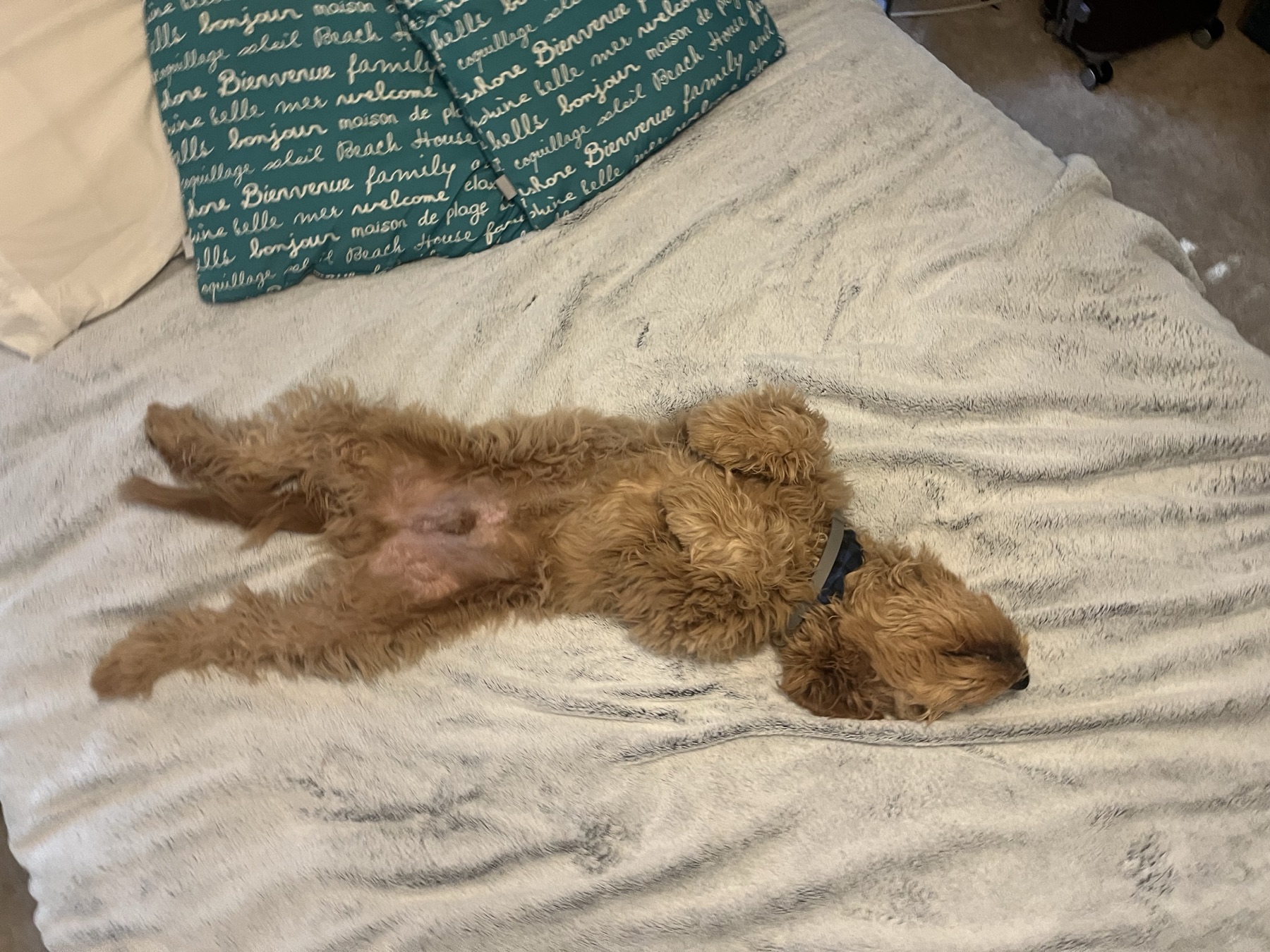

FREE GOLDENDOODLE GUIDE
Get the Goldendoodle Survival Guide
Everything I wish I'd known before getting Arie -- beach gear, grooming reality, the 7pm witching hour, and more. Free PDF.
No spam. Ever. Unsubscribe anytime.
Have questions? Find us on TikTok @ariepup!
← Back to the Blog