Every dog owner has stood at the counter with a pleading face staring up at them, wondering if one bite is actually a problem. Sometimes it isn't. Sometimes it's an emergency vet visit waiting to happen. Here's the honest, unglamorous breakdown of what's actually fine, what's genuinely dangerous, and why the amount matters more than most people assume.
Jump to a section
The Foods That Are Actually Dangerous
Some human foods are dangerous for dogs in any amount, and the list is shorter and more specific than people assume. Chocolate tops it, and the darker and more concentrated the chocolate, the worse it is, since it's the theobromine content doing the damage, not just the sugar. Grapes and raisins are dangerous too, and unpredictably so. Some dogs eat a handful and are fine, others eat two and end up in kidney failure, and there's no reliable way to know which dog you have until it's too late. Onions, garlic, and chives are toxic in any form, cooked, raw, or powdered, and the powdered versions hiding in sauces, broths, and seasoning blends are the ones that catch people off guard. Xylitol, the sugar substitute in sugar-free gum, some peanut butters, and a lot of baked goods, causes a dangerously fast insulin spike and is one of the few things on this list that can be fatal within hours. Macadamia nuts and alcohol round out the list, and raw bread dough belongs here too, since the yeast keeps rising once it's inside a warm stomach.
The Foods That Are Usually Fine
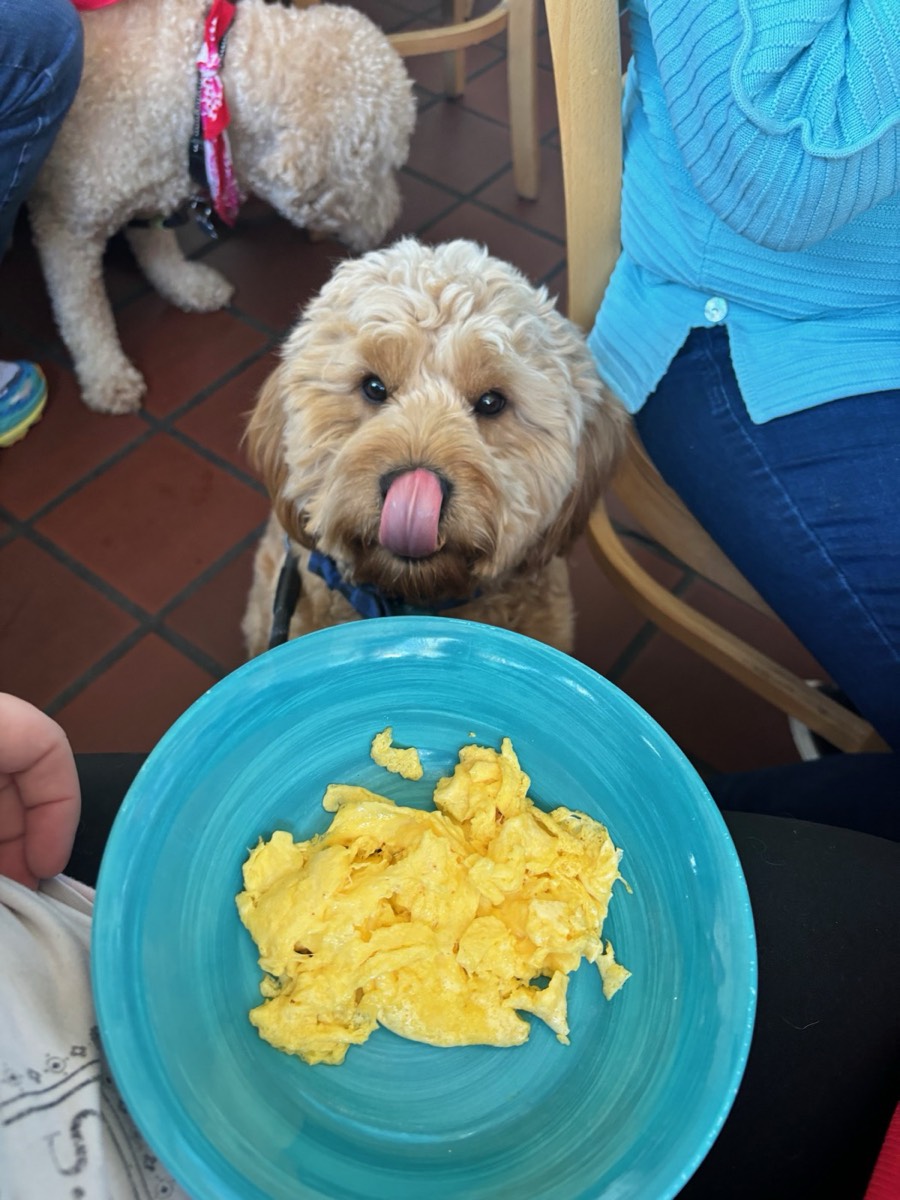
Plenty of human food is actually fine for dogs, as long as it's plain. Cooked chicken with no skin, bones, or seasoning is a safe, easy protein. Plain scrambled eggs, cooked all the way through with nothing added, are a fine occasional topper, and most dogs will stage a full campaign to get some. Plain pumpkin puree, not the spiced pie filling, carrots, green beans, and blueberries are all fine in reasonable amounts and double as low-calorie training treats. Plain white rice is a common stomach-settler during a bout of GI upset, though it's a short-term fix rather than a regular meal addition. The word doing all the work in every one of these is plain. Butter, salt, garlic powder, onion powder, and sauce turn a safe food into a risky one, and a lot of leftovers that look harmless are seasoned in ways that quietly cross the line.
Why Moderation Matters More Than the List Does
The list of what's safe matters less than people think, because most people-food problems aren't poisoning, they're volume and fat. A few bites of fatty table scraps, bacon, gravy, fried anything, can trigger pancreatitis in a dog who has never had an issue before, and it doesn't take much. Regular table scraps also add up calorically faster than they look like they would, since a few bites of human food can be the caloric equivalent of an entire extra meal for a dog that size. And every successful round of begging teaches a dog that begging works, which has nothing to do with toxicity and everything to do with who's actually training whom at the dinner table.
What to Do If He Eats Something He Shouldn't
If your dog eats something on the dangerous list, don't wait to see if symptoms show up before acting. Call your vet or an emergency animal poison control line immediately and describe exactly what and how much he ate, since the amount changes the urgency. Keep the packaging if you have it, since the ingredient list helps a vet assess risk faster than guessing does. Don't induce vomiting unless you're told to, since doing it wrong, or for the wrong substance, can cause more harm than the original food did. None of this needs to turn into a full-blown panic every time he steals a carrot off the counter, but it's worth having the number saved before you need it instead of googling it mid-emergency.
Most people food isn't a poison, it's a portion problem, and the actual danger list is shorter and more specific than the internet makes it sound. Learn the handful of foods that are genuinely off-limits, keep everything else plain and occasional, and save the emergency number before you need it instead of during.
Frequently Asked Questions
Can dogs eat scrambled eggs?
Yes, as long as they're cooked plain with nothing added. Butter, salt, or cheese mixed in turns a fine occasional treat into unnecessary fat and sodium, so keep it simple if you're sharing.
Can dogs eat peanut butter?
Most peanut butter is fine in small amounts, but always check the label first. Some brands, especially ones marketed as sugar-free or low-calorie, use xylitol as a sweetener, and xylitol is dangerous for dogs even in small amounts.
What foods are most dangerous for dogs?
Chocolate, grapes and raisins, onions and garlic in any form, xylitol, macadamia nuts, alcohol, and raw bread dough are the foods that pose a real danger, often in smaller amounts than people expect.
Is a little bit of people food actually that bad?
Not always, but it adds up faster than it looks like it would. A few bites of fatty or rich food can trigger digestive upset or worse, and regular sharing can turn into a dog who expects it at every meal, which is its own problem to manage.

FREE GOLDENDOODLE GUIDE
Get the Goldendoodle Survival Guide
Everything I wish I'd known before getting Arie. Beach gear, grooming reality, the 7pm witching hour, and more. Free PDF.
No spam. Ever. Unsubscribe anytime.
Have questions? Find us on TikTok @ariepup!
← Back to the Blog