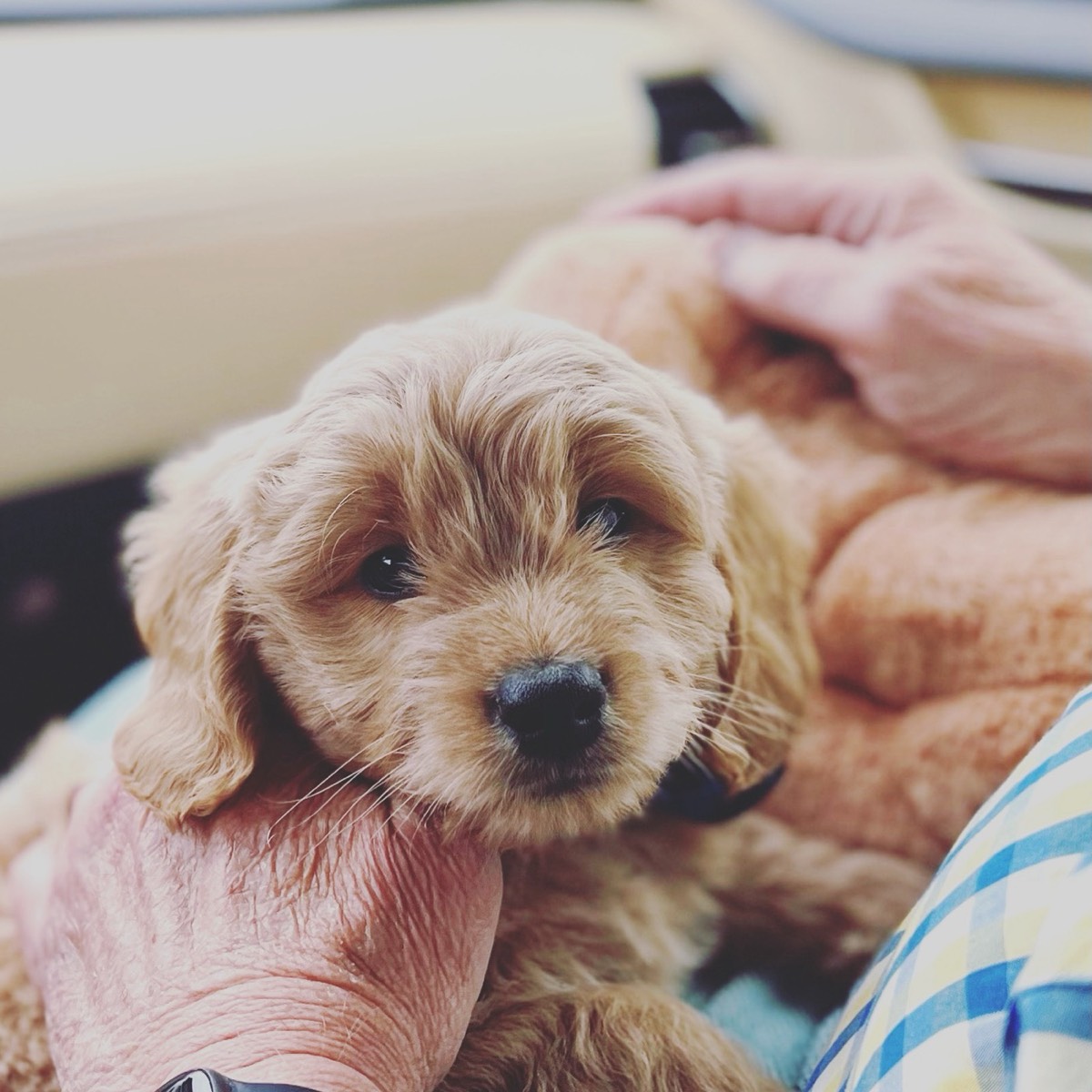
Feeding a Goldendoodle sounds simple until you're standing in the pet food aisle having an existential crisis while a store employee pretends not to notice. Arie is almost four years old and I have spent a disproportionate amount of my emotional energy figuring out what to put in his bowl. Here's what I've actually learned — not the Pinterest version, the real version.
Jump to a section
The Goldendoodle Metabolism Is Not a Joke
Goldendoodles are a hybrid of two intelligent, active breeds — Golden Retrievers and Poodles — both of which have historically been working dogs. Even if your Goldendoodle's most demanding job is monitoring the birds through the living room window, that genetic history means a metabolism that burns through food quickly and a digestive system that is, let's say, opinionated about what goes into it.
What this means practically: Goldendoodles generally need more protein than the average dog their size, consistent feeding times (their stomachs are remarkably punctual), and fat levels that support their coat without causing weight gain. The coat especially is a direct indicator of nutritional quality. When Arie's diet is off, his fur tells you first.
How Much to Feed a Goldendoodle
This varies a lot depending on size. Goldendoodles come in mini (15–35 lbs), medium (35–50 lbs), and standard (50–90 lbs) sizes. Arie is a standard at about 58 pounds, so I'll use him as the reference point throughout. How much a puppy eats shifts dramatically across the first year — if you're still in early stages, the feeding section of our Goldendoodle first-year guide covers the puppy-to-adult transition in detail.
For a standard Goldendoodle at a healthy weight with moderate activity, you're generally looking at 3 to 4 cups of quality dry food per day, split into two meals. The exact amount depends heavily on the specific food's caloric density — a high-quality food with 450+ kcal/cup will feed differently than a bargain brand with fillers.
Start with the manufacturer's recommendation based on your dog's weight, then adjust based on body condition score (you should be able to feel the ribs but not see them). Don't trust the packaging blindly — most recommend slightly more than needed.
Always split daily food into at least two meals. One large meal increases the risk of bloat, which is a serious condition in larger dogs.
What to Look for in Goldendoodle Food
Protein Source First
The first ingredient should be a named animal protein — chicken, beef, salmon, lamb. "Meat meal" is actually more protein-dense than whole meat due to water content, but the protein source should still be the first ingredient. Avoid foods where the primary ingredient is a grain or corn.
Fat Content for Coat Health
Goldendoodles' signature fluffy coats need dietary fat to stay healthy. Look for foods with at least 12–15% fat, ideally from named animal sources like chicken fat or salmon oil. Omega-3 and Omega-6 fatty acids are your friends here. When Arie's coat started looking dull and less fluffy, adding a fish oil supplement fixed it within three weeks.
Digestible Carbs, Not Cheap Fillers
Some carbs are fine — dogs need them for energy. Sweet potato, brown rice, oatmeal, and peas are all reasonable. Corn syrup, artificial colors, and "meat by-products" (unnamed source) are things I avoid. The ingredient list should read like food, not a chemistry experiment.
Treats: The Part Where Things Get Out of Hand
I will be honest with you: treats are where I have the least self-control, and Arie knows it. He has worked out exactly which look produces a treat and he deploys it strategically. This is something I wish someone had warned me about in the first 30 days — the treat manipulation starts early and only gets more sophisticated. Here is what I've landed on after a lot of trial and error.
Training treats should be small — like pea-sized — because Goldendoodles are food motivated and will train for tiny pieces just as happily as large ones. Calorie creep from training is real. Arie once gained a noticeable amount of weight in a month of intensive training because I was using full-sized treats. Lesson learned.
For longer-lasting chews, bully sticks and Himalayan chews are Arie's preferred options. They keep him occupied, support dental health, and don't have the ingredient question marks that some cheaper chews do. Greenies dental chews are a permanent fixture in our routine — his teeth are notably cleaner than they'd otherwise be.
Arie's Favorites
Zuke's Mini Naturals Training Treats — the training treat that started it all
Shop treats on Faves →Feeding Schedule That Works
Arie eats at 7am and 5:30pm, every single day. Goldendoodles are creatures of digestive routine — inconsistent meal times lead to hunger-induced chaos, begging, and what I can only describe as performative starvation. They are extremely good at pretending they have never been fed in their entire lives. (If you've ever watched a Goldendoodle clock in at 7pm with full zoomies energy right after dinner, that's a whole separate phenomenon I've written about.)
We do not free-feed (leaving food out all day). It makes portion control impossible and removes one of your best training tools — meal time is naturally a high-value moment for training and bonding.
Foods That Are Actually Dangerous
The classics everyone knows: no grapes or raisins (can cause kidney failure), no xylitol (extremely toxic, found in many sugar-free products), no chocolate, no onions or garlic. But a few less-obvious ones: macadamia nuts are toxic to dogs; avocado in large quantities can cause vomiting and diarrhea; cooked bones (especially chicken) can splinter and cause serious internal damage.
Arie once ate a grape off the floor before I could stop him. One grape. I called poison control immediately. He was fine, but the vet confirmed it was the right call — kidney damage from grapes can be dose-dependent and sometimes happens from very small amounts. Don't wait to see if symptoms develop.
The "Fancy Food vs. Regular Food" Question
I've tried premium fresh food (Farmer's Dog, Ollie), mid-tier kibble, and standard supermarket food. My honest take: the premium fresh foods are genuinely better — coat, energy, digestion all improve — but the cost is significant. For a 58-pound dog, fresh food runs $80-120/month versus $30-50 for good quality kibble.
What I do now: a high-quality kibble as the base, supplemented with occasional fresh cooked food and a fish oil capsule cracked over his bowl daily. It's not as premium as full fresh food, but it's dramatically better than pure kibble and much more sustainable budget-wise.
Frequently Asked Questions
How much should I feed my Goldendoodle per day?
For a standard Goldendoodle (50–65 lbs), generally 3–4 cups of quality dry food per day, split into two meals. Adjust based on your specific food's caloric density and your dog's body condition. If you can feel the ribs but not see them, you're in the right zone.
What's the best food for a Goldendoodle's coat?
Foods high in Omega-3 and Omega-6 fatty acids make the biggest difference for coat quality. Look for named animal fats like chicken fat or salmon oil in the ingredients. A daily fish oil supplement is also very effective and inexpensive.
Can Goldendoodles eat grain-free food?
Grain-free food is fine for most Goldendoodles, but there has been FDA investigation into a potential link between grain-free diets and dilated cardiomyopathy (a heart condition). It's not conclusive, but many vets now recommend including grains like brown rice or oatmeal in the diet. Consult your vet.
How often should I feed my Goldendoodle?
Twice a day, ideally at consistent times, is the standard recommendation for adult Goldendoodles. Puppies (under 6 months) typically need 3–4 smaller meals per day. Consistent timing supports digestion and keeps blood sugar stable.
Are treats making my Goldendoodle gain weight?
Probably. Treats are the most common hidden source of calorie overload. Use very small training treats (pea-sized or smaller), count them as part of daily calorie intake, and consider using part of your dog's regular kibble as training rewards. Greenies and dental chews count toward daily calories too.
What human foods are safe for Goldendoodles?
Safe options include plain cooked chicken, cooked sweet potato, plain rice, carrots, apples (without seeds), and blueberries. Avoid grapes, raisins, onions, garlic, xylitol (in sugar-free products), macadamia nuts, avocado in large quantities, and chocolate. When in doubt, check before feeding.
FREE GOLDENDOODLE GUIDE
Get the Goldendoodle Survival Guide
Everything I wish I'd known before getting Arie — beach gear, grooming reality, the 7pm witching hour, and more. Free PDF.
No spam. Ever. Unsubscribe anytime.
Have questions? Find us on TikTok @ariepup!
← Back to the Blog