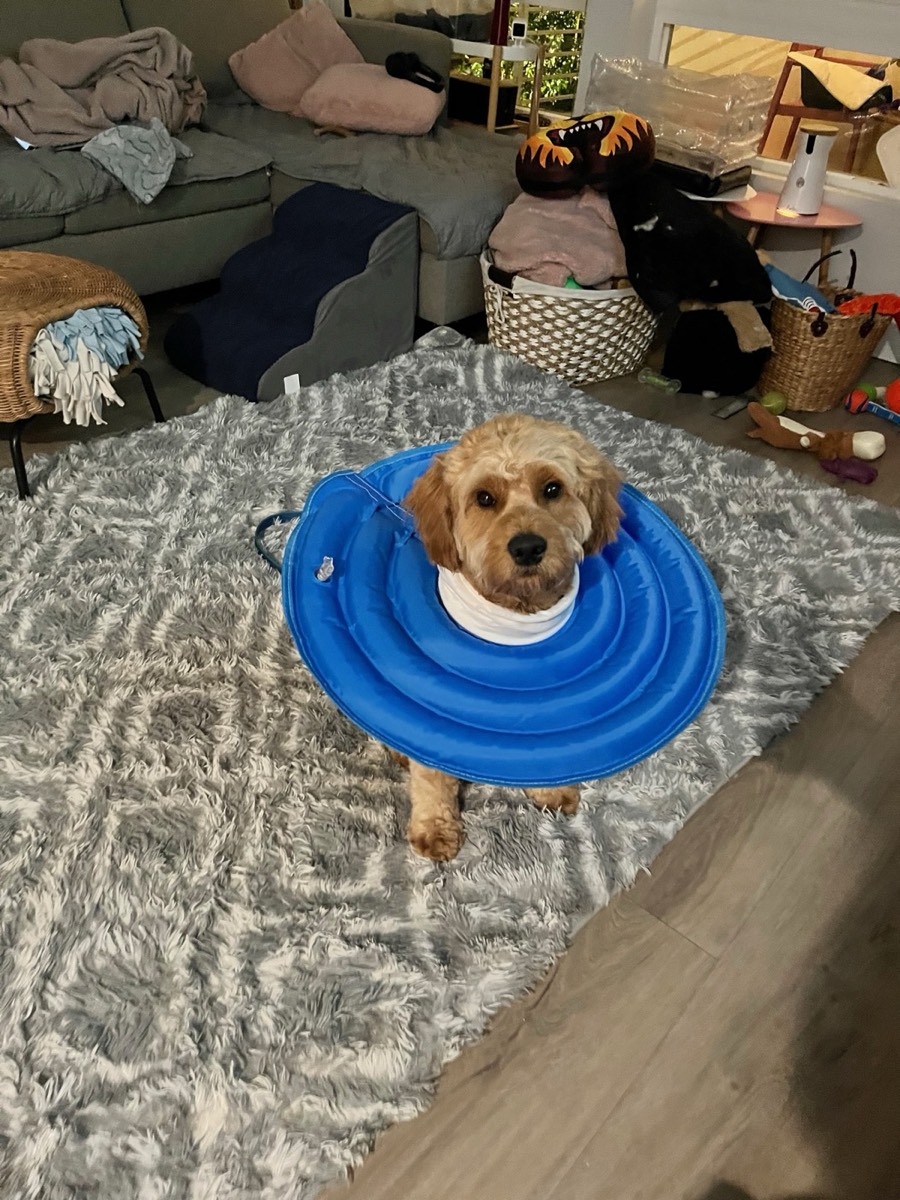
Every dog owner eventually has a moment where something minor happens at the worst possible time, usually a weekend, usually at night, and the vet's office is closed until Monday. A decent first aid kit doesn't make you a vet. It makes you the person who can handle the next twenty minutes calmly instead of frantically googling while your dog bleeds on the kitchen floor.
Jump to a section
What a Decent Kit Actually Needs
Start with the boring stuff, because the boring stuff is what gets used. Gauze pads and self-adhesive vet wrap for cuts and scrapes, blunt-tip scissors, tweezers for splinters and ticks, a digital thermometer, saline solution for flushing a wound or an eye, and antiseptic wipes. Styptic powder deserves its own mention, since a torn nail bleeds more dramatically than almost anything else a dog does to itself, and most owners discover this for the first time with no idea what to reach for.
Add a muzzle or a soft wrap, even for the friendliest dog you know. A dog in pain can bite without meaning to, and a way to keep yourself safe while helping is not pessimism, it's just the job. Write your vet's number and the nearest emergency animal hospital's number on a card taped inside the kit. Phones die and panic makes people forget passwords.
Beach, Trail, and Park Add-Ons
A kit that lives in the car or the backpack needs a few extras depending on where you're going. A tick removal tool matters more on trails. A dog who swims needs an eye rinse on hand, since sand and salt water find their way into eyes constantly and a dog cannot tell you it stings. Paw balm covers hot pavement in summer and rough trail terrain the rest of the year, and it's worth checking paws after every outing, since a thorn or a burn can go unnoticed until a dog is suddenly limping for no obvious reason.
Dog parks bring their own low-grade chaos, mostly minor scrapes and the occasional scuffle that ends with a small puncture wound that looks worse than it is. Clean it, cover it, and watch it over the next day for swelling or heat, which are the real signs something needs an actual vet rather than a bandage.
A patch of skin that turns red, raw, and damp almost overnight is usually something different: a hot spot, not an injury, and it needs a different response than anything in the kit covers.
Check the kit every few months. Saline evaporates, adhesive dries out, and the one time you actually need styptic powder is not the time to discover it turned into a brick.
What a Kit Can't Fix
This matters more than any item on the list. Heavy or spurting bleeding, a suspected broken bone, labored breathing, a swollen or hard belly, repeated vomiting, or any chance of poisoning all skip the kit entirely and go straight to the vet. A first aid kit buys stability and time on the way there. It is not a substitute for actual veterinary care.
Know the early signs of heatstroke too, since Southern California makes that a risk most of the year, not just a summer problem. Heavy panting that won't slow, bright red gums, and a dog who seems unsteady or glassy-eyed need immediate cooling and a vet call, not a wait-and-see approach.
Building One Without Overbuying
You don't need a pharmacy. A small zippered pouch with the core items covers most of what actually happens to dogs day to day, and a prebuilt kit from a pet brand saves the trouble of assembling one piece by piece. Building your own? A roll of self-adhesive vet wrap and a bottle of styptic powder cover the two things most owners run out of first.
Keep one in the car and a smaller version in whatever bag goes on hikes or beach days. Neither needs to be elaborate. It just needs to be there when the ordinary chaos of owning a dog produces its inevitable scraped paw or torn nail, which it eventually will, usually without warning and always at an inconvenient hour.
Frequently Asked Questions
What should be in a basic dog first aid kit?
Gauze pads, self-adhesive vet wrap, blunt-tip scissors, tweezers, a digital thermometer, saline solution, styptic powder, antiseptic wipes, a muzzle or soft leash for restraint, and your vet's phone number written down, not just saved in a phone that could die at the wrong time.
Can I use human first aid supplies on a dog?
Some basics like gauze and saline cross over fine, but a lot of human medication is actively dangerous for dogs, including common pain relievers. Never give a dog any medication, human or otherwise, without checking with a vet first.
How do I stop a dog's nail from bleeding?
Apply styptic powder directly to the nail and hold firm pressure for about thirty seconds. Cornstarch works in a pinch if you are caught without styptic powder. If the bleeding does not slow after a couple of attempts, call your vet.
When should a dog injury skip the first aid kit and go straight to the vet?
Anything involving heavy or spurting bleeding, suspected broken bones, difficulty breathing, a swollen abdomen, repeated vomiting, or any possible poisoning needs a vet immediately. A first aid kit buys you time and stability on the way there, it does not replace the trip.
Do I need a different kit for hiking versus the car?
The core supplies are the same, but a hiking kit should be smaller and lighter since you are carrying it, while a car kit can hold more volume and a few extras like an extra leash and a blanket. Most owners end up keeping one of each.


FREE GOLDENDOODLE GUIDE
Get the Goldendoodle Survival Guide
Everything I wish I'd known before getting Arie. Beach gear, grooming reality, the 7pm witching hour, and more. Free PDF.
No spam. Ever. Unsubscribe anytime.
Have questions? Find us on TikTok @ariepup!
← Back to the Blog