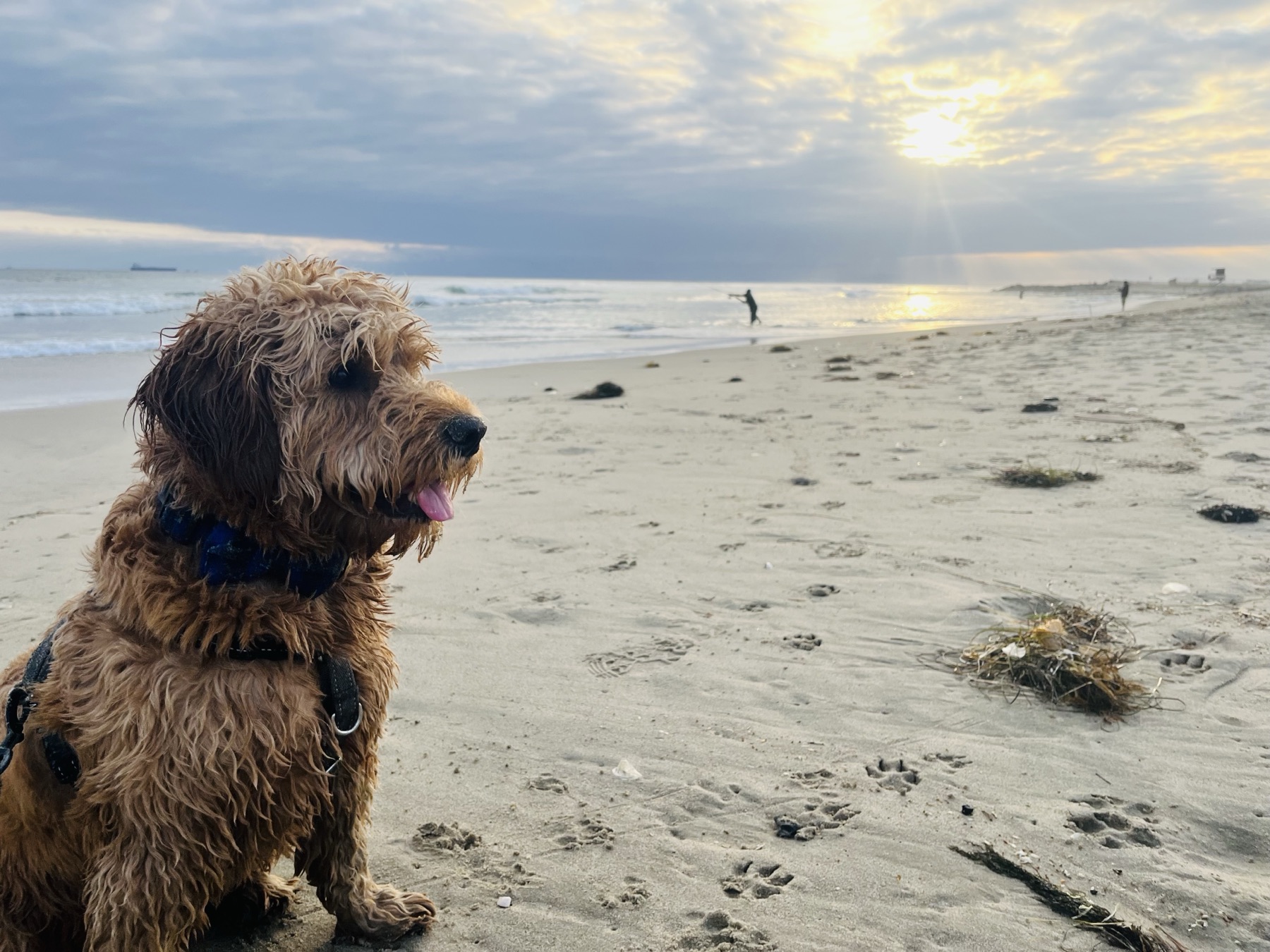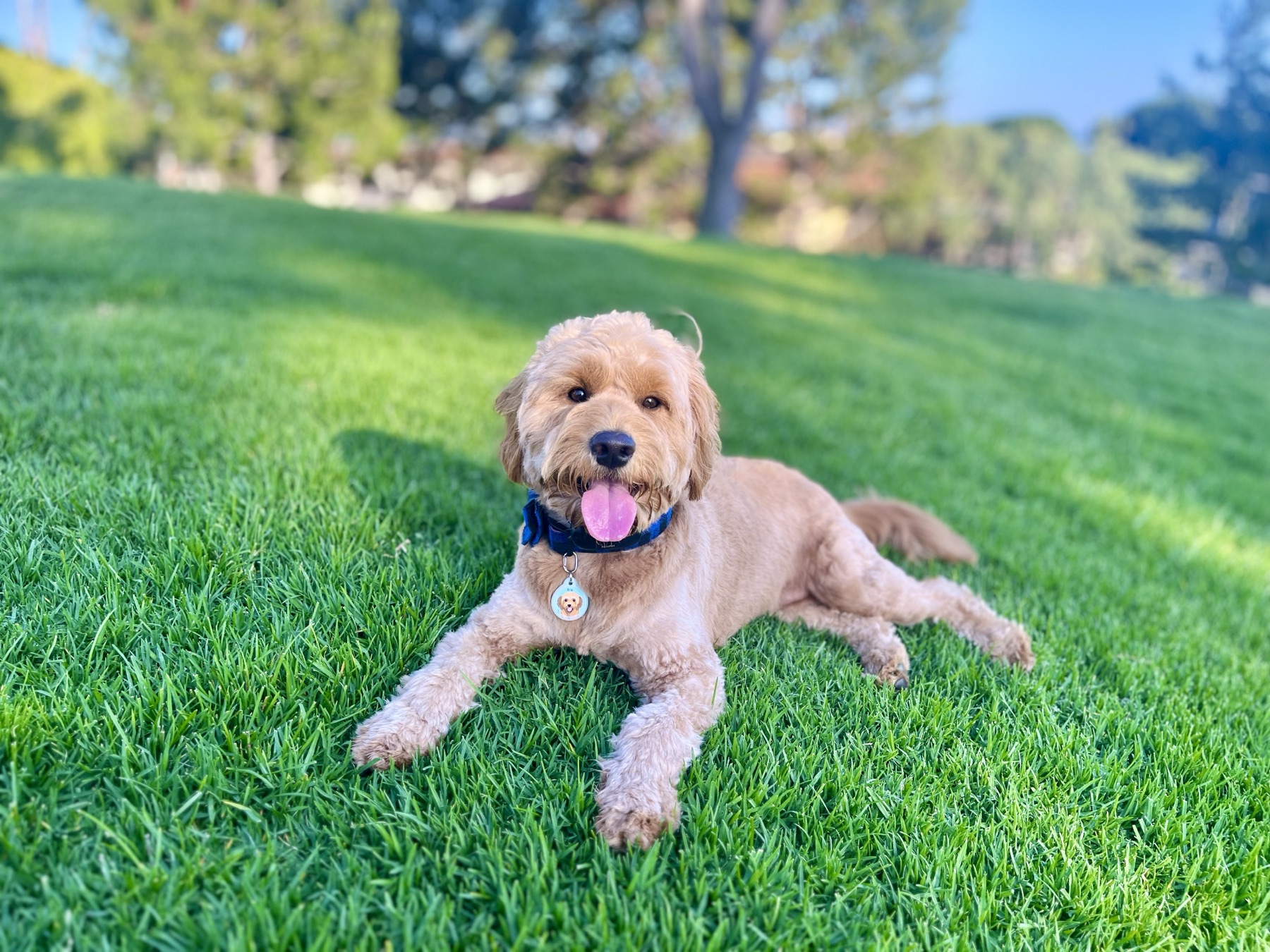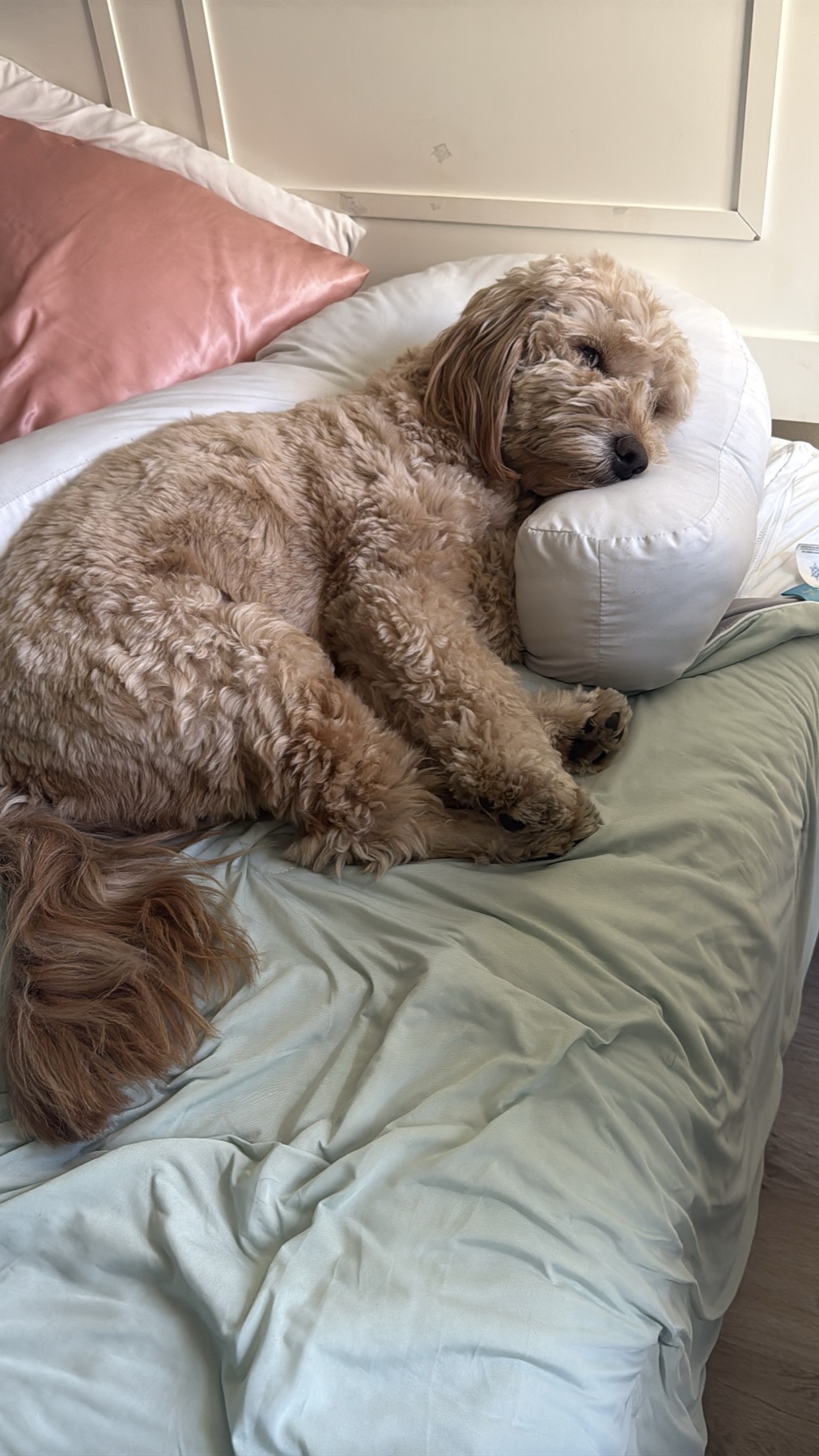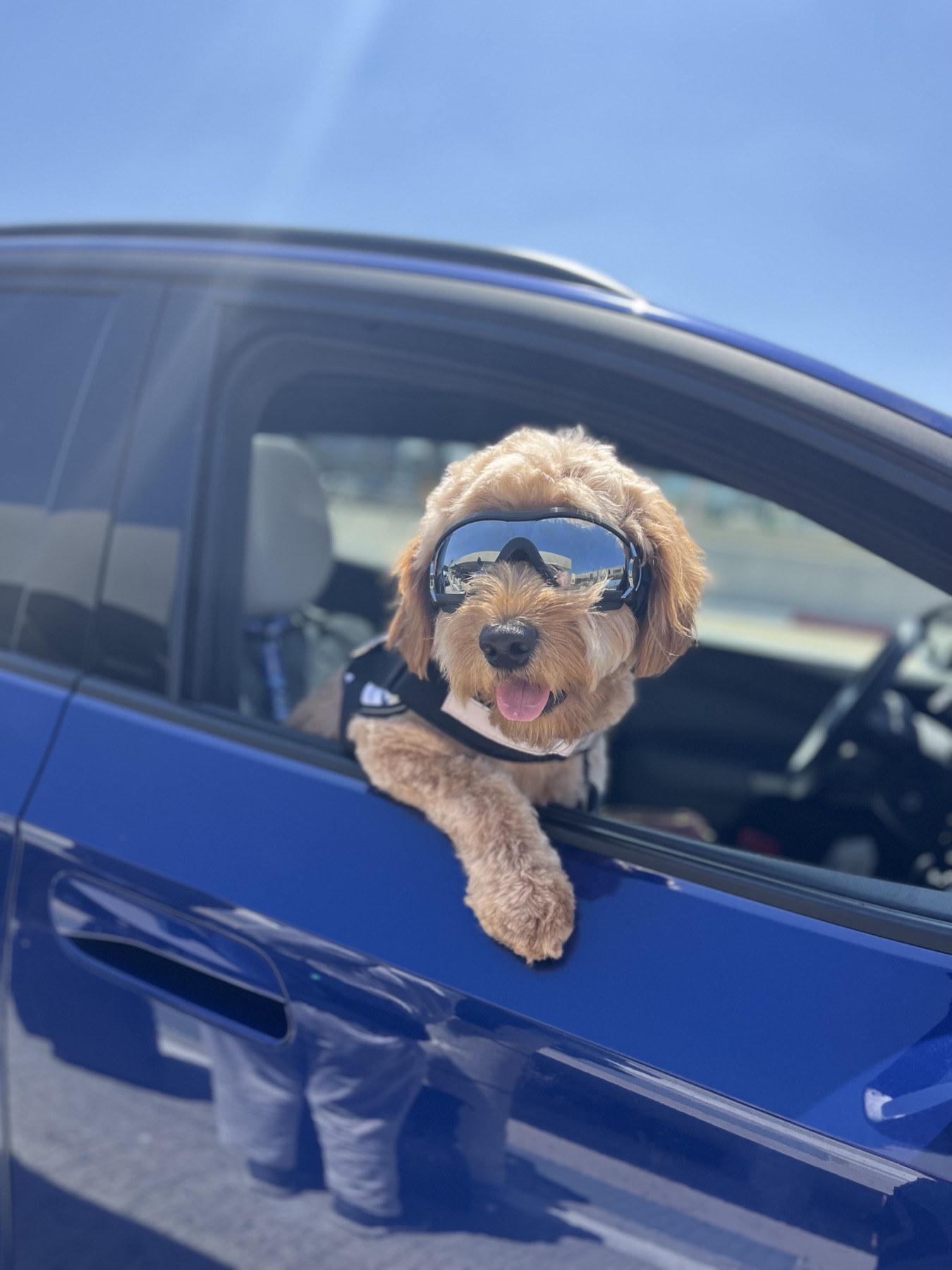
Arie believes he is a co-pilot. Legally, he is not. Physically, he tries very hard. This is everything I have figured out about traveling by car with a large, enthusiastic, sand-covered Goldendoodle who considers himself essential to the driving process.
Jump to a section
THE SEAT SITUATION
A 60-pound Goldendoodle in a car without a seat cover is a decision you will regret the first time it rains and you drive him home from the beach. Sand in the seat stitching. Wet dog smell baked into the upholstery. Fur in every crevice. I learned this the hard way with my previous car. (And if beach trips are where most of your car mileage goes, the dog beach packing guide pairs well with this one — the gear that saves the car on the way there is just as important as what saves it on the way home.)
The 4Knines back seat cover with hammock is what we use now. It is waterproof, stays in place, and the hammock design means Arie cannot fall off the seat when I brake. It is not cheap — around $75 — but it is built to last and I have not regretted it once.
4Knines Dog Seat Cover → Waterproof, hammock design, fits most vehicles. The one we actually use. Get it on Amazon
SAFETY TETHER — NOT OPTIONAL
An unsecured dog in a car is a danger to everyone — the dog included. In a sudden stop, a 60-pound dog becomes a 60-pound projectile. This is not a scare tactic, it is physics.
We use a Kurgo seat belt tether that clips to Arie's harness on one end and into the seat belt buckle on the other. He still has enough room to lie down and shift positions, but he cannot launch himself into the front seat when he spots a bird.
Kurgo Dog Seat Belt Tether → Crash-tested, easy to use, compatible with most harnesses. Get it on Amazon
MOTION SICKNESS
Arie went through a phase as a puppy where he got carsick on anything longer than 20 minutes. A lot of puppies do. The fix was mostly just exposure — lots of short, positive trips before the long ones — and making sure he did not eat within a couple of hours before driving.
If your dog is still struggling with motion sickness, talk to your vet. There are medications that work well. In the meantime:
- Keep trips short and reward heavily at the end
- Try to keep the car cool — warm car = worse nausea
- Crack windows a little for airflow
- No food for 2–3 hours before a longer drive
- Face them forward if possible — some dogs do better not seeing movement through side windows
Calming chews for anxious car rides: If your dog is anxious rather than nauseous, calming chews can help. We tried a few. Kradle Calming Chews worked well for Arie for vet-day car rides.
Car Setup Essentials
4Knines Dog Seat Cover — hammock style, waterproof, survived years of Arie
See travel gear on Faves →THE CAR ANXIETY THING
Some dogs love the car. Some dogs tolerate it. Some dogs are convinced every car ride ends at the vet and treat it accordingly. If your dog has car anxiety, the solution is always the same: desensitization, starting with just sitting in the parked car with the engine off, then short drives to fun places. For dogs where the anxiety goes deeper than just car nervousness, our post on Goldendoodle separation anxiety covers the broader pattern — car anxiety and separation anxiety often share the same root and respond to the same techniques.
Do not start your dog's car exposure with a three-hour road trip. Start with a five-minute drive to the park. Build up from there.
LONG ROAD TRIPS: WHAT WORKS
Stop every 2 hours
Dogs need bathroom breaks and leg stretches just like you do. Plan your stops at rest areas with grass, not just gas stations. Bring a leash you can clip fast without fumbling — a car door stop is not a fun situation.
Pack the car strategically
- Water bottle and collapsible bowl within arm's reach
- Poop bags clipped to the leash or bag
- A familiar blanket or bed scent for the back seat
- Towel for any unexpected mess or wet dog situation
- Familiar toys — a bully stick or chew can keep a dog occupied for 30–45 minutes on a drive
Where to sleep on the road
Finding dog-friendly hotels has gotten easier. Marriott Bonvoy properties are generally pet-friendly (fees vary). Kimpton hotels are excellent — no weight limit, no pet fee at most locations. Always call ahead and confirm, because online info is not always current.
WHAT ARIE THINKS ABOUT CAR TRIPS
Arie is fully convinced that every car trip ends somewhere great. The beach. The park. A friend's house. He is almost always right, which I think is intentional on my part. I try to make sure the car is always associated with something good, not just vet trips. It has made him an enthusiastic and terrible co-pilot, which is exactly what you want. If you're looking for destinations worth the drive, the best dog-friendly hiking trails in Orange County are the kind of payoff that makes even an anxious dog start to associate car trips with something good.
Frequently Asked Questions
Can Goldendoodles get car sick?
Yes — motion sickness is not uncommon in dogs, especially puppies. Signs include drooling, yawning, whining, and lethargy in the car. Most dogs grow out of it as they mature and develop more positive car associations. Short, frequent car trips that end at fun places help desensitize puppies. Your vet can also prescribe anti-nausea medication for severe cases.
Should my Goldendoodle be restrained in the car?
Yes. An unrestrained dog in a car accident becomes a projectile and is also a distraction while driving. Options include a crash-tested harness and seat belt tether, a properly sized crate secured to the car, or a dog barrier. The Kurgo seat belt tether is what we use — it's been safety-tested and gives Arie freedom to sit or lie down.
What seat cover is best for a Goldendoodle?
A hammock-style seat cover that attaches to both the front and back headrests and covers the entire back seat is the gold standard for large dogs. 4Knines makes a heavy-duty version that has survived multiple years of Arie's beach trips. It's waterproof, easy to remove and wash, and prevents the dog from falling into the footwell during turns.
How do I help my dog with car anxiety?
Gradual desensitization works best: start with the dog sitting in the parked car with good things (treats, praise), then short trips that end at good places, then gradually longer trips. A calming supplement like Zesty Paws Calming Bites before longer trips can take the edge off. Never put an anxious dog in the car only for vet visits — they'll associate the car with stress.
How often should I stop on a road trip with my dog?
Every 2 hours is the standard recommendation for breaks that allow the dog to stretch, drink water, and eliminate. Longer stops of 10–15 minutes are better than quick 2-minute leg stretches. In hot weather, more frequent stops are essential because car interiors heat rapidly — never leave a dog in a parked car even for a few minutes in warm weather.
Can Goldendoodles travel in the car long distances?
Yes, with proper preparation. The keys: a comfortable and secure space, regular stops, fresh water available, a familiar item (blanket, toy) that smells like home, and managing the temperature carefully. Arie has done multi-hour drives regularly and treats them as extended nap opportunities once he's settled in.