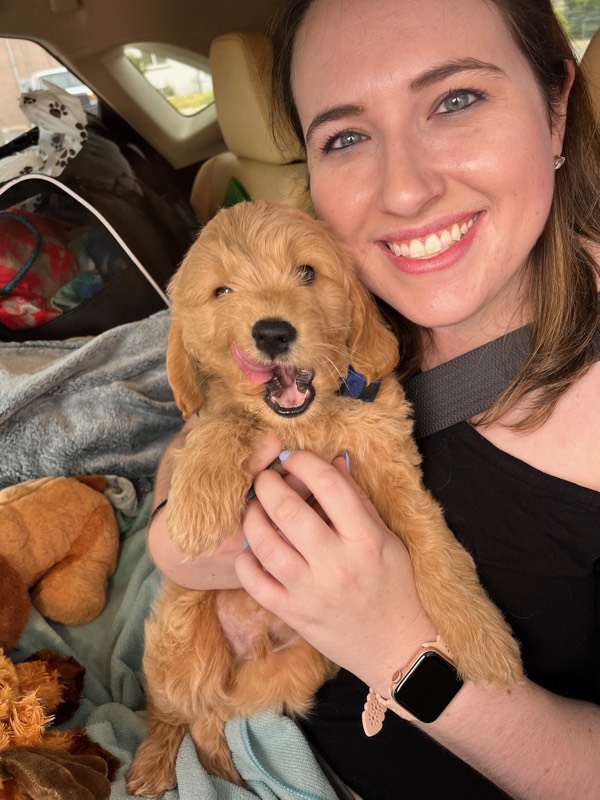
Goldendoodles have a reputation for being friendly, easygoing dogs. That reputation is earned, mostly, but it comes with a caveat: the breed disposition is a starting point, not a guarantee. An under-socialized Goldendoodle can absolutely grow into a reactive, anxious, or fear-based dog despite the genetics. The difference between a dog who handles the world gracefully and one who loses it at the vet, the groomer, or any person wearing a hat is almost entirely socialization. And that socialization has a hard deadline nobody tells you about until after you've missed part of it.
Jump to a section
The Socialization Window: What It Is and Why It Matters
Puppies have a developmental period, roughly 3 to 14 weeks of age, during which their brains are wired to absorb new experiences with minimal fear. Things encountered in this window get filed as "normal." Things not encountered in this window are treated with suspicion later, and changing that takes real work.
You bring your puppy home at 8 weeks, which means you have approximately six weeks of prime socialization time. Six weeks. That's it. Most new puppy owners spend those six weeks focused on potty training and not losing their minds, which is understandable, but socialization has to run in parallel.
After 14 weeks, the window doesn't slam shut entirely, but the brain shifts into a more cautious mode. New experiences can still be processed positively, but it takes more repetitions, more treats, more patience, and the results tend to be less durable. Everything is still possible, it just requires more effort.
One popular trainer framework: before 12 weeks, expose your puppy to at least 100 different people, 100 different sounds, and 100 different environments. It sounds excessive until you realize it breaks down to about 5 new things per day, which is totally achievable with intention.
What to Actually Expose Your Puppy To
The list of things to socialize a puppy to is longer than most people expect. People are the obvious one, but the category goes deeper than "meet humans." Your puppy needs to meet tall people, short people, people with hats, people with beards, people with helmets, people in uniforms, children, babies, elderly people, and people using wheelchairs or mobility aids. Any human presentation they don't encounter early can trigger a fear response later.
Beyond people, the categories are: other animals (dogs of different sizes, ideally well-socialized adult dogs), surfaces (grass, gravel, sand, metal grates, hardwood, tile), sounds (traffic, thunder recordings, fireworks, vacuum cleaners, dishwashers, hairdryers), handling (ears, paws, mouth, tail, being lifted and restrained), and environments (cars, vet offices, pet stores, hardware stores, outdoor patios, parking lots).
The groomer specifically deserves its own slot. Start handling your puppy's paws and ears daily from day one. Reward calm behavior with treats every time. Run a blow dryer at low intensity nearby while feeding meals. A puppy who has been handled this way is a completely different grooming client than one who hasn't. The behavior surcharge at the groomer is a direct result of skipped handling socialization. For the full picture of what grooming will actually cost you, the Goldendoodle grooming cost breakdown is worth a read before your first appointment.
Training Tool
High-value treats make socialization clicks faster. What Arie responds to best:
See Arie's treat picks on Faves →Can You Socialize Before Vaccines Are Done?
This is the question that paralyzes a lot of new puppy owners, because vets historically told people to keep puppies home until vaccines were complete. The problem is that waiting until full vaccination (typically 16 weeks) means the socialization window is already mostly closed.
The American Veterinary Society of Animal Behavior updated their position on this: behavioral problems from under-socialization are a greater health risk than the disease risk from controlled, low-exposure socialization before vaccines are complete. The key word is controlled. Puppy classes that require proof of first vaccines are considered safe. Carrying your puppy in a high-traffic environment so they can observe without ground contact is safe. What's not safe: dog parks, pet store floors, or contact with unknown dogs of unknown vaccination status. The risk calculation has a right answer and it isn't "stay home until 16 weeks."
Puppy kindergarten classes, run by a qualified trainer, are one of the most efficient socialization tools available. Your puppy gets supervised interaction with other puppies, exposure to strangers, and the beginning of a training foundation in one session. If you haven't found a trainer yet, the how to find a good dog trainer guide walks through what to look for and what to avoid.
The Mistakes That Set You Back
Flooding is the biggest one. Flooding means dropping your puppy into an overwhelming situation and expecting them to "get used to it." Taking an 8-week-old puppy to a crowded farmers market and letting strangers rush up to pet them is flooding. It can produce the opposite of socialization: a puppy who forms a strong fear association with crowds, strangers, or being touched.
Socialization should feel like controlled exploration, not exposure therapy. The puppy should be able to observe from a distance before getting close. They should be able to move away if something scares them. You should be watching their body language and intervening before they get to the panic point. A puppy who gets to investigate something scary on their own terms and then gets a treat is building confidence. A puppy who is held in place while terrified is building a phobia.
The other common mistake is relying entirely on your own household. If your puppy only ever meets the same four people, sleeps in the same quiet house, and walks the same empty street, the socialization window still closes at 14 weeks, it's just empty. Expose them to novelty on purpose. A snuffle mat works well for building comfort with new textures and smells indoors on low-energy days when you can't get out, and it doubles as mental enrichment that actually tires them out.
Calm Between Sessions
After a big socialization outing, puppies crash hard. What helps Arie decompress:
See calm picks on Faves →What to Do If You Missed the Window
First, the honest answer: you can't fully replicate what the socialization window does. If you have a 6-month-old dog who is already reactive to strangers or afraid of loud sounds, returning to baseline takes longer and doesn't always go all the way. That's just reality.
The practical answer: it's still worth doing the work. Counter-conditioning and desensitization, done correctly, can make a meaningful difference in a dog's quality of life and manageability. Find a trainer who works specifically with fear and reactivity. Avoid trainers who use punishment or flooding as the approach to fearful dogs. A fearful dog who gets punished for showing fear doesn't stop being fearful, they stop showing you the signs. That's worse.
If the anxiety runs deep, ask your vet about whether behavioral medication is appropriate. This isn't a character flaw or a sign that you failed. Some dogs have a genetic predisposition toward anxiety that socialization alone couldn't have fully addressed. Medication plus behavior work is often more effective than either alone. For the "is this a vet visit?" question in the meantime, we've used Dutch telehealth to talk to a vet about behavioral stuff without the wait and expense of a full in-office appointment. Worth knowing about.
Frequently Asked Questions
When is the socialization window for puppies?
The primary socialization window runs from about 3 to 14 weeks of age. During this period, a puppy's brain is actively forming associations with the world. Experiences before 14 weeks register as "normal." After 14 weeks, the window isn't shut completely, but new exposures require more work and produce weaker results.
Can you socialize a puppy before vaccinations are complete?
Yes, carefully. The American Veterinary Society of Animal Behavior states that the risk of behavioral problems from under-socialization outweighs the disease risk of controlled, low-exposure socialization. Puppy classes that require proof of first vaccines are generally considered safe. Avoid dog parks and unknown-dog contact until the full vaccine series is complete.
What happens if you don't socialize a Goldendoodle puppy?
An under-socialized Goldendoodle is more likely to develop fear-based reactivity, separation anxiety, and difficulty handling novel situations like vet visits, grooming, or travel. These patterns are harder to change after the window closes, though not impossible with a skilled trainer.
How long does puppy socialization take?
Formal socialization is most effective in the 8-14 week window after you bring your puppy home, but it's an ongoing practice. Short, frequent exposures work better than infrequent long ones. Aim for 2-3 new experiences or environments per week through the first six months.
Is a Goldendoodle naturally friendly and easy to socialize?
Goldendoodles are bred from two people-oriented breeds and tend toward friendliness, but genetics give you the starting point, not the finish line. An under-socialized Goldendoodle can still develop fear and reactivity. The breed disposition makes socialization easier, not optional.
Dutch Vet — Telehealth for $11/month
Licensed vets on your phone in hours, not days. We use it for the minor-but-not-nothing stuff, including behavioral questions. It's paid for itself in skipped co-pays more than once.
Try Dutch for $11/month →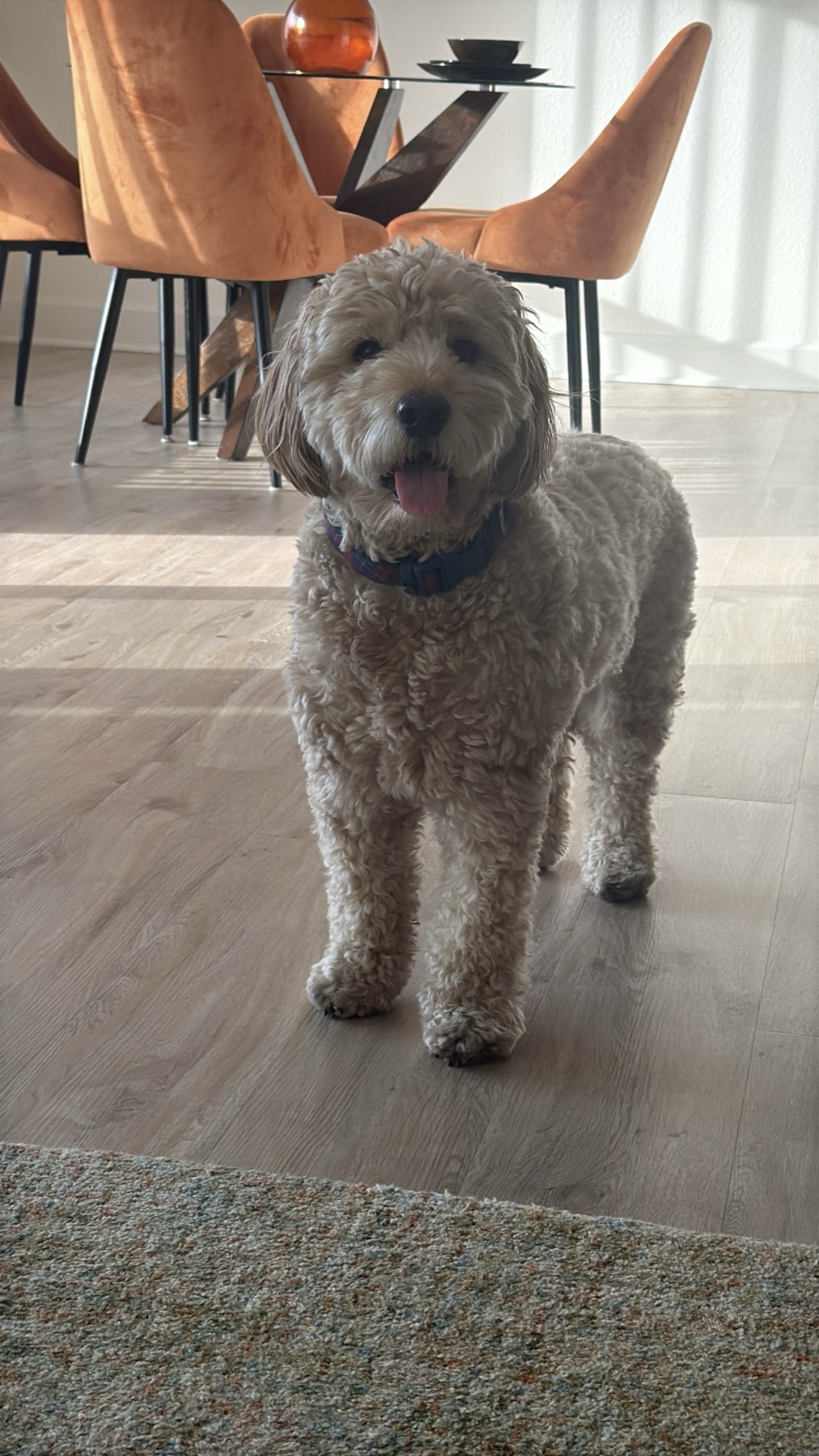
FREE GOLDENDOODLE GUIDE
Get the Goldendoodle Survival Guide
Everything I wish I'd known before getting Arie, beach gear, grooming reality, the 7pm witching hour, and more. Free PDF.
No spam. Ever. Unsubscribe anytime.
Have questions? Find us on TikTok @ariepup!
← Back to the Blog