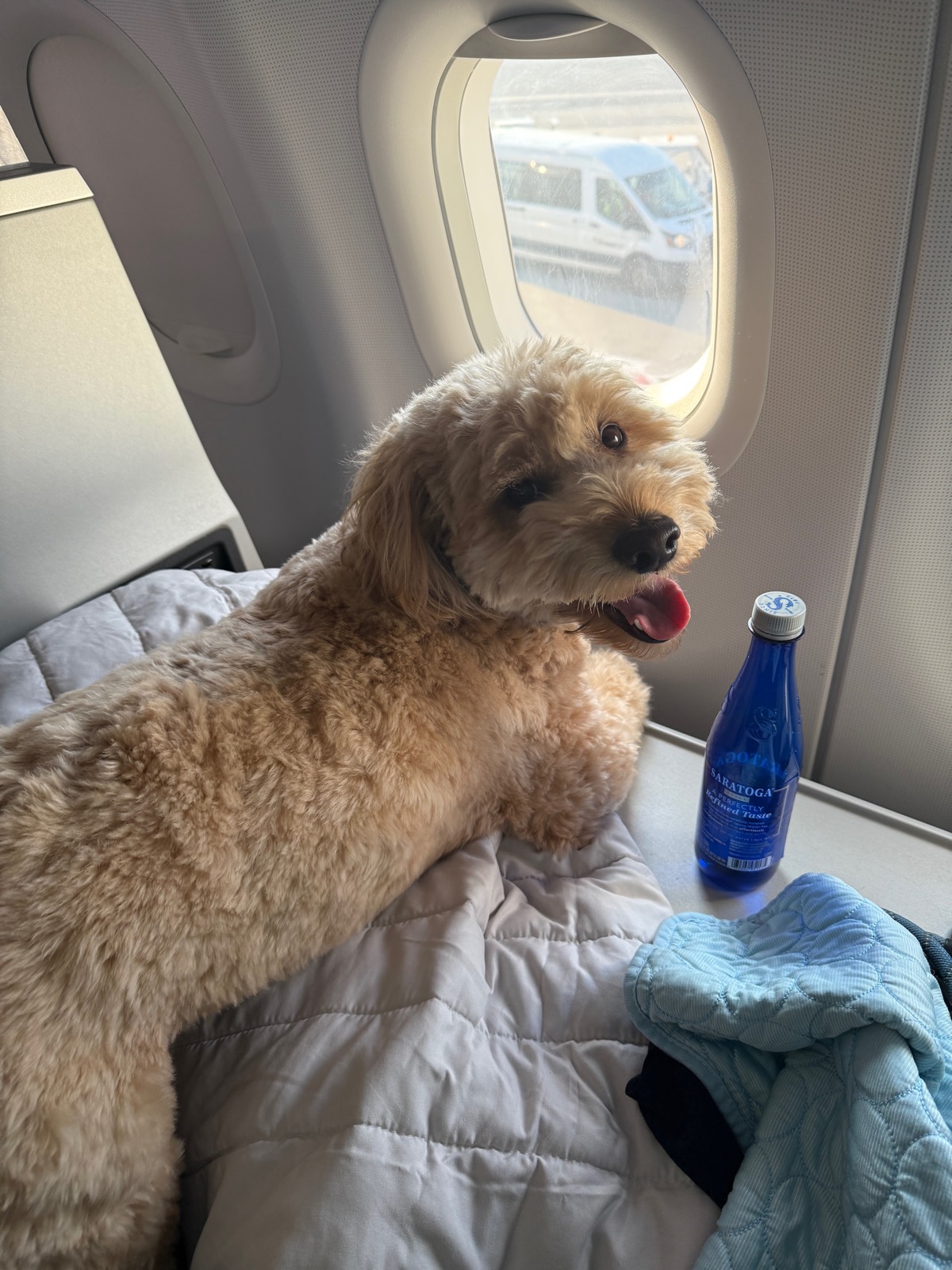
Flying with a dog is one of those things that sounds manageable until you are standing in a TSA line at 5am, your dog has decided the carrier is a torture device, and the agent is asking you to remove your shoes while also holding a 40-pound animal. It's a lot. Here is how to make it less of a lot.
Jump to a section
Cabin vs. Cargo: The Decision You Make First
If your dog is small enough to fit in a carrier that slides under the seat in front of you, cabin is almost always the better option. Your dog stays with you, the temperature is controlled, and you can keep an eye on them. Most major US airlines allow small dogs in the cabin, with a combined weight limit (dog plus carrier) that typically lands around 20 to 25 pounds. Check your specific airline before assuming anything.
If your dog is too large for the cabin, cargo is the other option. This is a legitimate choice and airlines that accept dogs in cargo have safety standards for it. That said, it is more stressful for most dogs, and a lot of large-dog owners decide flying simply is not worth it and drive or use a pet transport service instead. If cargo is your path, talk to your vet, choose a direct flight, avoid extreme weather travel dates, and do your homework on your specific airline's cargo pet policies.
For large dogs who travel by car, the SoCal road trip guide covers everything you need for a comfortable drive.
What Airlines Actually Require
Requirements vary by airline but the common ones are: a health certificate from a licensed vet (usually issued within 7 to 10 days of travel), proof of current vaccinations, and an airline-approved carrier. Some airlines require a specific form or use specific language in the health cert. Call your airline directly before the vet appointment so you know exactly what the certificate needs to say.
International travel adds a significant layer on top of this. Destination countries have their own entry requirements for animals, and some require treatments or testing weeks or months before travel. If you're flying internationally, start the documentation process at least 3 months out and verify requirements directly with the embassy or agriculture department of your destination country.
Call your airline and confirm: weight limits, carrier dimensions, required documentation, pet fee, and whether your specific flight has pet spots available. Do this before you pay for anything else.
How to Book Your Pet
Most airlines limit the number of pets allowed in the cabin per flight, and those spots fill up. Book your pet as early as possible, either during the initial booking process or by calling the airline afterward. There is a fee, which varies by airline and changes periodically, so confirm the current amount when you call.
Get everything in writing or via email confirmation. "I spoke with someone on the phone" has a way of not resolving favorably at the airport check-in counter.
What to Pack for Your Dog
The carrier is the most important piece of equipment. It needs to be soft-sided, airline-approved, and sized to fit both under the seat on your specific aircraft and comfortably around your dog. Your dog should be able to stand, turn, and lie down inside it. A good soft-sided carrier with a top opening makes loading and settling a lot easier than one you have to stuff the dog into from the front.
Arie's Travel Picks
Carriers, collapsible water bowls, and travel essentials we've actually used
See travel faves →Beyond the carrier, pack: a collapsible water bowl and water (your dog should be hydrated but not soaked before the flight), a few familiar-smelling items like a small blanket or worn t-shirt to put in the carrier, any medications your vet has recommended, poop bags, and enough treats for the airport and boarding process. A no-spill travel water bottle is genuinely useful for dogs who drink messily in normal circumstances, let alone in an airport.
Do not pack food for a short flight. A dog with a full stomach and flight anxiety is a dog who might get sick. Skip the meal before a short trip and feed normally when you land.
Getting Through Airport Security
At the TSA checkpoint: remove your dog from the carrier, place the empty carrier on the belt for X-ray, and carry your dog through the metal detector or body scanner. Your dog does not go through the X-ray machine. Put a leash or harness on your dog before you unzip the carrier. A loose dog in security is the kind of story that ends with you sweating through a shirt you actually wanted to wear on the plane.
Some TSA agents will ask to swab your hands after handling the dog. This is normal. Stay calm, be patient with the line behind you, and have everything else organized before you get to the checkpoint so your hands are free.
The Flight Itself
Exercise your dog before the flight. A tired dog is a quieter dog. Aim for a real walk or play session at least two hours before you need to be at the airport, not right before departure.
Once on board, your dog needs to stay in the carrier under the seat for the duration of the flight. The carrier can have the zipper cracked slightly for air and so you can put fingers in for reassurance, but the dog stays in. Some dogs settle immediately. Some take 20 minutes of whimpering and then pass out. Bring something calm to do yourself so you are not transmitting stress through your hand into the carrier.
On the anxiety question: most vets advise against full sedation at altitude. If your dog struggles significantly with new environments and confinement, talk to your vet well before the trip about calming supplements or a prescription option that does not carry the same risks as sedation. There are good options. The key word is "before the trip" -- the flight is not the time to experiment.
For the Anxious Traveler
Calming chews and supplements we use for high-stress situations
See calm faves →If your dog has deeper anxiety tendencies that show up outside travel situations too, the separation anxiety guide has a lot of overlap in terms of what actually works.
Frequently Asked Questions
Can dogs fly in the cabin on a plane?
Small dogs that fit in an airline-approved carrier under the seat in front of you can fly in the cabin on most major US airlines. There is typically a combined weight limit (dog plus carrier) of around 20-25 lbs, though this varies by airline. Always confirm with your specific airline before booking.
What documents does my dog need to fly?
Most US airlines require a health certificate from a licensed vet, typically issued within 7-10 days of travel. You may also need proof of vaccinations. For international travel, requirements vary significantly by destination and may include additional testing or treatments. Start early and verify with your airline and destination country directly.
How do I get my dog through airport security?
Remove your dog from the carrier. The empty carrier goes through the X-ray machine. You carry your dog through the metal detector or body scanner. Your dog does not go through the X-ray. Have a leash or harness on your dog before you unzip the carrier -- a loose dog in security is a situation you do not want.
Should I sedate my dog for flying?
Most vets and airlines recommend against sedation for air travel. Sedated dogs have reduced control of their respiratory and cardiovascular systems, which is riskier at altitude. Talk to your vet before the trip about alternatives such as calming supplements or a lower-risk prescription option if your dog has significant anxiety.
How early should I book my dog on a flight?
As early as possible. Most airlines limit the number of pets allowed in the cabin per flight. Do not assume you can add your pet at check-in -- many flights are at pet capacity well before departure day.

FREE GOLDENDOODLE GUIDE
Get the Goldendoodle Survival Guide
Everything I wish I'd known before getting Arie -- beach gear, grooming reality, the 7pm witching hour, and more. Free PDF.
No spam. Ever. Unsubscribe anytime.
Have questions? Find us on TikTok @ariepup!
← Back to the Blog