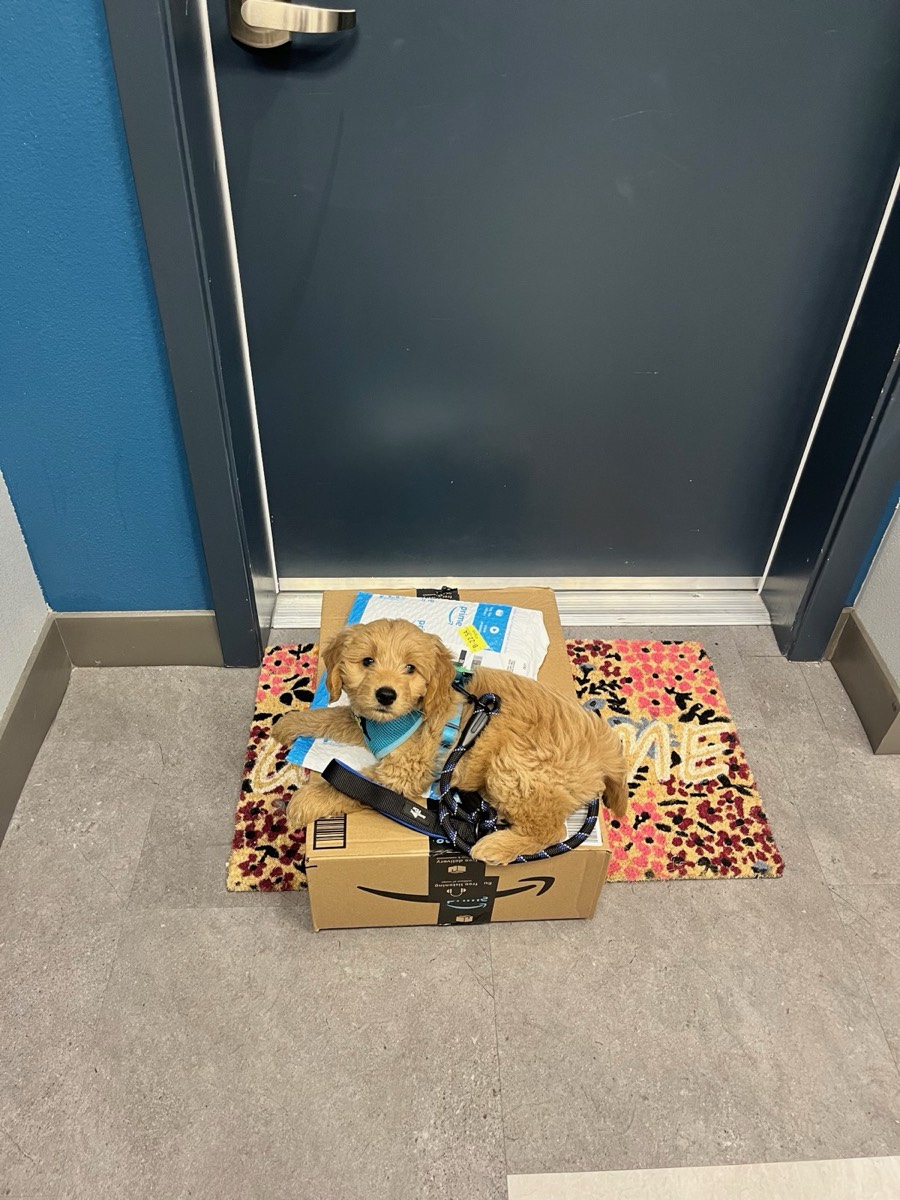
The goal of crate training is not to lock your dog up. It is to give your dog a place where they genuinely want to go, which is also conveniently the place where they cannot eat your couch. These two outcomes are not mutually exclusive. But the second one only follows from the first, and that is where most people go wrong.
Jump to a section
Why Crate Training Actually Works
Dogs are den animals in the sense that they gravitate toward enclosed, sheltered spaces when given the choice. Watch any dog left to their own devices and they will eventually wedge themselves under a desk, behind a couch, or into whatever small dark corner is available. This is not anxiety. It is just preference.
A crate works because it satisfies this instinct in a controlled way. Once a dog genuinely views the crate as their space, the crate becomes a feature of their life, not a punishment. The problem is that most people try to skip the "genuinely views it as their space" part and go straight to closing the door, which is how you end up with a dog who screams at 2am.
Crate training is also the fastest path to house training. Dogs do not want to eliminate where they sleep. A properly sized crate leverages this to help a puppy hold it long enough to make it outside. It is not magic, but it is remarkably effective when you do not undermine it by buying a crate that is too big.
Choosing the Right Crate (Size Matters More Than You Think)
The crate should be big enough for your dog to stand up fully, turn around, and lie down stretched out. That is it. If there is significantly more room than that, a puppy will use the extra space as a bathroom, which defeats the entire purpose.
For a standard or large Goldendoodle, a 42-inch crate is the standard recommendation. For a puppy who will eventually grow into that size, buy the 42-inch crate with a divider panel and adjust it as the puppy grows. This is cheaper than buying two crates.
Wire crates are the most common choice because they fold flat, have good airflow, and the divider system is easy to use. A heavy-duty wire crate with a divider runs around $50-80 for the size you need. Some dogs prefer the more enclosed feel of a plastic travel crate, which blocks more visual stimulation and can feel more den-like. Try the wire version first. If your dog is consistently anxious despite good training, try draping a blanket over three sides to reduce visual stimulation.
The Actual Process: Week by Week
Days 1-3: Introduction with zero pressure
Put the crate in a common living area, not a back bedroom. Leave the door open or off entirely. Toss treats near the crate, then at the entrance, then just inside. Do not close the door. Do not even think about closing the door. The only goal here is for your dog to discover that good things happen near the crate and that going near it is their idea.
Feed your dog's meals just inside the crate door. Once they are comfortable eating inside the crate, start feeding deeper in. This takes a few days. You are doing nothing but building a positive association. This phase seems too slow. It is not. Rushing it is the single most common mistake and it costs you weeks.
Days 4-7: Door closed, briefly
Once your dog is willingly walking into the crate for meals or treats, start closing the door while they eat. Open it immediately after they finish. Then start extending the duration by seconds. Thirty seconds. A minute. Five minutes. Your dog should be calm when you open the door, not frantic. If they are frantic, you moved too fast.
Give a specific cue every time the dog goes in. A simple "crate" or "place" works. You want a word they associate with going in voluntarily, not a word you say while pushing them inside.
Weeks 2-4: Building duration
Now you are extending crate time gradually. Start with short crating sessions while you are home, so the dog learns that crate time does not equal you leaving. Go about your day. The dog will eventually lie down and stop caring. That is the moment you have been working toward.
The general rule for puppies: they can hold their bladder approximately one hour per month of age, plus one. A 3-month-old puppy can hold it for about 4 hours maximum. Do not exceed this or you are setting them up to fail and associate the crate with distress.
A frozen Kong stuffed with something your dog finds irresistible makes crate time something to look forward to rather than something to endure. Freeze them in batches. Keep three in your freezer at all times. This is not a bribe. It is classical conditioning, and it works faster than anything else.
Mistakes That Slow Everything Down
Using the crate as punishment is the fastest way to undo your training. The crate should never be where the dog goes when they are in trouble. It should be the opposite of that.
Letting the dog out when they cry is the second most common mistake. If you open the crate in response to vocalizing, you have just trained the dog that vocalizing opens the crate. Wait for a pause, even a short one, then open the door. This teaches the opposite lesson.
Crating for too long before the dog is ready creates a negative association that can take months to undo. Gradual duration build is not optional. It is the whole thing.
Putting the crate somewhere isolated also backfires. Dogs are social animals. A crate in a back room with the door closed feels like exile. A crate in the living room or bedroom where they can see and smell you is a much easier sell.
When Your Dog Absolutely Refuses
Some dogs, particularly those who were not introduced to crates as puppies or who had a bad experience with confinement, resist crate training significantly harder. This is not a character flaw. It is just a longer process.
Go back to the beginning. Treat the crate as a brand new object. Spend a week feeding every meal near and in the crate before you close the door for even a second. Use higher-value treats than you think you need. Consider whether your dog might have genuine separation anxiety rather than just crate resistance, because the fix is different.
If your dog is panting heavily, drooling, or injuring themselves trying to escape, that is not crate training resistance. That is a dog in distress, and the crate is not the right tool without professional guidance. A good trainer can assess whether you are dealing with a training problem or a behavioral one, and the distinction matters.
For most dogs, though, the answer is just patience and a better frozen Kong. The dog who seemed completely opposed to the crate in week one is often the dog who walks in voluntarily by week six. You just have to trust the process and not rush the door-closing step.
Frequently Asked Questions
How long does crate training take?
For puppies, basic crate acceptance typically takes 1-2 weeks of consistent practice. Full crate comfort, where the dog will settle quietly for several hours, usually takes 4-8 weeks. Adult dogs with no crate history can take longer because you are also undoing whatever association they already have with confinement.
Is it cruel to crate a dog?
No, when done correctly. Dogs gravitate toward enclosed, sheltered spaces when left to their own devices. A properly introduced crate becomes a genuinely preferred rest spot. The issues arise from doing it wrong: crating for too long, using the crate as punishment, or forcing a dog in before they are comfortable.
What size crate does a Goldendoodle need?
A standard or large Goldendoodle needs a 42-inch crate, big enough to stand up, turn around, and stretch out. For puppies, use a divider to reduce the space so the puppy cannot use one end as a bathroom. Too much space defeats the instinct that makes crate training work.
What do you put in a dog crate?
A crate mat or padded liner, a frozen Kong or safe chew, and for puppies going through adjustment, a worn piece of your clothing. Skip water bowls during training sessions -- they spill and create unnecessary bathroom urgency. Once the dog is reliably crate trained for longer periods, a spill-proof bowl attached to the door is fine.
Why does my dog cry in the crate?
Usually one of three reasons: the introduction was too fast and the dog associates the crate with being abandoned, the dog needs to go to the bathroom, or there is genuine separation anxiety. The fix for the first two is slowing down your training pace. Separation anxiety is a separate issue that often needs professional support.
FREE GOLDENDOODLE GUIDE
Get the Goldendoodle Survival Guide
Everything I wish I'd known before getting Arie: beach gear, grooming reality, the 7pm witching hour, and more. Free PDF.
No spam. Ever. Unsubscribe anytime.
Have questions? Find us on TikTok @ariepup!
← Back to the Blog