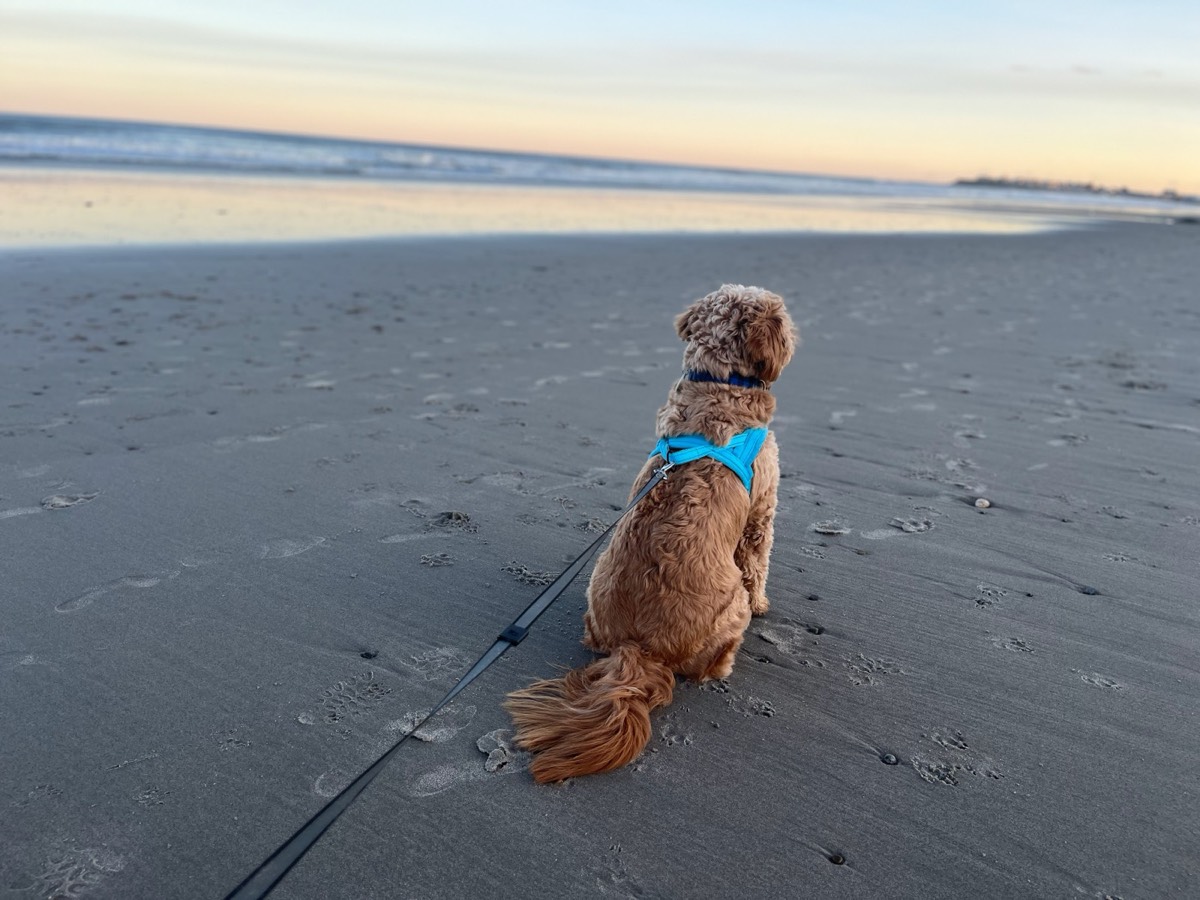
Somewhere between the sixth and eighth birthday, a Goldendoodle quietly trades zoomies for naps, and nobody sends a memo when it happens. The senior years don't arrive on a schedule. They show up in increments: a slower sprint to the door, more hesitation on the stairs, a nap that runs twenty minutes longer than it used to. None of it means something is wrong. It just means the game has changed a little, and it helps to know what to expect.
Jump to a section
When Does a Goldendoodle Become a Senior
Size decides the timeline more than age does. A standard Goldendoodle usually moves into senior territory around 7 to 8 years old, since larger breeds tend to age faster and carry shorter average lifespans than smaller dogs. A mini or toy often doesn't show real senior changes until closer to 9 or 10. There's no hard cutoff here, no birthday that flips a switch. It's a gradual shift your vet will start flagging at annual exams once bloodwork, joint mobility, or coat condition starts to move.
The Physical Changes You'll Notice First
The earliest signs are usually small enough to explain away. Slower to get up off the floor, more careful about jumping onto the couch instead of launching, a bit more panting after a walk that used to be no big deal. The muzzle grays first, usually starting right around the mouth and chin. Coat texture can shift too, sometimes getting coarser, sometimes thinner, especially in dogs who were curlier in their prime. None of these on their own are alarming. Taken together over a few months, they're the pattern worth paying attention to.
Joint Support Matters More Than Ever
Stiffness after resting, a slight hitch getting up, or reluctance to take the stairs are the most common joint complaints in older Goldendoodles. A few adjustments help more than people expect: shorter, more frequent walks instead of one long haul, a ramp or set of steps for the car or a tall bed, and an orthopedic bed that actually supports weight instead of flattening out after a month. Repeated jumping on and off furniture is harder on aging joints than most owners realize, so a set of steps by the couch earns its keep quickly.
Move senior vet visits to twice a year instead of once. Dogs are good at masking pain, and a lot of early joint or organ changes show up in bloodwork or a hands-on exam months before there's any visible symptom at home.
Diet and Weight in the Senior Years
Activity drops before appetite does, which is exactly how senior dogs put on weight quietly. Extra pounds land directly on already-stressed joints, so keeping a lean body condition matters more now than at any other life stage. Many senior formulas run lower in calories and higher in the kind of joint-support ingredients, like glucosamine, that a younger dog doesn't need yet. Any diet change is worth a quick check with your vet first, especially if there's an existing health condition in the mix. Training treats don't have to disappear either, they just do better in a lower-calorie form.
Cognitive Changes: More Than Just "Getting Old"
Physical slowing is easy to spot. Cognitive changes get written off far too often as just being old. Confusion in a familiar room, a flipped sleep-wake cycle where a dog is restless at 3am and asleep all afternoon, staring blankly at a wall or corner, house-training lapses in a dog who's been reliable for years, or new nighttime pacing and whining can all point to canine cognitive dysfunction, the dog version of age-related cognitive decline. It's genuinely a medical issue, not a behavior problem, and it's worth naming out loud to a vet rather than quietly adjusting the whole household around it.
When to Actually Call the Vet
Some changes are normal aging. Others aren't, and the difference is worth knowing before it becomes an emergency. Sudden lameness, noticeable weight loss or gain without a diet change, appetite that drops off for more than a day or two, a marked increase in drinking or peeing, any new lump or one that's changing shape, or sudden disorientation all warrant a call rather than a wait-and-see approach. Older dogs hide discomfort well, which is exactly why the twice-a-year vet visit matters more here than it ever did in the puppy years.
Frequently Asked Questions
At what age is a Goldendoodle considered a senior?
It depends on size. Standard Goldendoodles are usually considered senior around 7 to 8 years old, since larger breeds tend to age faster and have shorter average lifespans. Minis and toys often don't show senior changes until closer to 9 or 10. It's a gradual shift, not a hard cutoff, and your vet is the best judge based on bloodwork and joint health rather than birthday alone.
What are the first signs of aging in a Goldendoodle?
Slower to get up from lying down, more hesitation on stairs, a grayer muzzle, shorter enthusiasm for long walks, and more panting after moderate activity are usually the earliest signs. They tend to show up gradually rather than all at once.
Should I change my senior Goldendoodle's food?
Many senior dogs benefit from a lower-calorie formula since activity naturally drops, and some senior diets add joint-support ingredients like glucosamine. Any food change is worth running by your vet first, especially if your dog has an existing health condition.
How much exercise does a senior Goldendoodle need?
Still regular movement, just restructured. Two or three shorter walks tend to work better than one long one, and low-impact options like swimming are easier on aging joints than repeated jumping or hard sprinting.
What are signs of cognitive decline in older dogs?
Confusion in familiar spaces, a disrupted sleep-wake cycle, staring blankly at walls or corners, house-training lapses, and increased nighttime restlessness or vocalizing can all point to canine cognitive dysfunction. These are worth mentioning to a vet rather than writing off as normal aging.

FREE GOLDENDOODLE GUIDE
Get the Goldendoodle Survival Guide
Everything I wish I'd known before getting Arie. Beach gear, grooming reality, the 7pm witching hour, and more. Free PDF.
No spam. Ever. Unsubscribe anytime.
Have questions? Find us on TikTok @ariepup!
← Back to the Blog