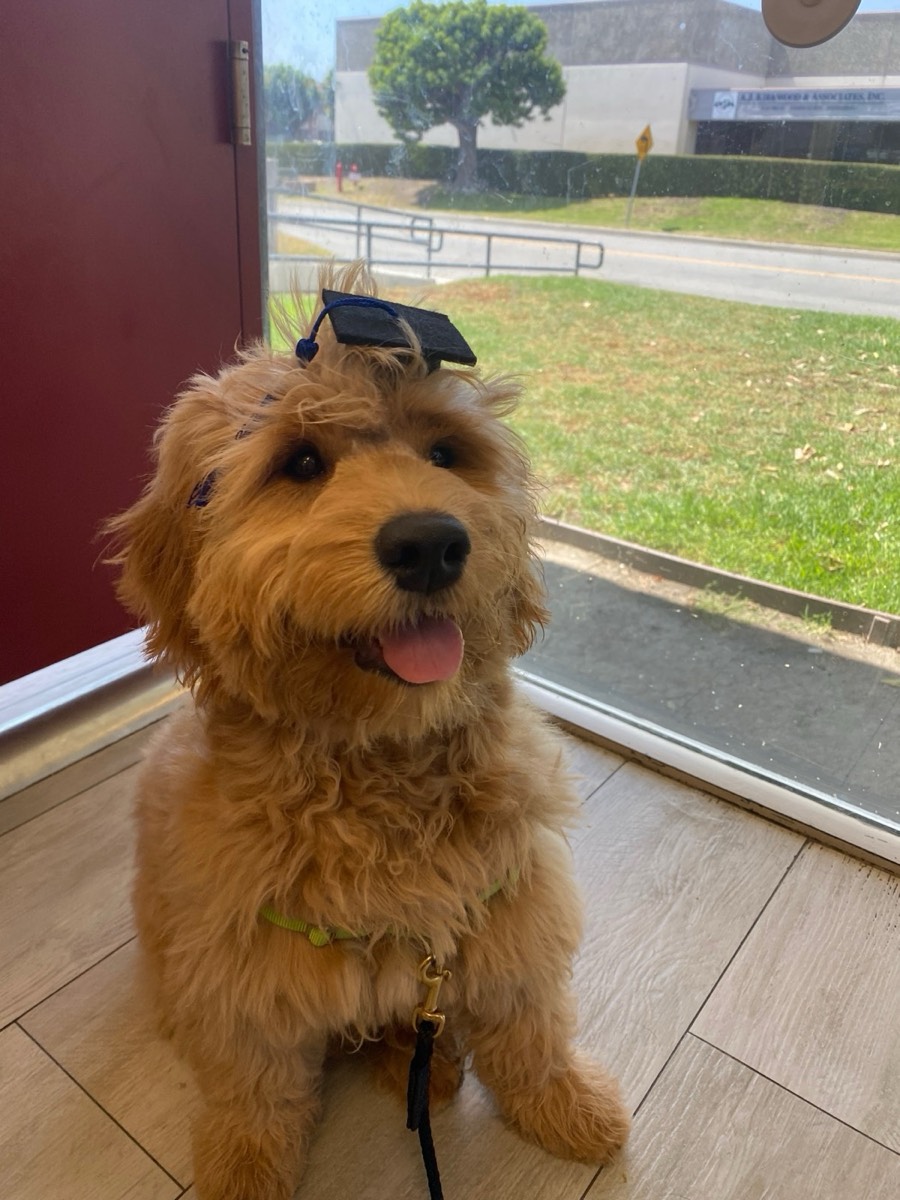
Every Goldendoodle owner eventually has the same moment in the mirror, holding their dog's face up to the light and squinting at a reddish brown streak that was not there a few weeks ago. It is not dirt. It will not wash off with a regular bath. And no, he is not sad about something. Here is what is actually going on under that fur and what you can realistically do about it.
Jump to a section
What Actually Causes Tear Stains
The color comes from a compound called porphyrin, a natural byproduct your dog's body produces and sheds partly through tears, saliva, and urine. Porphyrin contains iron, and when it sits on fur and gets exposed to air and sunlight, it oxidizes into that reddish brown tint everyone calls a tear stain. Every dog produces porphyrin. The only reason a Goldendoodle shows it and a black Lab does not is coat color, not tear volume. Light, long fur around the eyes is basically a built in highlighter for something that was always there.
Breed structure does not help either. A Goldendoodle's face fur grows long enough to wick tears sideways instead of letting them evaporate, and floppy ears plus a curly coat mean that area stays warm and a little damp more often than it should. None of this means something is wrong with your dog. It means he is built exactly the way he is built, and the fur is doing what fur does.
Ruling Out Something More Than Cosmetic
Before you treat tear staining as a grooming issue, it is worth ruling out that it is actually one. A little excess tearing on its own is normal and cosmetic. A sudden jump in how wet the area is, one eye clearly worse than the other, squinting, or discharge that is not clear and watery is a different situation. Those can point to a blocked tear duct, an ingrown eyelash, allergies, or an eye infection, and staining is just the visible side effect of a problem that needs a real diagnosis, not a wipe. Slow, steady, symmetrical staining is the boring normal version. Fast or one-sided staining is the version that earns a vet visit.
The Daily Routine That Keeps Stains Down
The single most effective thing you can do costs nothing and takes thirty seconds: wipe the area daily before the residue has a chance to oxidize and set. A damp, soft cloth or a dedicated grooming wipe run gently under each eye once a day keeps fresh porphyrin from building into a stain in the first place. Trying to lift a stain that has been baking in for a month is a much bigger project than wiping it away while it is still fresh.
Keeping the fur trimmed short around the eyes helps too, both because it gives tears less surface area to cling to and because it is easier to actually see what is going on under there. A steel comb works the area loose before a wipe gets to it, which matters more than people think since staining tends to build up in fur that stays matted against the skin.
Diet Myths and What's Actually Worth Trying
The internet is full of confident claims that switching tap water to distilled or filtered water will fix tear stains. There is no solid evidence behind this, and most vets will tell you it is a myth that persists because people usually start a cleaning routine around the same time they switch the water, and give the water credit that belongs to the wiping. The same goes for a lot of grain free diet claims thrown around on tear stain forums. Food allergies can cause excess tearing in some dogs, but that is a specific allergy issue to work through with a vet, not a reason to overhaul your dog's diet on a guess.
Over the counter tear stain supplements are a slightly different story. Most work by introducing a low dose antibiotic that changes porphyrin levels in the tears themselves, and they genuinely reduce staining in some dogs within a few weeks. They do nothing for staining caused by an underlying irritation or blocked duct, which is why a supplement that works great for one dog can do absolutely nothing for another. If you are going to try one, talk to your vet first, since you are technically giving a low grade antibiotic to a dog who does not have an infection.
A daily wipe will outperform almost every product marketed specifically for tear stains. Consistency beats anything in a bottle, every single time.
When It's a Vet Problem, Not a Grooming One
Call the vet if the tearing shows up suddenly, if one eye is noticeably worse than the other, or if you notice redness, squinting, or any discharge that is not clear. Those are not things a wipe and a comb are going to solve, and treating them like a grooming problem just delays an easy fix for something like a blocked duct or an eyelash growing the wrong way. For everyday, symmetrical, always-been-there staining, though, this really is just maintenance. Wipe it daily, keep the fur trimmed, skip the water bottle upgrade, and accept that a little rust colored streak is just part of owning a dog with a face this fluffy.
Frequently Asked Questions
Why do Goldendoodles get tear stains?
Tear stains come from a pigment in tears called porphyrin, which turns reddish brown when it sits on light colored fur and oxidizes in the air. Goldendoodles get noticed for it because their lighter, longer fur shows the staining far more than a dark coated breed would, not because they actually produce more tears than other dogs.
Are tear stains bad for a dog's health?
On their own, tear stains are cosmetic and not a health problem. The concern is what sits underneath them. Constantly damp fur around the eyes can lead to skin irritation or a yeast infection if it is never cleaned or dried, so the staining itself is harmless but the neglected wet fur underneath it is worth managing.
Do tear stain supplements actually work?
Most over the counter tear stain supplements work by adding a low dose antibiotic that changes the porphyrin levels in tears, and they can reduce staining in some dogs. They do nothing for staining caused by allergies, blocked tear ducts, or eyelash irritation, so a dog who does not respond to them likely has an underlying cause that needs a vet's attention instead.
How often should you clean tear stains?
Wiping the area once a day, or twice for a dog who tears up a lot, keeps stains from setting in and the fur from staying damp. Catching it daily is far easier than trying to lift a stain that has been building for weeks, since fresh residue wipes away in seconds and old, set in staining barely budges.
When should tear stains see a vet instead of a groomer?
A sudden increase in tearing, one eye watering much more than the other, redness, squinting, or any discharge that is not clear calls for a vet visit, not a wipe and a shrug. Those signs can point to a blocked tear duct, an eyelash growing the wrong direction, or an eye infection, all of which need an actual diagnosis rather than a grooming fix.
FREE GOLDENDOODLE GUIDE
Get the Goldendoodle Survival Guide
Everything I wish I'd known before getting Arie. Beach gear, grooming reality, the 7pm witching hour, and more. Free PDF.
No spam. Ever. Unsubscribe anytime.
Have questions? Find us on TikTok @ariepup!
← Back to the Blog