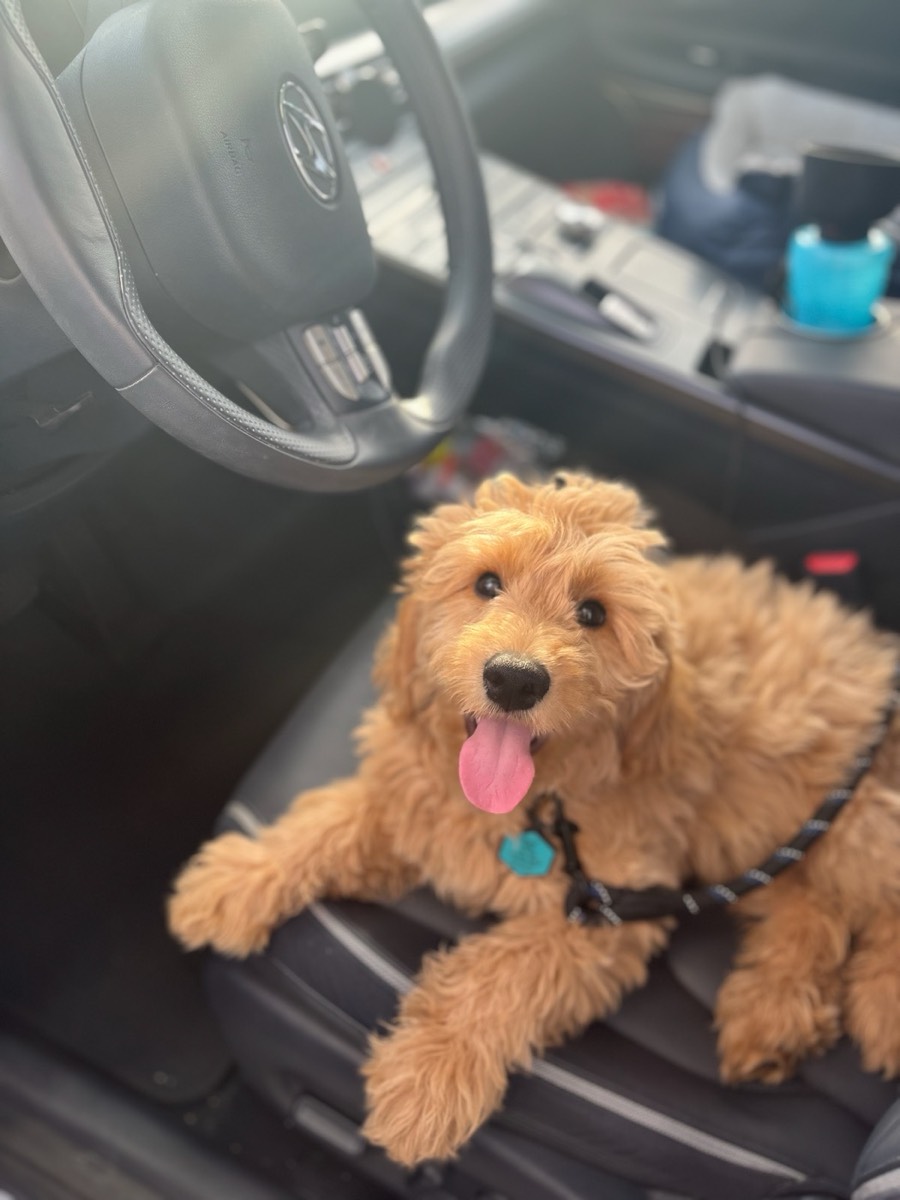
Picking a Goldendoodle breeder is the one decision in this whole process you don't actually get to redo. You can return a harness that doesn't fit. You can't undo a health problem a basic test would have caught, or make up for months of poor early socialization after the fact. It's worth slowing down here, even when a litter of cream-colored puppy photos is doing its best to rush you.
Jump to a section
Red Flags That Should End the Conversation
A breeder who can't or won't talk about health testing is the biggest one. "We've never had a sick puppy" is not health testing, it's a sales line, and genetic conditions don't always show up in a dog's first few years anyway. Walk away from anyone who treats the question as rude.
Other signs worth taking seriously: puppies always available with no waitlist, multiple litters going at once, no willingness to let you see where the puppies are actually raised or meet at least the mother, and a push for a deposit before you've asked a single real question. A reputable breeder is usually a little hard to get a puppy from, not a little too easy.
What a Good Breeder Actually Does
Health testing on both parents is the baseline, not a bonus. For a Goldendoodle that means hip and elbow screenings through a group like OFA, an eye certification, and a genetic panel for the conditions known to show up in Poodles and Golden Retrievers. A breeder who can produce paperwork for this without being asked twice is doing the job right.
Good breeders also limit how often a mother is bred, raise puppies in an actual home environment with early handling and noise exposure rather than a kennel out back, and stay reachable long after the sale. A lot of the best ones will take a dog back at any point in its life if things don't work out, no questions asked. That single policy tells you more about their priorities than almost anything else they'll say.
Questions to Ask Before You Hand Over a Deposit
Ask to see health clearances for both parents, not just a verbal "they're healthy." Ask how many litters the mother has had and how recently. Ask what happens if the dog develops a hereditary condition down the line, and get the answer in writing if it matters to you. Ask whether you can meet the mother in person, and be cautious if the answer is consistently no.
It's also fair to expect the breeder to ask you questions back. A good one wants to know about your home, your schedule, and whether you've thought through what a high-energy, intelligent dog actually needs. A breeder who doesn't care who they're handing a puppy to isn't vetting for a good fit, they're processing a transaction.
If a breeder gets defensive about a reasonable question, that's the answer. A good one will never make you feel strange for asking where your future dog's medical history is coming from.
Breeder, Rescue, or Both Worth Considering
Breed-specific rescues exist for Goldendoodles and are worth checking before committing to the breeder route entirely, especially if you're open to an adult dog rather than a puppy. Rescue dogs skip the puppy-proofing chaos and often come with a clearer picture of their adult temperament already formed. Neither path is more legitimate than the other. It comes down to what you're set up for right now.
Whatever route you take, the pattern to watch for is the same. Good breeders and good rescues both slow the process down and ask you real questions. Anyone rushing you toward a deposit is telling you something about what happens after the sale too.
Frequently Asked Questions
How much should a Goldendoodle puppy cost from a reputable breeder?
Prices vary a lot by region and generation, but health-tested breeders generally charge more than backyard operations because testing, vet care, and limiting litters all cost money. A price that looks dramatically lower than everyone else in your area is worth asking hard questions about, not just celebrating.
Is a lower price always a red flag?
Not automatically, but it should prompt more questions, not fewer. A legitimately lower price might come from a smaller operation with lower overhead. A suspiciously low price paired with puppies always being available and no health paperwork is a different story entirely.
Should I visit in person before paying any deposit?
Whenever possible, yes. Seeing where puppies are actually raised, meeting at least the mother, and watching how the breeder interacts with the dogs tells you things no phone call or Instagram page can. A breeder who makes an in-person visit difficult or unnecessary is worth a second look.
What health testing should Goldendoodle parents have?
At minimum, hip and elbow screening through a recognized registry like OFA, an eye certification, and genetic testing for the heritable conditions known in Poodles and Golden Retrievers. Ask to see the actual results, not just a verbal assurance that testing was done.
Are doodle-specific rescues a good alternative to a breeder?
For a lot of people, yes. Rescues skip the puppy stage entirely and often come with a clearer sense of the dog's adult temperament already. It is a genuinely different experience from raising a puppy, so it comes down to what you are actually prepared for right now.
FREE GOLDENDOODLE GUIDE
Get the Goldendoodle Survival Guide
Everything I wish I'd known before getting Arie. Beach gear, grooming reality, the 7pm witching hour, and more. Free PDF.
No spam. Ever. Unsubscribe anytime.
Have questions? Find us on TikTok @ariepup!
← Back to the Blog