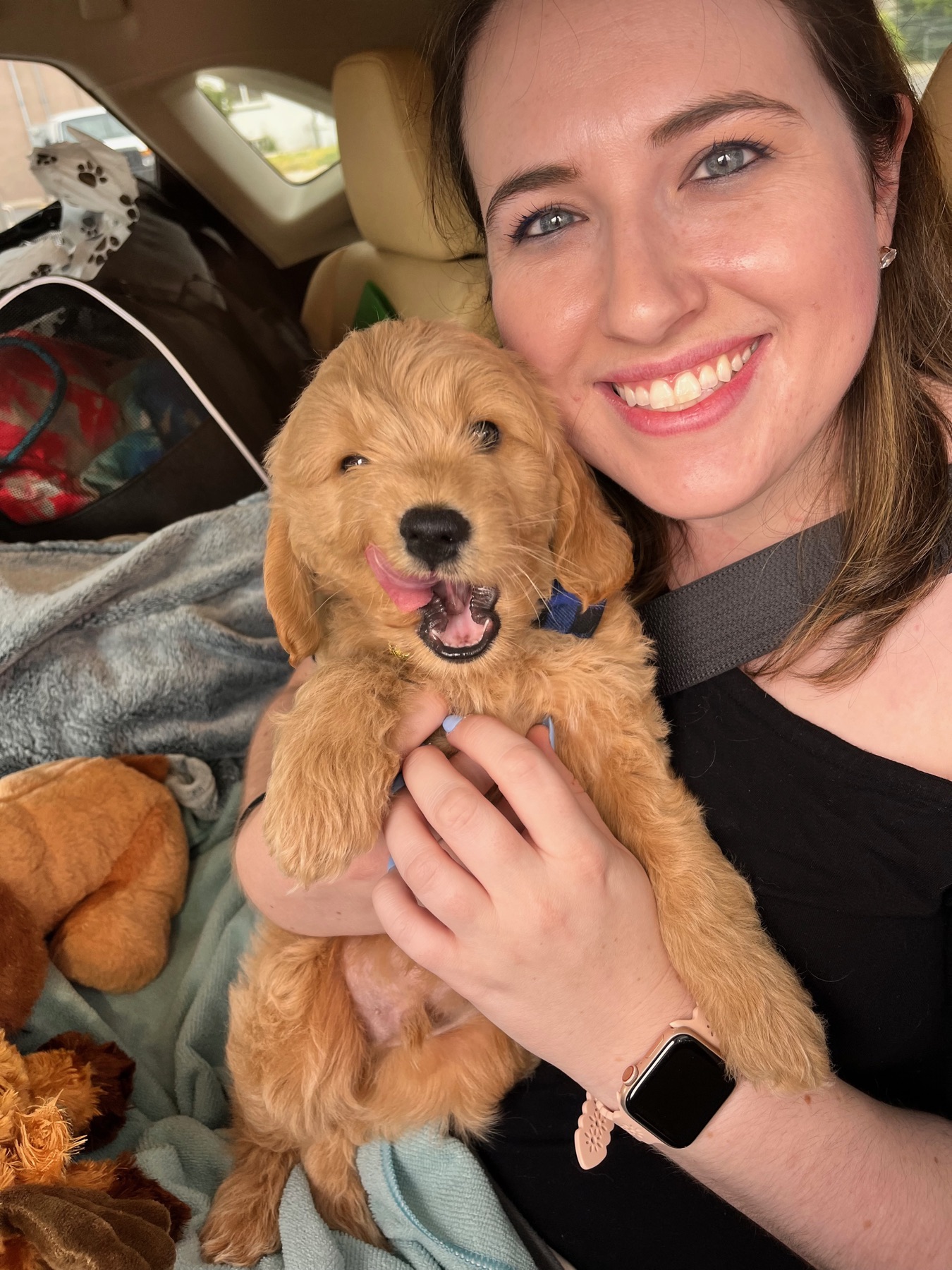
Nobody told me. That's the thing I keep coming back to when I think about Arie's first 30 days. People told me he'd be a lot of work. They told me he'd be cute. They told me he'd need exercise and training and socialization. None of that prepared me for the specific, overwhelming, relentlessly chaotic reality of the first month. So here is the thing nobody told me — and now I'm telling you.
Days 1–5: The Honeymoon and the Reality Check
The first few days are magical and terrifying simultaneously. The puppy is small and soft and looks at you with enormous eyes full of total trust, and you feel like you might actually cry from how beautiful this is. Then night one happens.
Puppies do not sleep through the night. Arie did not sleep through the night for the first three weeks. He cried. I went to him. I wasn't supposed to (experts will tell you this reinforces the crying), but he was eight weeks old and alone in a crate for the first time in his life and I was not equipped to ignore it. We found a middle ground: the crate in the bedroom, close enough that he could hear and smell me. It helped by week two.
The other thing no one tells you: the puppy smell. Puppies smell a very specific way — warm, sweet, slightly milky — that triggers some ancient bonding mechanism in humans. It is extremely effective. You will forgive a lot of crimes because of the puppy smell. This is by design.
The Potty Training Reality
I had read that Goldendoodles are easy to potty train. This is true in the long run — Arie was reliably house-trained by 14 weeks. It is not true in the first 30 days. In the first 30 days, you take the puppy outside every 45 minutes to 2 hours, every time they wake up, every time they eat, every time they play intensely, and every time they look even vaguely contemplative.
The rule that actually worked: out the door within 60 seconds of any of those events. Not 5 minutes later when you've finished what you were doing. Sixty seconds. The window is that short with a very young puppy.
Use a specific word or phrase consistently right before they go — "go potty," "outside," whatever you pick. Say it every single time. By week three, Arie associated the word with the action, which made the whole thing much faster to resolve.
Celebrate like it's the greatest achievement in human history every single time they go outside. Disproportionate praise is the point.
Sleep Deprivation Is Real
I need to say this plainly: the first two weeks with a Goldendoodle puppy are sleep-depriving in a way that is comparable to having a newborn, minus the social sympathy. People will ask how the puppy is doing. They will not ask how you are doing. You are running on coffee and that warm puppy smell and the occasional moment where he falls asleep on your chest and everything seems worth it.
Get through it. It does end. By week three, Arie was sleeping in longer stretches. By week five, he was sleeping through the night. The fog lifts.
Socialization: This Window Matters More Than Anything
The socialization window for puppies is roughly 3–14 weeks — and the experiences (or lack of them) during this period shape your dog's personality for life. This is not an exaggeration. Arie's social ease with strangers, other dogs, and unusual situations is directly traceable to how deliberately I approached socialization in the first month.
What socialization actually means: controlled, positive exposure to as many different people, sounds, surfaces, and situations as possible. Not overwhelming the puppy — brief, positive encounters. New sounds (traffic, vacuum cleaner, thunder), new textures (grass, sand, concrete), new people (hats, beards, children, men, uniforms), new dogs (vaccinated, known-gentle dogs only until fully vaccinated).
Every day I tried to give Arie at least one new experience. Most were five minutes long. The cumulative effect was a dog who is genuinely unflappable in almost every situation — and that has made every part of owning him easier.
For Anxious Moments
Zesty Paws Calming Bites — what we used during the first vet visits
See calming products →The Biting: It's a Phase, But It's a Phase You Need a Strategy For
Goldendoodle puppies bite. Everything. Your hands, your ankles, the furniture, their leash, your phone, the corner of the drywall. This is normal puppy behavior — they're teething and exploring — but it needs to be addressed immediately and consistently.
The approach that worked for us: a firm "ouch" or "no" followed immediately by redirecting to a toy. Every single time, without variation. Arie figured it out around week 6–7. The key is consistency — every person in the house has to respond the same way every time, or the lesson doesn't take.
What makes this phase harder with Goldendoodles specifically: they have very high play drive and they bite during play enthusiastically. The distinction between play biting and actual aggression is important to understand — but the training response is the same either way. Redirect. Reward the toy. Never use hands as toys. (The same high-octane energy that fuels biting is also what powers the evening zoomie sprints — both peak in the first few months, and both do calm down.)
First Vet Visit: What to Expect
Schedule the first vet visit within the first week if possible, or within a few days of getting your puppy. You need to establish care, confirm the puppy's vaccine status, start a deworming protocol if needed, and — critically — get your vet's specific recommendations for your puppy's health plan going forward.
Goldendoodle-specific things to discuss: hip screening (both parent breeds have elevated hip dysplasia rates), cardiac screening history in the bloodline, and whether to do genetic health testing. Not every vet brings these up proactively. Ask. While you're getting the health basics sorted, it's also worth locking in your puppy's food — our Goldendoodle feeding guide covers what we feed Arie and what to look for at each stage.
Grooming from Day 1
Chris Christensen Big G Slicker Brush — start brushing early to normalize it
See grooming tools →What Week 4 Actually Looks Like
By the end of the first month, something shifts. The fog of sleep deprivation starts to lift. The puppy starts responding to their name reliably. Potty training is clicking. The biting is getting better. You start to see their actual personality emerge — the specific quirks and preferences and habits that are uniquely them.
For Arie, week four was when his bird surveillance behavior first appeared, when I realized he was going to be a velcro dog, and when he first rang the doorbell by accident and then intentionally repeated it. The chaos gremlin was already fully formed at 12 weeks. I should have known.
The first 30 days are hard. They are the hardest part of the whole experience, front-loaded at the beginning when you're also in the adjustment period yourself. Push through them. What's on the other side is worth it in ways that are genuinely hard to describe — and if you want to know what the whole first year looks like month by month, we have that mapped out too.
Frequently Asked Questions
When do Goldendoodle puppies sleep through the night?
Most Goldendoodle puppies begin sleeping through the night consistently by 5–7 weeks after coming home, or around 12–16 weeks of age. The transition is gradual — you'll notice longer and longer stretches before the breakthrough. Consistency with a crate routine and resisting the urge to take them out of the crate unless absolutely necessary speeds this up.
How do you potty train a Goldendoodle puppy fast?
The fastest approach: take them out every 45–90 minutes, immediately after waking, after eating, and after play. Use a consistent verbal cue, celebrate every outdoor success dramatically, and never punish accidents — just clean up and prevent the next one by going out more frequently. Most Goldendoodles are reliably trained by 14–16 weeks.
Are Goldendoodle puppies hard?
Yes, honestly. The first 4–6 weeks are genuinely challenging — sleep disruption, potty accidents, biting, and the constant vigilance required for socialization and training. Goldendoodles are smart, which means they learn fast, but smart also means they get bored fast and test limits. It gets significantly easier after the 8-week mark.
How much do Goldendoodle puppies sleep?
A lot — typically 16–20 hours per day as very young puppies, declining to 12–14 hours by 4 months. The sleep/wake cycles are short and unpredictable at first. They'll be full chaos mode for 30 minutes, then crash completely for 2 hours. Use the nap time for yourself. Seriously.
What should I buy before my Goldendoodle puppy comes home?
Crate sized for an adult (with a divider for the puppy stage), food and water bowls, quality puppy food, a collar and ID tag, a 6-foot leash, a slicker brush (start brushing from day one), high-value training treats, enzymatic cleaner for accidents, and a lot of patience. Don't over-buy toys — puppies play with everything and ignore expensive toys for cardboard boxes.
When should I start training my Goldendoodle puppy?
Immediately — literally from day one. At 8 weeks, puppies can learn sit, name recognition, and the concept of a crate. The socialization window closes around 14 weeks, so every day counts. Short sessions (3–5 minutes) multiple times a day are far more effective than one long session.


FREE GOLDENDOODLE GUIDE
Get the Goldendoodle Survival Guide
Everything I wish I'd known before getting Arie — beach gear, grooming reality, the 7pm witching hour, and more. Free PDF.
No spam. Ever. Unsubscribe anytime.
Have questions? Find us on TikTok @ariepup!
← Back to the Blog