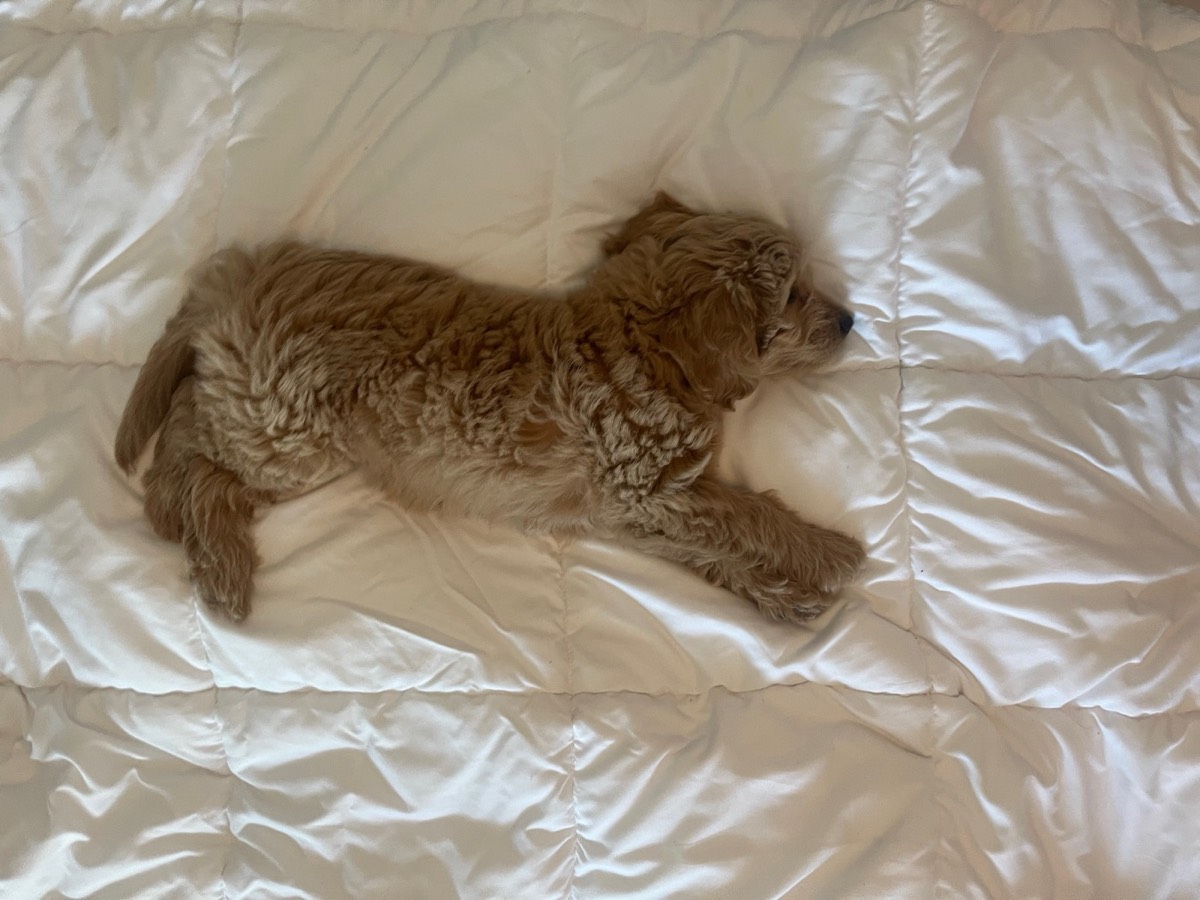
Goldendoodles get marketed as the perfect dog, and in a lot of ways they are. They're also a breed with a specific set of health risks that come with the Golden Retriever and Poodle genetics. None of these are dealbreakers. But going in without knowing them means paying for things you could have prevented, or catching problems later than you should have.
Jump to a section
Hybrid Vigor Is Real, But Not Magic
The "hybrid vigor" argument for Goldendoodles -- that crossing two breeds produces healthier offspring -- has some genetic truth to it. When you combine two gene pools, recessive disorders are less likely to express. But Goldendoodles can still inherit health problems common to both parent breeds. Hybrid vigor reduces risk, it doesn't eliminate it. And it does nothing for conditions that are dominant rather than recessive, or for conditions shared by both parent breeds.
The good news is that most Goldendoodle health issues are manageable. The less good news is that manageable often means expensive if you're not paying attention early.
Hip and Elbow Dysplasia
Both Golden Retrievers and Poodles carry risk for hip dysplasia -- a malformation of the hip joint that causes pain, reduced mobility, and arthritis over time. Elbow dysplasia is the same general concept applied to the front joints. These are the conditions that responsible breeders screen for most consistently, because the genetic component is real and OFA (Orthopedic Foundation for Animals) testing on breeding dogs makes a meaningful difference in offspring risk.
Signs tend to show up in young adulthood, often between one and three years old: a subtle change in gait, reluctance to go up stairs, stiffness after rest, or a general "slowing down" that doesn't match the dog's age. Early diagnosis matters because weight management and appropriate exercise significantly slow progression. An overweight Goldendoodle with hip dysplasia is in for a harder time than a lean one. A joint supplement like Cosequin DS is commonly recommended by vets for early joint support -- not a cure, but useful for maintenance.
Telehealth Vet
Dutch -- licensed vets on your phone for $11/month. Useful for the "is this worth an in-person visit?" moments.
See Arie's health picks on Faves →Ear Infections
This one is less dramatic than hip dysplasia but far more common and far more preventable. Goldendoodles have floppy ears that trap moisture and restrict airflow. Combine that with the hair that grows inside the ear canal (from the Poodle side) and you have a setup for chronic ear infections if you're not proactive about cleaning.
Signs: head shaking, scratching at the ears, a yeasty or funky smell, dark debris in the ear canal, or any visible redness. Recurring ear infections that don't resolve with cleaning are worth a vet culture to identify whether you're dealing with yeast, bacteria, or both -- because the treatments differ and using the wrong one repeatedly creates resistance.
Weekly ear cleaning with a vet-approved ear solution is the prevention. Grooming appointments should include ear cleaning and plucking. If your groomer skips ears, find one who doesn't.
Skin Allergies and Atopic Dermatitis
Skin issues are the health complaint that Goldendoodle owners mention most often after joint problems. Atopic dermatitis is an inflammatory skin condition that's genetic in origin and triggered by environmental allergens -- pollen, dust mites, mold, grass -- as well as food. It shows up as itching, paw licking, recurring hot spots, and sometimes chronic ear problems (the ear and skin issues often travel together).
The frustrating part is that food allergies often present as skin issues rather than stomach upset. A dog who's itching constantly and has no obvious environmental trigger is worth an elimination diet trial, guided by your vet. These trials take time -- at least 8 weeks on a novel protein diet -- but they're the only way to accurately identify food triggers. Allergy testing (blood or skin) exists but has mixed accuracy for food allergies specifically.
Management usually involves some combination of diet adjustment, antihistamines, omega-3 supplementation, medicated shampoos, and in more persistent cases, Apoquel or Cytopoint. These are not cheap options but they work significantly better than scratching the problem indefinitely.
Skin Support
Fish oil for dogs -- omega-3s are one of the few supplements with real evidence behind them for skin and coat health.
Arie's grooming and skin picks →Eye Conditions
Progressive Retinal Atrophy (PRA) is a genetic condition that causes gradual degeneration of the retina, eventually leading to blindness. It's inherited from the Poodle line. The good news: it's testable. Responsible breeders run genetic testing (Embark includes PRA panels) and don't breed dogs who carry two copies of the relevant gene variants.
Other eye conditions worth knowing: cataracts (both breeds have some predisposition), and pigmentary uveitis, which is specific to Golden Retrievers and can be inherited by Golden mixes. Symptoms to watch for include cloudiness in the eye, squinting, visible discharge that's not the normal corner-of-eye gunk, or any changes in how your dog navigates at night or in low light. Annual eye checks during vet visits catch most things early.
Bloat (GDV)
Gastric dilatation-volvulus -- bloat -- is a condition where the stomach fills with gas and twists on itself, cutting off blood flow. It's a medical emergency that can be fatal within hours without surgery. Standard-size Goldendoodles are large, deep-chested dogs, which is the body type with the highest risk. Mini Goldendoodles have lower risk by comparison.
Signs are dramatic and fast: a distended stomach that looks visibly swollen, unproductive retching (the dog tries to vomit but can't), restlessness, salivating, and rapid deterioration. If you see these symptoms together, this is a "go to the emergency vet right now" situation, not a wait-and-see one.
Preventive steps: don't feed immediately before or after vigorous exercise, consider a slow-feeder bowl if your dog eats fast, and ask your vet about gastropexy (a prophylactic surgical procedure that tacks the stomach in place) at the time of spay or neuter, particularly for standard-size dogs with no family history of bloat.
Slow feeder bowl for fast eaters. No intense exercise within an hour of meals. Ask your vet about gastropexy at the time of spay/neuter for standard-size dogs.
Subvalvular Aortic Stenosis
SAS is a heart condition more common in Golden Retrievers -- a narrowing just below the aortic valve that makes the heart work harder than it should. Mild cases often go undetected and cause no symptoms. More significant cases can cause exercise intolerance, fainting, or sudden cardiac death in young dogs. It's detected via cardiac auscultation (your vet listening for a heart murmur) and confirmed with echocardiogram.
This is why the puppy's first vet appointment and all annual checkups should include a thorough cardiac exam. Most vets will hear a murmur if one is present. If a murmur is detected, a cardiology referral for echo is the next step. SAS is not always serious, but it needs to be evaluated rather than assumed benign.
What Good Breeders Test For
Before you buy a Goldendoodle from any breeder, ask specifically what health testing the parents have had. Reputable breeders should be able to show OFA clearances for hips and elbows on both parents, cardiac exams by a cardiologist (for Golden Retriever parent), Embark or equivalent genetic testing that includes PRA and other inheritable conditions, and CERF or OFA eye evaluations. A breeder who waves off these questions or says "they're healthy, I don't worry about that" is telling you something important.
Genetic testing doesn't guarantee a healthy dog. It significantly improves the odds. The puppy vs. adult Goldendoodle guide covers more of the what-to-ask-before-you-commit territory if you're still in the decision phase.
The Ongoing Stuff
None of the conditions above are reasons not to get a Goldendoodle. They're reasons to get one with eyes open. The practical upshot is this: vet checkups annually (or more often for older dogs), consistent ear cleaning, weight management throughout the dog's life, and a vet relationship you can actually call when something seems off. The first-year cost guide has a realistic breakdown of what this all adds up to financially, including where the surprise expenses tend to come from. For the minor stuff -- ear questions, skin flares, "is this lump something?" -- we use Dutch telehealth because a phone consult at $11/month has saved us several unnecessary emergency visits. For the bigger surprises, pet insurance is worth having before anything is diagnosed, because pre-existing conditions are what most policies exclude.
Goldendoodles are genuinely great dogs. The health picture is manageable. You just have to know it's part of the deal.
Frequently Asked Questions
Are Goldendoodles prone to health problems?
Goldendoodles are generally considered a healthier breed than their purebred parents, thanks to hybrid vigor -- but they still inherit health tendencies from both the Golden Retriever and Poodle lines. The most common issues are hip and elbow dysplasia, ear infections, skin allergies, eye conditions like progressive retinal atrophy, and bloat in larger dogs. Most are manageable with early detection and good preventive care.
What are the most common Goldendoodle health issues?
The conditions that appear most often in Goldendoodles include: hip and elbow dysplasia, ear infections (from the floppy ear structure and moisture retention), atopic dermatitis and food allergies, progressive retinal atrophy and other eye conditions, subvalvular aortic stenosis, and bloat in standard-size dogs.
Do Goldendoodles have sensitive stomachs?
Some do. Food allergies and sensitivities are fairly common, often showing up as skin issues (itching, hot spots, paw licking) rather than obvious digestive symptoms. If your dog has chronic skin problems, the food is worth looking at before assuming it's environmental. An elimination diet trial, guided by your vet, is the cleaner way to test this.
How can I keep my Goldendoodle healthy?
Buy from a breeder who does OFA hip and elbow testing and Embark genetic testing on breeding dogs. Keep up with ear cleaning (weekly minimum). Stay on schedule with annual vet checkups. Maintain a healthy weight -- extra weight accelerates joint problems significantly. Watch for early signs like changes in gait, excessive licking, eye cloudiness, or head shaking.
Is pet insurance worth it for a Goldendoodle?
For a breed with real health risk factors -- joint problems, potential for bloat, eye conditions -- pet insurance makes financial sense, especially if you get it before any conditions are diagnosed. A single orthopedic surgery for hip dysplasia can run $3,000-6,000. Get it while your dog is young and before anything is flagged as pre-existing.
FREE GOLDENDOODLE GUIDE
Get the Goldendoodle Survival Guide
Everything I wish I'd known before getting Arie -- beach gear, grooming reality, the 7pm witching hour, and more. Free PDF.
No spam. Ever. Unsubscribe anytime.
Have questions? Find us on TikTok @ariepup!
← Back to the Blog