A hot spot can go from nothing to a raw, oozing mess in a matter of hours. One minute your dog seems fine, the next he has a quarter sized wound and he will not stop licking it. Here is what is actually happening and what to do about it before a small annoyance turns into an emergency vet visit.
Jump to a section
What a Hot Spot Actually Is
A hot spot, or acute moist dermatitis if you want the clinical name, is a patch of skin that gets so irritated it turns raw, inflamed, and often infected within hours. It usually starts small, a spot your dog licks or scratches more than normal, and spirals fast because licking makes the irritation worse, which makes the licking worse, in a loop that does not stop on its own. The telltale signs are a red, wet, foul smelling patch, often with the fur matted flat around it or missing entirely. Goldendoodles are more prone to them than short haired breeds because a thick double coat traps moisture and heat right against the skin, which is exactly the environment a hot spot needs to take off.
Why They Show Up Out of Nowhere
Hot spots rarely come out of nowhere, they just look that way because the damage happens so fast. The usual triggers are things that make a dog itchy or uncomfortable in one spot: allergies to food, pollen, or grass, a bug bite, a tick, an ear infection that spreads irritation to the surrounding fur, or a coat that stayed damp too long after a bath or a swim. Boredom and anxiety can also cause a dog to lick or chew one area obsessively until the skin breaks down, so a hot spot that shows up during a stretch of less exercise or more time alone is worth a second look at what else changed. Once the skin barrier breaks, bacteria move in fast, and a mildly itchy patch becomes an angry, weeping one within a day.
How to Treat One at Home
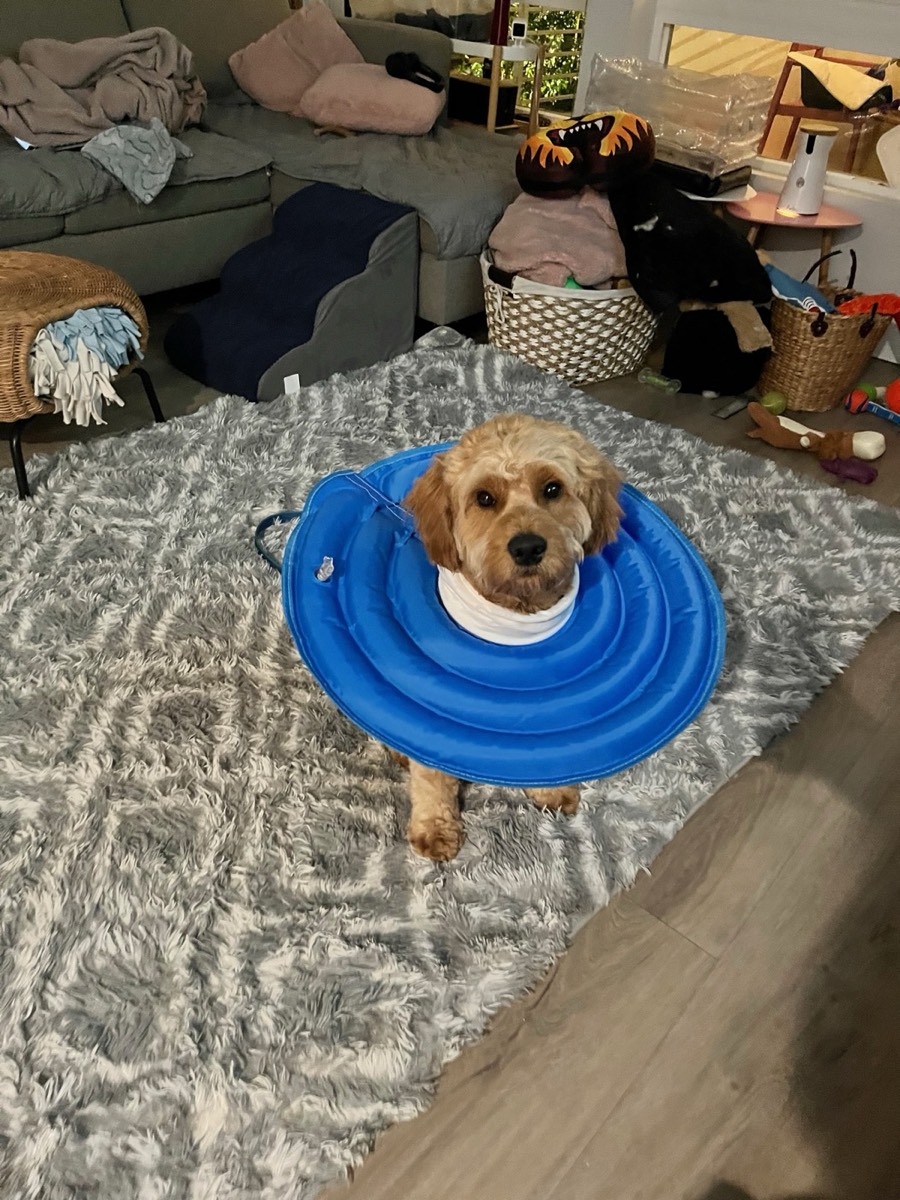
For a small, early hot spot, you can usually get ahead of it at home. Gently clip the fur around the area, which sounds harsh but removing hair lets air reach the skin and stops matted fur from trapping more moisture against the wound. Clean it with a vet approved antiseptic, not hydrogen peroxide, which damages healthy tissue along with the bad stuff. A pet safe wound spray calms the area and starts the healing process without the sting of alcohol based products. The hardest part is stopping the licking, because your dog's instinct is working directly against recovery. A cone, a recovery collar, or even a loose t-shirt over the spot for a few hours can buy the skin time to start closing.
When to Call the Vet Instead
Some hot spots need more than a home routine. If the patch is larger than a couple of inches, spreading, oozing anything beyond clear fluid, or your dog seems genuinely miserable rather than just annoyed, that is a vet visit, not a wait and see. Vets often prescribe a short course of antibiotics or a steroid to break the itch lick cycle, plus an e-collar your dog will hold against you personally. Repeat hot spots in the same area, or several showing up at once, usually point to an underlying cause like allergies that needs its own workup rather than treating each spot as a one-off.
Whatever else you do, stop the licking. A perfectly treated hot spot will not heal if your dog has unrestricted access to lick it. The cone is not optional, it is the entire treatment plan wearing a funny shape.
How to Keep Them From Coming Back
Prevention is mostly about moisture and maintenance. Dry your dog thoroughly after every bath or swim, especially around the ears, armpits, and any spot where the coat is thick, since damp fur against skin is the single biggest setup for a hot spot. Regular brushing matters for the same reason, it keeps the coat from matting into little moisture traps and lets you actually see the skin underneath instead of guessing. If your dog is prone to allergies, talk to your vet about managing the root cause rather than just treating the flare ups, since a dog who is not already itchy is a dog who is not going to lick his way into one.
Hot spots look dramatic and heal fast once you catch them early, which is really the whole lesson here. Check your dog over after beach days and bath nights, keep the coat dry and brushed, and you will catch the next one as an annoying pink patch instead of a full blown wound.
Frequently Asked Questions
What does a hot spot look like on a dog?
A hot spot usually looks like a red, wet, raw patch of skin, often with the fur around it matted flat or missing entirely. It can smell unpleasant and feels warm to the touch. Dogs typically lick or chew the area constantly, which is usually the first sign something is wrong before the skin even breaks down.
What causes hot spots in dogs?
Hot spots start with something making a dog itchy or uncomfortable in one spot, like allergies, a bug bite, an ear infection, or a coat that stayed damp too long after a bath or swim. Once a dog starts licking or scratching that spot, the irritation and the licking feed each other and the skin can break down within hours.
Can I treat a hot spot at home?
Small, early hot spots can often be managed at home by trimming the fur around the area, cleaning it with a vet approved antiseptic, and stopping the licking with a cone or recovery collar. Larger, spreading, or oozing hot spots, or a dog who seems genuinely miserable, need a vet visit rather than a home fix.
How long does it take a hot spot to heal?
A small hot spot caught early and kept dry and clean often starts improving within a few days. Larger or infected hot spots treated with vet prescribed antibiotics or steroids usually clear up within one to two weeks. The biggest factor in healing time is whether the licking actually stops.
Are Goldendoodles more prone to hot spots?
Goldendoodles and other thick, double coated breeds are more prone to hot spots than short haired dogs because their coat traps moisture and heat against the skin. Staying on top of drying the coat after baths and swims, and brushing regularly to prevent matting, goes a long way toward preventing them.
FREE GOLDENDOODLE GUIDE
Get the Goldendoodle Survival Guide
Everything I wish I'd known before getting Arie. Beach gear, grooming reality, the 7pm witching hour, and more. Free PDF.
No spam. Ever. Unsubscribe anytime.
Have questions? Find us on TikTok @ariepup!
← Back to the Blog