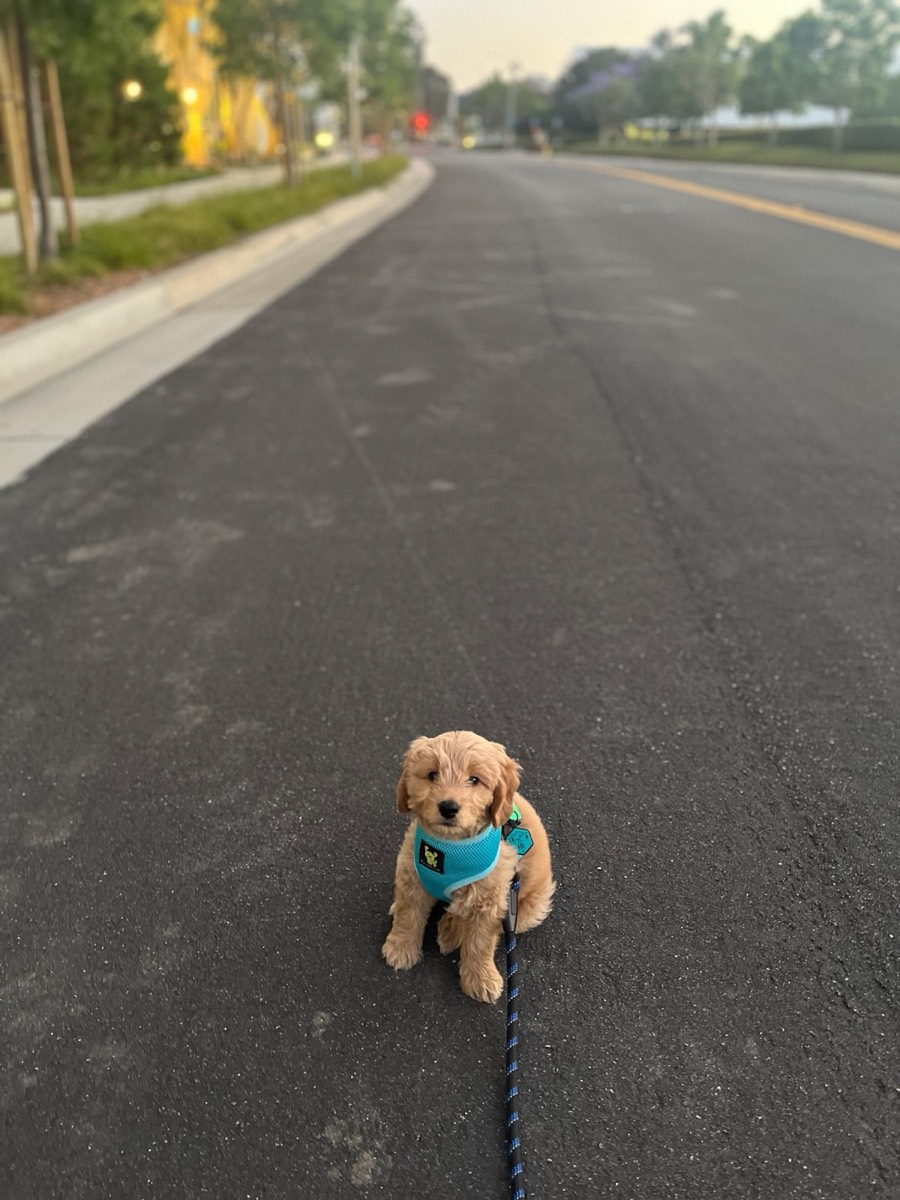
There is a specific shoulder ache that only dog owners know. It lives on whichever side your dog walks on, and it shows up after about three blocks of being towed like a sled. If you have it, your dog pulls. Here is why it happens and exactly how to fix it, in the order that actually works.
Jump to a section
Why Dogs Pull (It Is Not What You Think)
Your dog is not pulling because he is dominant, stubborn, or trying to win. He is pulling because it works. Every time he leans into the leash and you keep walking, you have just taught him that pulling produces forward motion toward the next fascinating smell. He is a tiny scientist running the same experiment a hundred times a walk, and you keep giving him the result he wants.
That is the whole problem, and it is also the whole solution. Pulling is a rewarded behavior. To stop it, you stop rewarding it. Easy to say, deeply annoying to do consistently, which is why most dogs pull their entire lives.
Start With the Right Gear
Gear will not train your dog, but the right gear makes training possible instead of a wrestling match. The single most useful tool for a puller is a front-clip harness. The leash attaches at the chest rather than the back, so when your dog lunges forward, the design gently turns him back toward you instead of letting him plant his weight and power ahead like a sled dog. It takes the strength advantage away from him without hurting him.
Skip the retractable leash entirely. It teaches the exact wrong lesson, that constant tension equals freedom and forward motion. Use a plain four to six foot leash so you can actually communicate. If you want a simple place to start, a basic front-clip no-pull harness covers most dogs without spending a fortune.
The Method That Actually Works
The method is called stop-and-go, and it is almost stupidly simple. The moment the leash goes tight, you stop walking. You become a tree. You do not yank, scold, or talk. You just stop, and the walk does not continue until the leash goes slack again. When your dog turns back or steps toward you and the leash loosens, you mark it with a cheerful word and keep moving. Forward motion is the reward, and your dog only earns it with a loose leash.
The first few walks with this method are excruciating. You will travel about forty feet in twenty minutes and question every choice that led you here. That is normal. Your dog is updating his entire theory of how leashes work, and that takes a few hundred repetitions. Within a week or two, the math clicks for him: tight leash stops the fun, loose leash keeps it going.
Bring high-value treats and reward generously whenever your dog is walking in the sweet spot beside you with a loose leash. You are not bribing him, you are paying him for the behavior you want so it becomes the default. Cheap biscuits will not cut it against the smell of another dog's business on a hydrant. Use something he would sell state secrets for.
A tight leash never moves forward. Not once, not "just this time because we're late." Every single exception you make resets the lesson and teaches your dog that pulling works sometimes, which is the most motivating reward schedule there is. Consistency is the entire game.
The Mistakes That Keep Your Dog Pulling
The biggest one is inconsistency. If pulling gets the dog forward even one walk in five, you have built a slot machine, and your dog will keep pulling forever hoping for the payout. The fix has to be every walk, every person who holds the leash.
The second mistake is the marathon walk. People try to fix pulling on a sixty minute walk and both parties end up furious. Train in ten minute blocks when you have patience to spare, and on the days you just need to get the dog tired, use the harness for management and skip the training pressure. Trying to train when you are already late and frustrated teaches your dog nothing except that you are no fun.
The third mistake is under-exercising. A dog with a tank full of unspent energy physically cannot focus on loose-leash walking. If your dog is wired, the leash work will go nowhere until the baseline energy is handled. Our breakdown of how much exercise a Goldendoodle actually needs covers how to get the tank to a workable level first.
What to Do With a Reactive Puller
Some dogs do not pull out of general excitement, they pull because they spot another dog, a squirrel, or a skateboard and lose their entire mind. This is reactivity, and stop-and-go alone will not fix it because the dog is over threshold and cannot hear you. The move is distance. Spot the trigger early, create space before your dog locks on, and reward calm attention back to you. You are teaching your dog that noticing the scary or exciting thing pays better than charging it.
For dogs who run hot on walks, a calming chew before you head out can take the edge off enough that training has a chance to land. It is not a substitute for the work, just a way to start the lesson with a brain that is online.
How Long It Takes
Expect a noticeable difference within a couple of weeks of short, consistent practice, and a dog who walks nicely most of the time within a few months. There will be backslides. A windy day, a new neighborhood, a squirrel with a death wish, and your progress seems to evaporate. It has not. You just hit a harder level, and the rules are still the rules.
If you have put in honest, consistent weeks and the pulling is not budging, or the reactivity feels bigger than you can manage alone, that is the point to bring in help rather than grind. A good trainer can see in one session what is invisible from inside the leash. Our guide to finding a good dog trainer walks through how to pick one who uses methods that match this approach.
Frequently Asked Questions
Why does my dog pull on the leash?
Dogs pull because it works. When a dog leans into the leash and you keep walking, the dog learns that pulling moves it forward toward the smells and sights it wants. It is not dominance or stubbornness. It is a simple, well-rewarded habit, and the fix is to stop rewarding it.
What is the fastest way to stop a dog from pulling?
The fastest improvement usually comes from a front-clip harness combined with the stop-and-wait method: the second the leash goes tight, you stop walking, and you only move again when the leash is loose. Gear buys you control while the training builds the habit. Neither one alone is a permanent fix.
Do anti-pull harnesses work?
Front-clip harnesses help a lot because the leash attaches at the chest, so a pulling dog gets gently turned back toward you instead of powering straight ahead. They reduce pulling immediately, but they manage the behavior rather than teach loose-leash walking. Use the harness and train at the same time.
How long does it take to train a dog to walk on a loose leash?
For most dogs, a few weeks of short, consistent practice produces a clear difference, and a few months produces a dog who walks nicely most of the time. Consistency matters more than session length. Ten focused minutes a day beats one long frustrating walk a week.
Should I use a retractable leash to stop pulling?
No. Retractable leashes teach a dog that constant tension equals forward motion, which is the exact opposite of what you want. They also make it nearly impossible to communicate clearly through the leash. A standard four to six foot leash is the better tool for teaching loose-leash walking.

FREE GOLDENDOODLE GUIDE
Get the Goldendoodle Survival Guide
Everything I wish I'd known before getting Arie. Beach gear, grooming reality, the 7pm witching hour, and more. Free PDF.
No spam. Ever. Unsubscribe anytime.
Have questions? Find us on TikTok @ariepup!
← Back to the Blog