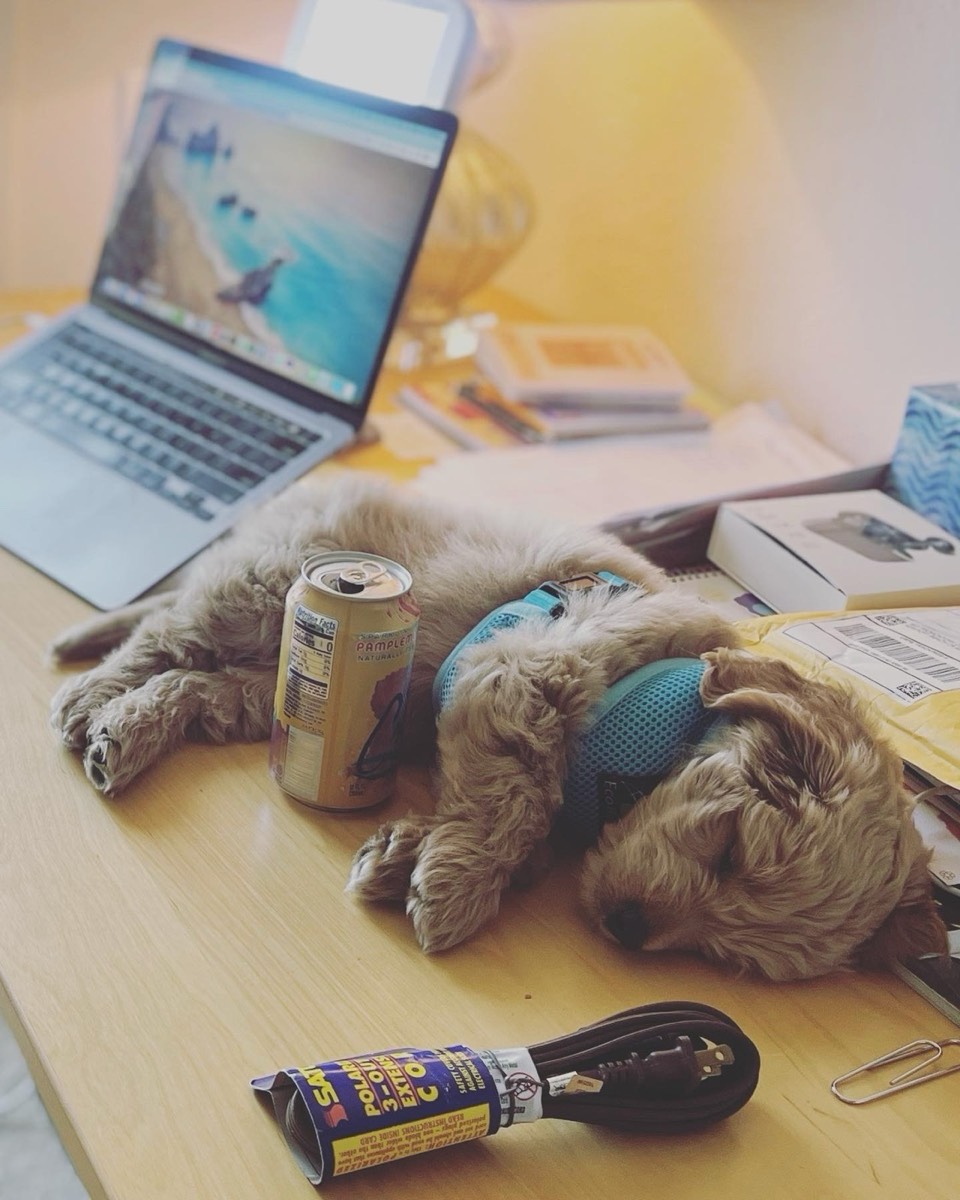
People pick a Goldendoodle size the way they pick a couch, based on a photo, without doing the math on whether it fits the room. Mini and standard Goldendoodles come from the exact same cross of Golden Retriever and Poodle, and yet the day-to-day experience of living with one versus the other is genuinely different. Neither size is the correct one. They're just built for different lives.
Jump to a section
What Actually Determines the Size
A Goldendoodle's size comes down almost entirely to which size Poodle was in the cross. A Golden Retriever paired with a standard Poodle produces a standard Goldendoodle, typically landing somewhere between 50 and 90 pounds full grown. A Golden paired with a miniature or toy Poodle produces a mini, usually somewhere in the 25 to 35 pound range, sometimes smaller depending on the generation and the specific dogs involved. There's real variation within both categories, so any number a breeder gives you is an estimate, not a guarantee.
Coat, temperament, and shedding tendencies are driven more by genetics and generation than by size category, so don't assume a mini automatically sheds less or acts calmer than a standard. Those traits travel independently of body size.
Space and Lifestyle Fit
This is where size actually matters in daily life. A standard Goldendoodle needs real room to move, a yard or regular access to open space, and a car big enough to fit a crate that isn't a joke. A mini can genuinely thrive in a smaller home or apartment, provided the walks and mental stimulation still happen. Neither size gets a pass on exercise. A bored mini finds just as much trouble as a bored standard, it just does less structural damage while finding it.
Think honestly about your stairs, your car trunk, your furniture, and whether you want a dog who can rest a chin on the kitchen counter without standing on hind legs. That last one surprises more new standard owners than anything else on this list.
Cost Differences Add Up Fast
A standard eats more, needs more medication by weight, and takes longer on the grooming table, which usually means a higher bill every six to eight weeks. Food alone can be double the monthly cost of a mini depending on brand and portion size. Boarding and pet-sitting rates sometimes scale with size too, so it's worth weighing which option actually fits your dog before your next trip. None of this is dealbreaker territory, but it's worth running the actual math against your budget before falling for a specific puppy photo.
Health Considerations Aren't the Same
Size doesn't make one version of this breed healthier overall, it just shifts which risks are more common. Standard-size dogs, being large and deep-chested, carry a higher relative risk for conditions like bloat and hip dysplasia. Mini and toy-sized dogs carry a higher relative risk for patellar luxation, a kneecap issue that shows up more often in small breeds generally. A reputable breeder should be able to speak to health testing relevant to the specific size and generation you're looking at, regardless of which one you choose.
Ask any breeder what health testing was done on both parents, not just what size the puppy will be. Size is the easy question. Health history is the one that actually matters five years from now.
Physical Handling and Households With Kids
An excited 70-pound standard can knock a small child over by accident without meaning to, simply through mass and enthusiasm. A mini has the same enthusiasm with a lot less force behind it. That doesn't make a standard wrong for a family with young kids, plenty of them do great together, but it does mean more active supervision and earlier training around jumping and greeting manners. On the flip side, a mini is easier for a smaller or older person to physically handle, walk, and lift into a car when needed.
So Which One Is Actually Right for You
If you have consistent access to outdoor space, a car that can handle a large crate, and a budget that can absorb higher food and grooming costs, a standard gives you a big, goofy, physically imposing dog with the same soft Goldendoodle temperament. If your space or budget is tighter, or you want a dog that's easier to lift, travel with, and manage physically, a mini delivers the same personality in a smaller, less expensive package. Both will shed, both will need training, and both will absolutely end up on the furniture regardless of what anyone tells you before bringing one home.
Frequently Asked Questions
What is the size difference between a mini and standard Goldendoodle?
A mini Goldendoodle typically lands somewhere around 25 to 35 pounds, roughly knee-height, from a Golden Retriever crossed with a miniature or toy Poodle. A standard Goldendoodle, bred from a standard Poodle, usually runs 50 to 90 pounds and stands well above the knee. Exact size still varies by breeder and generation.
Do mini Goldendoodles have more health problems than standard ones?
Different problems, not necessarily more. Minis carry a higher relative risk for patellar luxation, a kneecap issue common in small and toy breeds. Standards, being large deep-chested dogs, carry higher risk for bloat and joint conditions like hip dysplasia. Neither size is automatically healthier overall.
Are mini Goldendoodles good for apartments?
Generally, yes, more so than a standard. A smaller body means a smaller exercise footprint and less impact when zoomies happen indoors. That said, energy level is more about the individual dog and how much mental stimulation it gets than about pure size.
Do mini and standard Goldendoodles shed the same amount?
Coat type drives shedding more than size does. A mini and a standard with the same coat type shed about the same relative to their body, but a standard simply has more surface area, which means more total hair and a longer, more expensive grooming session.
Is a standard Goldendoodle harder to train than a mini?
Not inherently. Trainability comes down to the individual dog's temperament and how consistent the training is, not size. What does change is the stakes: an 80-pound untrained standard pulling on a leash is a much bigger problem than a 30-pound mini doing the same thing.
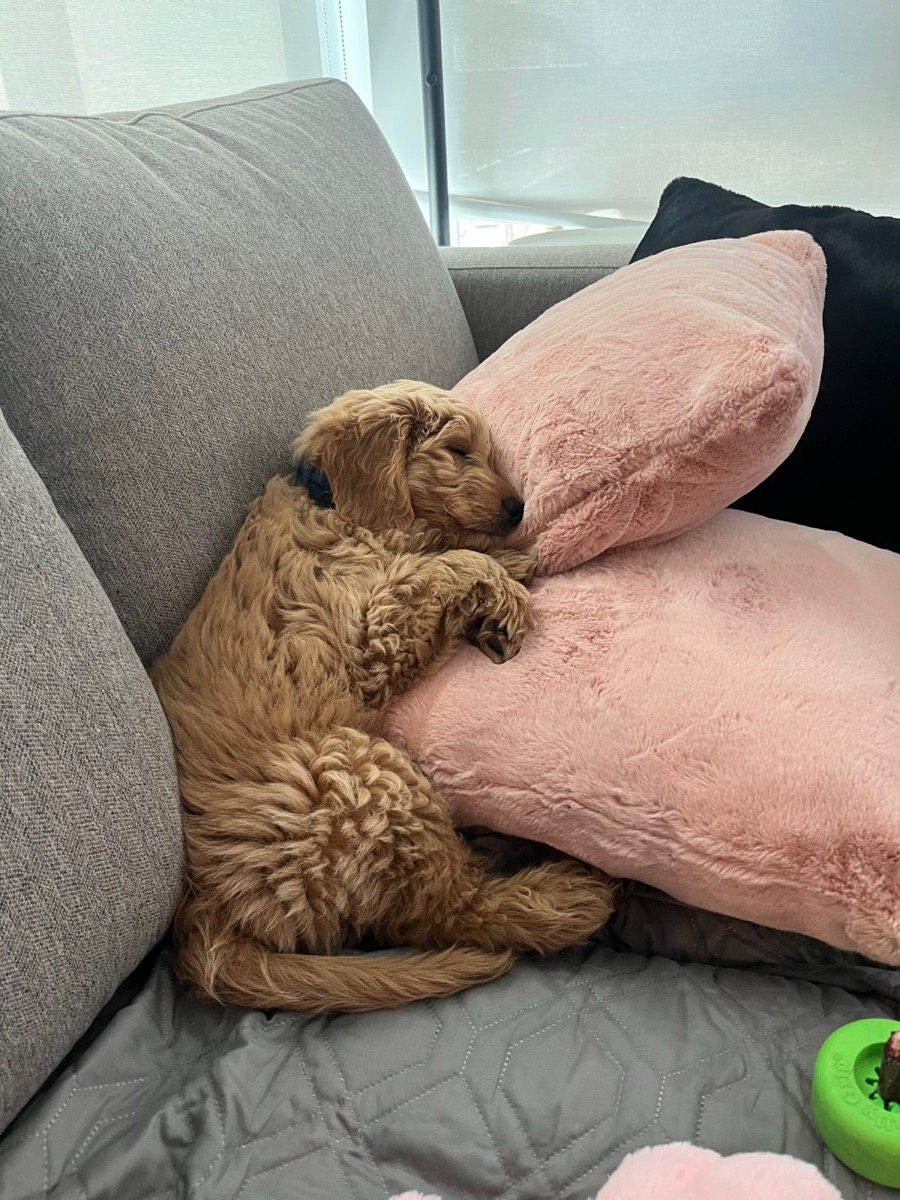
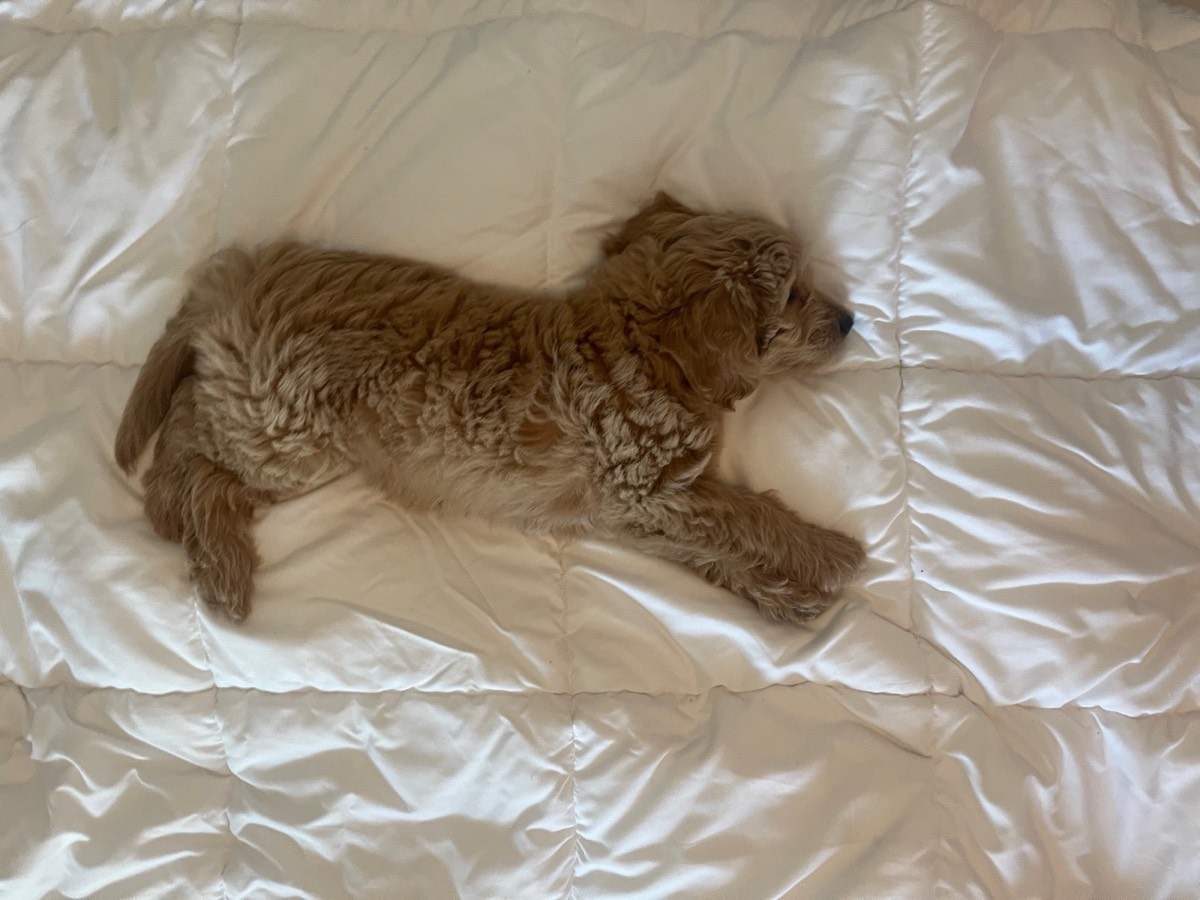
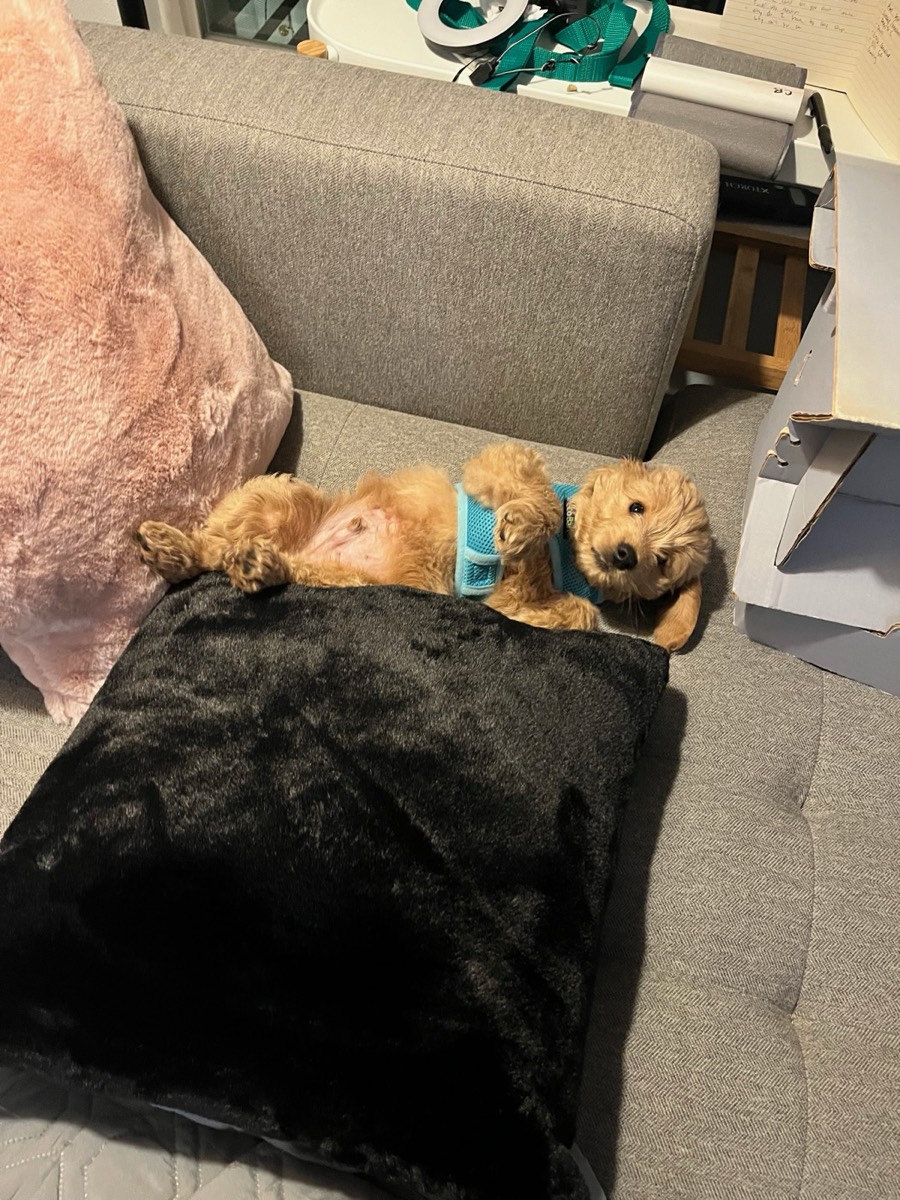
FREE GOLDENDOODLE GUIDE
Get the Goldendoodle Survival Guide
Everything I wish I'd known before getting Arie. Beach gear, grooming reality, the 7pm witching hour, and more. Free PDF.
No spam. Ever. Unsubscribe anytime.
Have questions? Find us on TikTok @ariepup!
← Back to the Blog