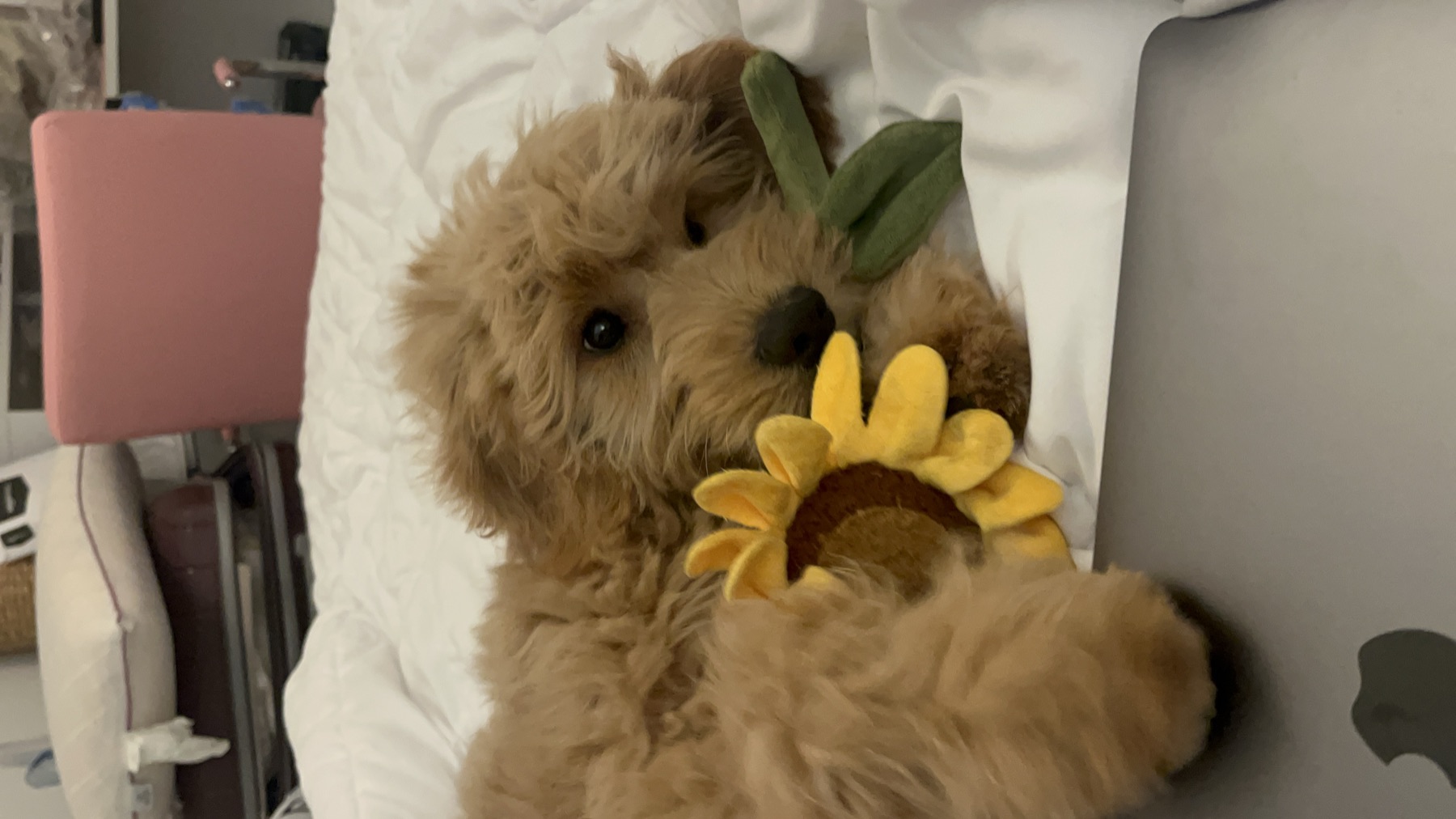
A dog covered in what is essentially a wool sweater, who cannot sweat and who would absolutely walk across the surface of the sun for a single tennis ball, is not built for summer. Goldendoodles run hot, they have no off switch, and they will hide the early signs of overheating until you are looking at a real problem. The good news is that summer with a doodle is completely manageable. You just have to be the one paying attention, because they will not be.
Jump to a section
Why Goldendoodles Overheat Faster Than You Think
Dogs do not cool themselves the way we do. They have a few sweat glands in their paw pads, but those do almost nothing. The real cooling system is panting, which moves air across a wet tongue and the roof of the mouth. It works, but it is slow, and it gets overwhelmed fast on a hot day.
Now add a Goldendoodle's coat. That curly, dense fur is wonderful for looking ridiculous in photos, but it traps a layer of warm air against the body. A clean, brushed coat actually insulates against heat to a degree, the same way it insulates against cold. A matted, dirty coat does the opposite. It holds heat in and blocks airflow to the skin, which is one more reason summer grooming is not optional.
Doodles also tend to be high-drive dogs who do not self-regulate. A lab might flop down in the shade when they have had enough. A Goldendoodle will keep fetching, keep running, keep going until they are in trouble, because the ball is more important than their own internal temperature. That part is on you to manage.
The Pavement Problem
This is the one that catches people off guard. On a sunny 85-degree day, asphalt can climb past 130 degrees. It absorbs heat all day and radiates it back up into your dog's paws, which are right at ground level where it is hottest. Pads can blister in under a minute on surfaces like that.
The test is simple and worth doing every single time before a summer walk. Press the back of your hand flat against the pavement and hold it for seven seconds. If you cannot keep it there comfortably, it is too hot for paws, full stop. Grass and dirt trails stay much cooler, so reroute onto those, or just move the whole walk to early morning or after sunset when the ground has had time to release the heat.
If you genuinely have to cross hot pavement, dog booties are the only real fix, though most dogs need a few practice sessions indoors before they will tolerate them without doing the high-stepping puppet walk. A set of breathable summer dog booties is worth keeping by the door for beach parking lots and midday emergencies.
Beach & Water Gear
Cooling mats, collapsible bowls, and beach-day essentials
See Arie's beach picks →Cooling Strategies That Actually Work
Shade and water are the boring answers, and they are also the right ones. Always have cool water available, and bring a collapsible bowl anywhere you go in summer. A dog that is well hydrated cools itself far more effectively, and the difference shows up fast on a warm day.
For active cooling, target the places where blood runs close to the surface: the belly, the groin, the armpits, and the paw pads. A wet towel draped over the back does very little because the coat blocks it. A wet towel the dog lies on, belly down, does a lot. Cooling mats work on the same principle and give a hot dog somewhere to dump heat without any effort from you.
Water play is the best-case scenario. A kiddie pool in the yard, a hose, a swim at a dog beach, all of it cools from the skin up and burns energy at the same time, which is the dream combination for a doodle. If your dog is new to water, our guide on teaching a dog to swim walks through how to build the confidence before you toss them in.
Freeze a wet rope toy, or freeze low-sodium broth into a Kong, and you have a cold chew that lowers core temperature from the inside while keeping a restless dog busy. Keep a few in the freezer all summer. It is the easiest indoor activity on a heat-advisory day.
Heatstroke Signs and What to Do
Heatstroke moves faster than people expect, and the early signs are easy to brush off as normal hot-day behavior. Learn them, because catching it early is the entire game.
The first flags are heavy, frantic panting that does not slow down, thick or stringy drool, very red gums, and a dog that seems glassy-eyed or unsteady on their feet. Later signs are vomiting, diarrhea, and collapse, and by then you are in a true emergency.
If you see the early signs, stop everything. Move the dog into shade or air conditioning. Offer cool water but do not force it. Start cooling with cool or room-temperature water on the belly, groin, paws, and armpits, and use a fan or moving air to help it evaporate. Here is the part people get wrong: do not use ice or ice-cold water. Cooling a severely overheated dog too fast can backfire by constricting blood vessels and trapping heat in the core. Steady cooling beats a cold shock.
If the dog does not bounce back quickly, get to a vet, and call ahead so they are ready. Heatstroke can cause internal damage that does not show on the outside, so when in doubt, a vet check is always the right call. Keeping a basic dog first aid kit in the car through summer is a small thing that pays off on the day you actually need it.
The Summer Coat Question
Every summer, someone decides the humane thing to do is shave their doodle down to the skin. It usually is not. That coat is doing double duty as both insulation and sun protection, and a close shave strips both. Pale skin underneath can sunburn, and without the coat regulating temperature, some dogs actually overheat more easily, not less.
The better move is a shorter summer trim that leaves an inch or so of coat, paired with regular brushing so it stays clean and airy instead of matted and heat-trapping. Talk to your groomer about a summer length rather than reaching for the clippers in a panic. If you are not sure how to vet a groomer in the first place, we covered exactly that in our guide on finding a good dog groomer.
Summer with a Goldendoodle is genuinely the best season, beach mornings, pool afternoons, all of it. You just have to be the brain in the operation, because your dog will happily cook themselves chasing a ball and look delighted the entire time. Walk early, test the pavement, keep the water close, and learn the warning signs. Do that and the worst thing about your summer will be the sand that ends up in places sand should never be.
Frequently Asked Questions
What temperature is too hot to walk a Goldendoodle?
Once the air hits about 85 degrees, walks get risky, and above 90 they are genuinely dangerous for most dogs. But air temperature is only half of it. Pavement can run 40 to 60 degrees hotter than the air, so an 85-degree day can mean asphalt well over 130 degrees. Use the seven-second rule: press the back of your hand to the pavement and hold it. If you cannot keep it there comfortably for seven seconds, it is too hot for paws.
Do Goldendoodles overheat easily?
They can. A Goldendoodle's curly coat traps heat against the body, and dogs cool themselves almost entirely by panting, which is far less efficient than sweating. A heavy, unbrushed coat makes it worse by holding warm air close to the skin. A well-maintained coat actually insulates against heat, but only when it is clean and free of mats.
Should I shave my Goldendoodle in summer?
Usually not down to the skin. The coat provides insulation and sun protection, and shaving it too short removes that barrier and exposes pale skin to sunburn. A shorter summer trim that keeps an inch or so of coat is a better call than a full shave. Talk to your groomer about a summer length rather than reaching for the clippers yourself.
What are the first signs of heatstroke in dogs?
Heavy, frantic panting that does not slow down, thick or stringy drool, bright red gums, glassy eyes, and a dog that seems unsteady or disoriented. Vomiting and collapse come later and mean it is an emergency. If you see the early signs, stop everything, move to shade, offer water, and start cooling the dog with room-temperature water on the belly and paws. If symptoms do not improve quickly, go to the vet.
Can I put ice on an overheated dog?
Skip the ice and ice-cold water. Cooling a severely overheated dog too fast can constrict blood vessels and actually trap heat in the core. Use cool or room-temperature water instead, focused on the belly, groin, paws, and armpits where blood runs close to the surface. A fan helps the water evaporate. The goal is steady cooling, not a shock to the system.
FREE GOLDENDOODLE GUIDE
Get the Goldendoodle Survival Guide
Everything I wish I'd known before getting Arie: beach gear, grooming reality, the 7pm witching hour, and more. Free PDF.
No spam. Ever. Unsubscribe anytime.
Have questions? Find us on TikTok @ariepup!
← Back to the Blog